The UK has just 42 days of diesel supplies left, according to new reports this week, meaning the country is edging closer to possible emergency contingency plans as the crisis in the Middle East continues to pile on pressure at the pumps. Both petrol and diesel rationing plans are on the table and ready to be rolled out by government if the crisis in the Middle East continues to cause problems for supplies and push prices up.
Diesel stockpile figures
According to reports from Sky, the UK has just 42 days worth of diesel left, which is lower than almost every major developed country. The US has 677 days, Japan has 1,025 days, Canada 1,382 days and France, Spain and Germany all have between 219 and 398 days. Only Australia, with 31, is in a worse position for diesel stockpiles as of July 2026.
Earlier in the year, a Labour Treasury minister refused to rule out petrol and diesel rationing in the wake of the ongoing conflict in Iran and the supply issues on the Strait of Hormuz.
Government contingency plans
Government has contingency plans in place from the Department for Energy Security & Net Zero under its National Emergency Plan for Fuel, which show exactly how rationing would work in practice should it be implemented and who would get first priority.
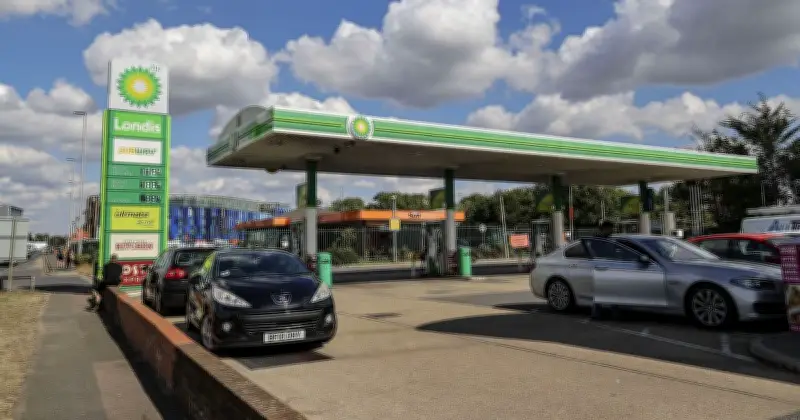
Prices at the pumps have shot up yet again recently, with the RAC confirming the average cost of unleaded petrol is now 173.95p and diesel is a staggering 198.89p, the highest prices since the conflict began in February.
Priority order for fuel
The National Emergency Plan for Fuel sets out who gets first dibs on petrol and diesel. It says that emergency services and 'critical service vehicles' would be the first priority before all other drivers.
Then, utilities such as gas and electricity suppliers and water firms would get next priority, followed by public transport, such as buses and diesel trains. Commercial vehicles would be next, such as lorries taking food to and from supermarkets, and health related deliveries.
Finally, general public drivers could face restrictions on the amount of petrol they can buy at a time, as well as be handed reduced opening hours at petrol stations.
Emergency powers and schemes
The document explains: "The majority of potential fuel supply disruptions can be addressed by measures to help industry maintain fuel supply; these would be deployed by DESNZ in co-ordination with industry and other government departments. However, the government does have emergency powers under the Energy Act 1976, which it can use to control supply and demand of petroleum products. It should be noted that use of these emergency powers is reserved for the most severe of disruptions. These measures would only be activated in the event of a severe national fuel supply shortage."
The plan includes a Designated Filling Station scheme, under which emergency and critical service vehicles would be given priority access to road fuel from filling stations designated by the relevant Local Resilience Forum (Resilience Partnership in Scotland). A Bulk Distribution Scheme would direct oil companies and fuel distributors to prioritise the delivery of bulk petroleum products to critical services such as emergency services, utilities and public transport.
A Commercial Distribution Scheme would direct oil companies and fuel distributors to prioritise the supply of road diesel to the commercial vehicles sector to support the operation of key supply chains, such as food and health. A Maximum Purchase Scheme would restrict the sale of road fuels at retail filling stations to the public to a maximum amount per visit to ensure that all motorists have access to some fuel, and could also limit the hours in which road fuels can be sold. A Crude Oil and Imported Product Allocation Scheme would allow government to formally allocate crude oil and other imported oil products within the UK.
Asked if the Government was set to invoke such plans, Dan Tomlinson told Times Radio in the summer: "At the moment, it is too early to tell what the impact of this crisis will be in the coming months." Asked again whether the Government was making contingency plans to ration petrol, Mr Tomlinson said: "We will monitor the situation, and we’ll monitor it carefully."
Simon Williams, the RAC's head of policy, has forecast "the record of 199.09p will almost certainly be surpassed over the weekend", as Labour's conference gets under way. Asked whether he will cut taxes on diesel, the Prime Minister told BBC East Yorkshire and Lincolnshire: "People will have to wait for the Budget on this one." He added: "I am well aware, though, of the pressure on people and particularly the cost of fuel." But he warned the cost rise was "barely in" the UK Government’s control and said: "Obviously, it’s driven by world events and the supply of fuel or the restriction on the supply of fuel in the Middle East."