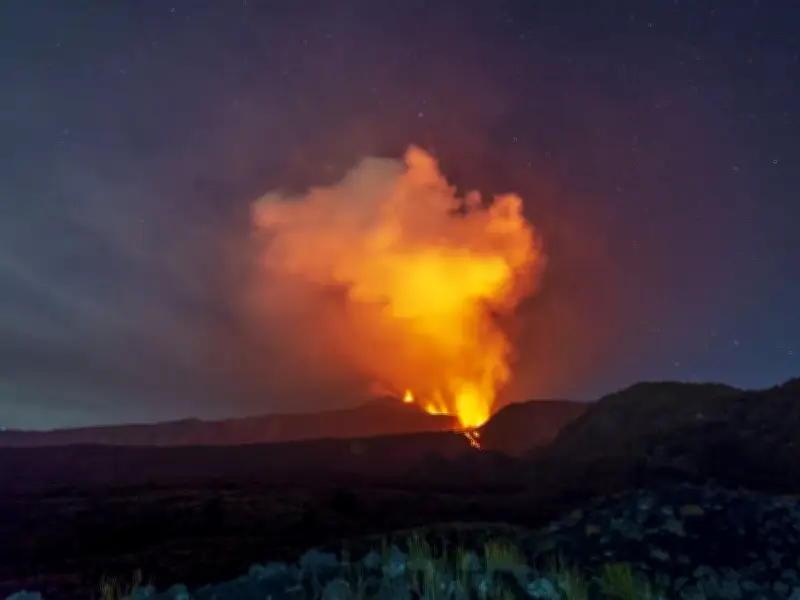
An eruption at Mount Etna, Europe's largest and tallest active volcano, has led to the closure of Catania-Fontanarossa Airport, one of Italy's busiest, disrupting travel plans for many British holidaymakers. The airport suspended all arrivals due to volcanic ash in the atmosphere.
Airport closure and flight suspensions
In a statement on its official website, airport officials said: "Due to Etna’s eruptive activity and the associated release of volcanic ash into the atmosphere, the airspace corresponding to the ash cloud southwest of the volcano (Sector C1) has been closed. Arrivals are suspended until 5:00 PM."
The statement added: "As the situation is significantly affecting operations, passengers are kindly advised to check the status of their flight with their airline before heading to the airport. The situation is being constantly monitored, and further updates will be provided depending on the evolution of volcanic activity and weather conditions."
Initially, a small number of landings were allowed until early this morning, but flights were then completely suspended. Other airports on the island remain unaffected.
Advice for UK passengers
Airlines with routes from the UK to Catania include British Airways, easyJet, Jet2, Ryanair, and Wizz Air. Passengers with bookings should check their flight status on the airport's official website. Delays, diversions, or cancellations are possible, and airlines are expected to contact affected holidaymakers.
Mount Etna's volcanic activity has often disrupted flights to Catania, located just 29 miles from the volcano. Passengers are sometimes re-routed to other Sicilian airports like Palermo. Similar cancellations occurred last month, with a two-day closure on July 5 and 6.
Travel advice and passenger rights
The Foreign, Commonwealth & Development Office (FCDO) currently has no warnings against visiting Sicily, advising only to "Check with your travel provider or Catania airport before travelling." Apart from exclusion zones near the volcano, Brits can still visit, but should monitor local emergency updates.
While flight delays over three hours often allow compensation claims, volcanic eruptions are typically considered 'extraordinary circumstances', making claims unlikely to succeed. However, passengers are still protected under EU Regulation 261/2004, which requires airlines to provide assistance during delays. For flights to Sicily, this applies to delays over three hours.
Airlines must offer two free phone calls or emails, meals and refreshments appropriate to the delay length (often as vouchers), and hotel transfers and accommodation if the delay is overnight.