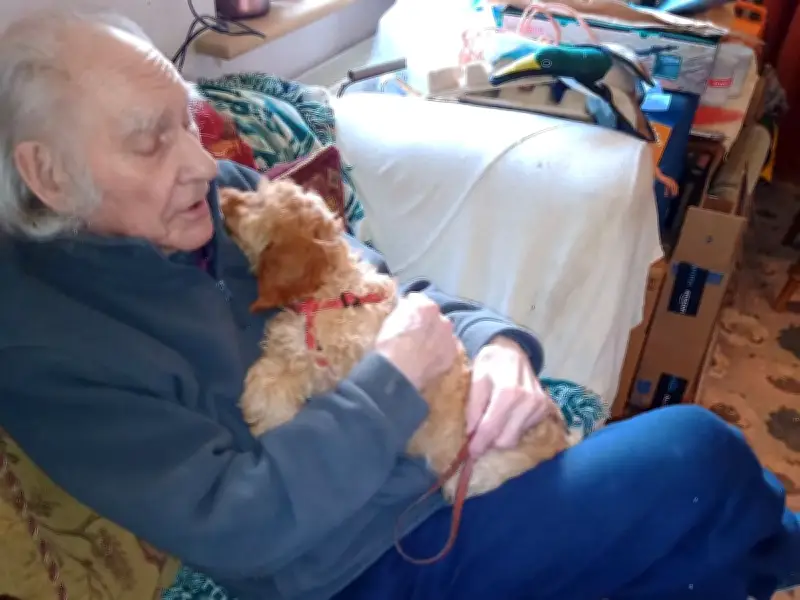
A widow whose husband died after a six-month stay at Glangwili Hospital in Carmarthen has said scabies was a major factor in his death. Paul Baxter, 90, was admitted to the hospital's A&E department on December 17 last year after suffering a stroke, and was moved to a ward two days later. He died on June 8 this year, with scabies noted as a secondary cause of death on his certificate.
Diagnosis delayed by three months
Paul's wife, Kate, said her husband began scratching his skin in February while at the hospital, but was not diagnosed with scabies until May 15. "They weren't treating him for scabies, they were treating him for a rash," she said. "But it got worse and worse. I spoke to the head of the ward and we made an appointment to see a dermatologist in April."
During the final weeks of Paul's life, Kate could only touch him while wearing PPE, including gloves, a hat, a mask, and a gown. She described his condition: "Paul told me: 'My back is itching'. I touched his back and his skin was falling off like sand."
Death certificate listing
On Paul's death certificate, "crusted scabies" is listed as a contributing cause, with "pneumonia, frailty of old age, and ischaemic stroke" as the primary cause. Kate said she fought to have scabies included, but the coroner and medical examiner disagreed with listing it among primary causes. "I agreed to it being listed as a contributory factor but I maintain it should have been listed as a primary factor," she said.
Hospital outbreak response
Hywel Dda University Health Board, which manages hospitals in Carmarthenshire, Pembrokeshire and Ceredigion, is dealing with an outbreak of the condition. In July, a ward at Glangwili Hospital was shut, followed by the closure of more wards. Last month, visitors were told to stay away from Prince Phillip Hospital in Llanelli while a number of wards were closed due to cases of scabies.
A spokesman for the health board said: "Scabies is a common skin condition that is usually spread through direct skin-to-skin contact and in some cases also though shared personal items. The risk to the public remains low and robust measures are in place to help prevent further spread. These include enhanced cleaning, appropriate laundering of clothing and bedding, prompt assessment and treatment of anyone with symptoms as well as their close contacts, and ongoing support from infection prevention and control teams."
Kate urged hospitals to improve cleaning and reporting, saying: "If you are not happy about the treatment that a loved one has received, keep pushing for answers and explain to [hospital staff] that you are not happy. Paul was not diagnosed with scabies early enough. He had scabies for quite a long time and I can't understand why Glangwili Hospital didn't realise that."