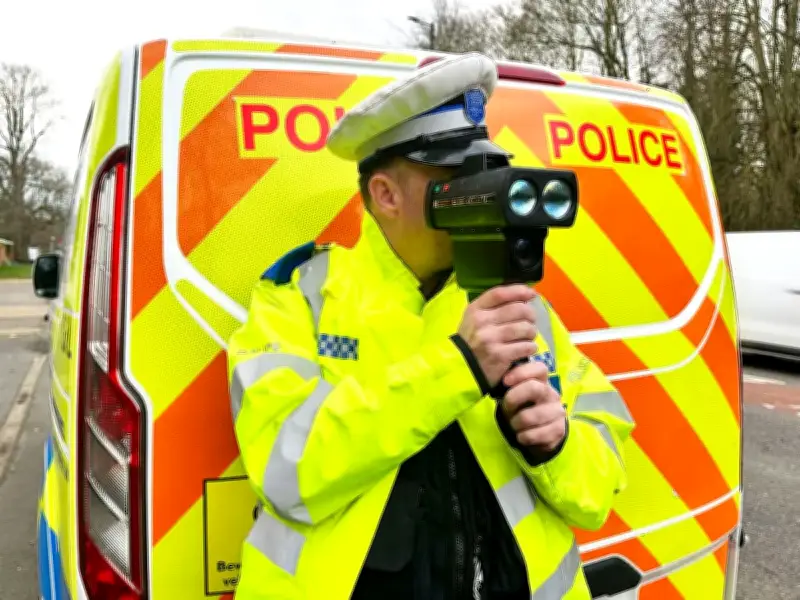
UK police have clarified what happens if you are caught speeding at 10% over the limit, such as doing 31mph in a 30mph zone. Under UK legislation, speeding is a strict liability offence, meaning police and the Crown Prosecution Service do not have to prove you intended to speed or were even aware you were doing so.
If your vehicle exceeds the legal threshold, the offence is committed. Motorists have no legal entitlement to a margin of error, so in principle, being caught at 31mph in a 30mph zone could technically result in a speeding fine.
How forces apply the 10% plus 2mph guidance
In practice, enforcement varies by force. London's Metropolitan Police explained in a freedom of information response: "The Met observes the current National Police Chiefs' Council [NPCC] guidelines which states that enforcement action should commence as soon as a speed is at +10% plus 2mph. This is normally the minimum speed at which enforcement is undertaken in all speed limits. NPCC guidance also states that whilst tolerances exist, they do not and cannot replace police officers' discretion."
In a separate freedom of information request, North Wales Police confirmed it "applies the NPCC guidelines which outline the enforcement thresholds of not less than 10% plus 2mph".
Special rules for 20mph limits in Wales
Following the Welsh Government's introduction of a widespread 20mph default speed limit on residential roads, North Wales Police added: "Following the change in the default speed limit, chief police officers allowed us to increase to 10% plus 4mph in 20mph limits only, meaning we start to prosecute at 26mph in a 20mph limit".
Official documents suggest that discretion within the 10% plus 2mph threshold is embedded in physical infrastructure and local authority strategy rather than left solely to individual officers. A Bedford Borough Council document on speed camera policy stated there would need to be "clear evidence that... a significant number of motorists are regularly exceeding the posted speed limit", yet it regarded the speed limit as being 10% plus 2mph above what signage indicated.
Speed camera calibration and legal defences
The Met Police confirmed speed cameras are generally calibrated to the same guidance, stating: "The minimum speed at which a speed camera is operated may be varied at any time but there are no plans to use a threshold that is not contained in the current guidance."
Every enforcement camera is calibrated following manufacturers' and Home Office guidelines, meaning motorists could have a valid legal defence against a speeding penalty if they could demonstrate the equipment was defective. Motorists may ask for the calibration certificate for the particular camera or radar gun that was used.