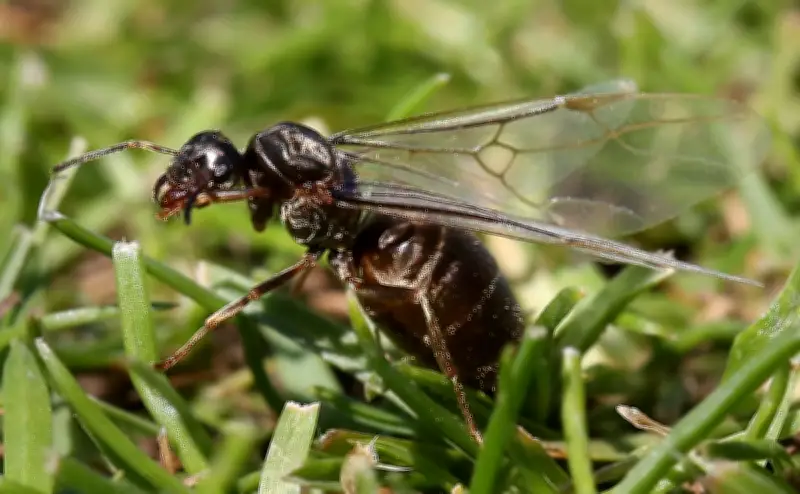
Millions of flying ants are set to take to the skies across the UK as hot weather triggers their annual mating flights. While a few ants are harmless, large swarms can be unsettling. The phenomenon, often called Flying Ant Day, typically occurs in July or August, but the exact timing varies by region and weather conditions.
What Is Flying Ant Day?
Flying Ant Day refers to the period when young queen ants leave their nests to mate with males and establish new colonies. Despite the name, the Royal Society of Biology notes that there is no single day when all ants fly simultaneously. Instead, emergences can happen over multiple days or weeks, usually between mid-July and the end of August. Urban areas tend to see flights earlier than rural ones due to higher temperatures.
Why Do Flying Ants Appear?
Ants mate in flight to maximize reproduction. After mating, the queen sheds her wings and attempts to start a new nest, which initially contains about 5,000 worker ants but can grow to 15,000. Male ants die within a few days, while worker ants (all female) live about a month. Queens can live over 10 years, spending most of their lives in the nest. According to the Royal Society of Biology, male ants are produced only during flying ant season and do not work.
Why Does Flying Ant Day Happen in Hot Weather?
Ant swarms are triggered by temperature and humidity. Queens and males leave the nest when conditions are hot and humid, typically in July or August. Flights occur when temperatures exceed 25°C, wind is light, and rain is possible soon. This regional variation explains why swarms appear at different times across the country.
What Attracts Flying Ants?
Flying ants are drawn to sweet foods like honey and sugary treats. Open food containers or spills can attract them indoors. Dampness also appeals to ants seeking moisture for their colony. To reduce attraction, clean up food debris, store food in airtight containers, and secure trash can lids.
When Is Flying Ant Day 2025?
With current warm weather, flying ants could swarm any day. Researchers from the Royal Society of Biology emphasize that emergences are not confined to a single day. Citizen science data shows multiple flying ant days from mid-July to late August. The peak is not yet clear, but some believe swarms have already begun.
How Long Do Flying Ants Live?
Queen ants can live up to 15 years, worker ants about seven years (if they avoid predators), and reproductive males only around two weeks—they die after mating.
Do Flying Ants Bite?
Black flying ants have weak mandibles that cannot bite human skin and lack stingers. Red ants, however, have a venomous stinger on their abdomen and can deliver a painful sting if threatened. They also bite with their mandibles.
How to Get Rid of Flying Ants
To prevent infestations, block entry points, use dish soap to dehydrate ants, sticky tape to catch them, or artificial sweeteners as poison. Vacuum up visible nests. Remove food debris, clean spills promptly, and store food in airtight containers. Install fly screens on windows and doors, and clean pheromone trails with strong detergent to disrupt foraging.
Why Are Flying Ants Important?
Flying ants are a vital food source for birds and are harmless to humans. They recycle nutrients, aerate soil, and act as natural pest deterrents. The Royal Society of Biology states that flying ant days are essential for mating, allowing queens to establish new colonies after landing and burrowing.