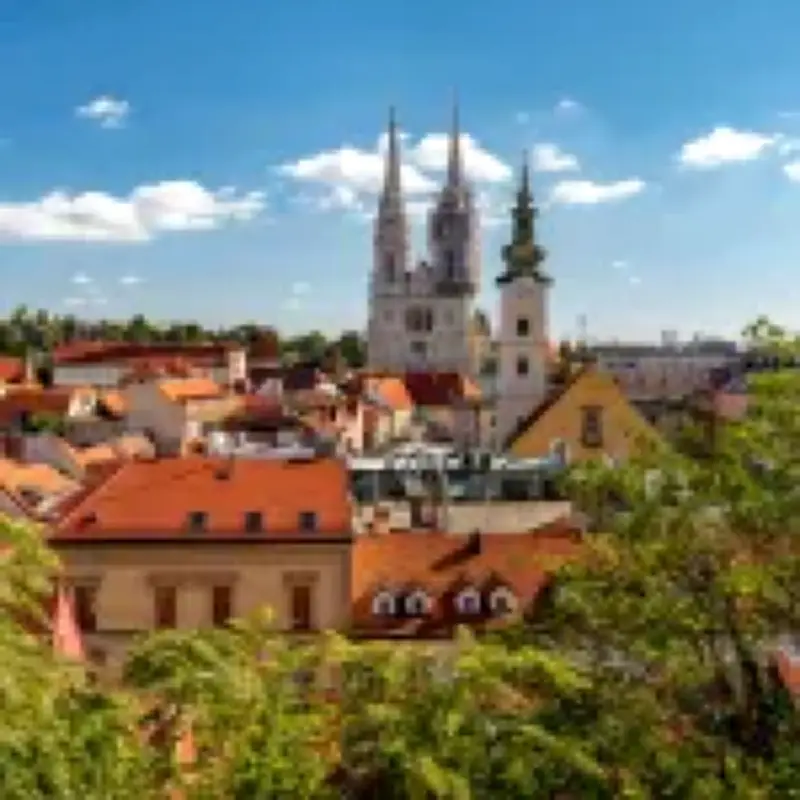
Despite a rainy start, a 24-hour visit to Zagreb revealed a curious city with more than initially meets the eye, including free electric golf-buggy rides, cheap drinks, and medieval architecture. The writer arrived with only a day to spare, and after soggy Birkenstocks and an overpriced umbrella, the day ended better than it began.
A Spontaneous City
The trip was a last-minute bargain: return flights from London Stansted cost only £47. While Croatia draws over 21 million tourists a year, only 1.3 million visit the capital, compared to nearly 50 million who go to Paris. Zagreb, it seems, is often overlooked.
Shortly after arriving, the writer met Helena, a tour guide who waved her onto the Fulir, a free electric golf-buggy that runs daily around the city centre from 8am to 8pm, including holidays. Designed primarily for the elderly or those with limited mobility, it is also available to tourists. Helena, who packs her rucksack each morning 'ready to not return until the next,' described the city as spontaneous: 'You start with a coffee, and you end with a concert in the evening.' Her favourite spot is Jazz Cafe, where live music continues into the early hours.

A Great Day Out
The Fulir offers a flexible way to see Zagreb, with no two routes the same and stops that can be requested. Highlights include Ban Jelačić Square, where markets bustle despite the rain, and Cvjetni Square, home to an attractive bell tower. At Zrinjevac Park, signs of the 2020 earthquake are still visible in damaged buildings; two were killed and 27 injured. 'We are still rebuilding,' Helena explained.
A short walk away is the Art Pavilion, a palatial yellow structure hosting gallery exhibitions and Croatian National Theatre Ballet rehearsals. Nearby, the Orient Express bar is styled like the iconic train, with wood fittings, leather upholstered seats and booths, and golden age trinkets on the walls.
The Upper Town
The tour continued along Tkalčićeva, a pedestrian street lined with colourful buildings, restaurants, cafes, and shops. The street follows the path of the old Medveščak stream, which once divided the rival medieval settlements of Kaptol and Gradec before being paved over at the turn of the 20th century. Its most famous resident is Marija Jurić Zagorka, Croatia's first female journalist and a novelist and advocate for women's rights.
In the Upper Town, medieval architecture remains, including the Cravat Regiment marching in traditional military dress with drums and horses, and the firing of the Grič Cannon from the Lotrščak Tower at midday. The Stone Gate, built in 1242, houses a shrine to the Virgin Mary. The Zagreb Card, costing €38 for 24 hours or €48 for 72 hours, offers free public transport and free admission to attractions such as the Zagreb City Museum and the Museum of Broken Relationships, which displays relics from failed romances, including a onesie, a horse shoe, and a fridge containing a slice of birthday cake.
The visit ended with a ride on the world's shortest funicular, a 66-metre journey taking less than 60 seconds. Zagreb may lack the aesthetics of the Adriatic, but it remains a lovely place to spend a day, even in the rain.
The Essentials
Direct flights to Zagreb are available from Manchester, Birmingham, Newcastle, Edinburgh, and London Stansted, with one-way fares starting from £16 in September with Ryanair. Accommodation options include Tia Apartments and Rooms (from £59/€69 per night), Novotel Zagreb (from £87/€102 per night), and Esplanade Zagreb Hotel (from £120/€140 per night).