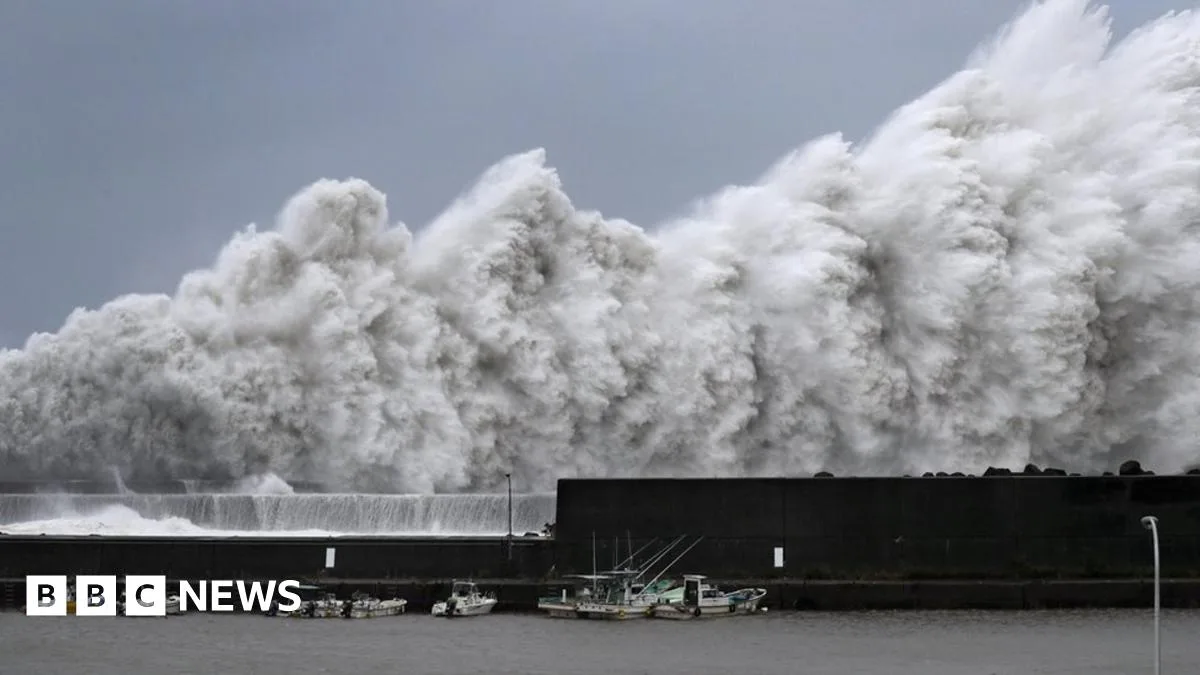
Japan has been struck by its most powerful typhoon in 25 years, with Typhoon Jebi causing at least seven deaths and 200 injuries. The storm made landfall on Shikoku island on Tuesday before moving across the main island of Honshu, bringing winds of up to 172km/h (107mph).
In Osaka Bay, the storm swept a tanker into a bridge, and parts of a railway station roof collapsed in Kyoto. Flooding covered runways at Kansai International Airport, built on a man-made island. More than a million people were ordered to evacuate as authorities warned of high waves, flooding and mudslides.
Hundreds of flights, trains and ferries were cancelled, and tens of thousands lost power. Prime Minister Shinzo Abe convened an emergency meeting, urging people to take action to protect their lives. The Japan Meteorological Agency classed Jebi as 'very strong', the first such typhoon to make landfall on the main islands since 1993, when 48 people died or went missing.
The country has experienced extreme weather this summer, including deadly floods and landslides in July that killed over 200 people, followed by a record heatwave. Officials continue to warn of landslides, flooding, high tides, lightning and tornadoes in affected areas.