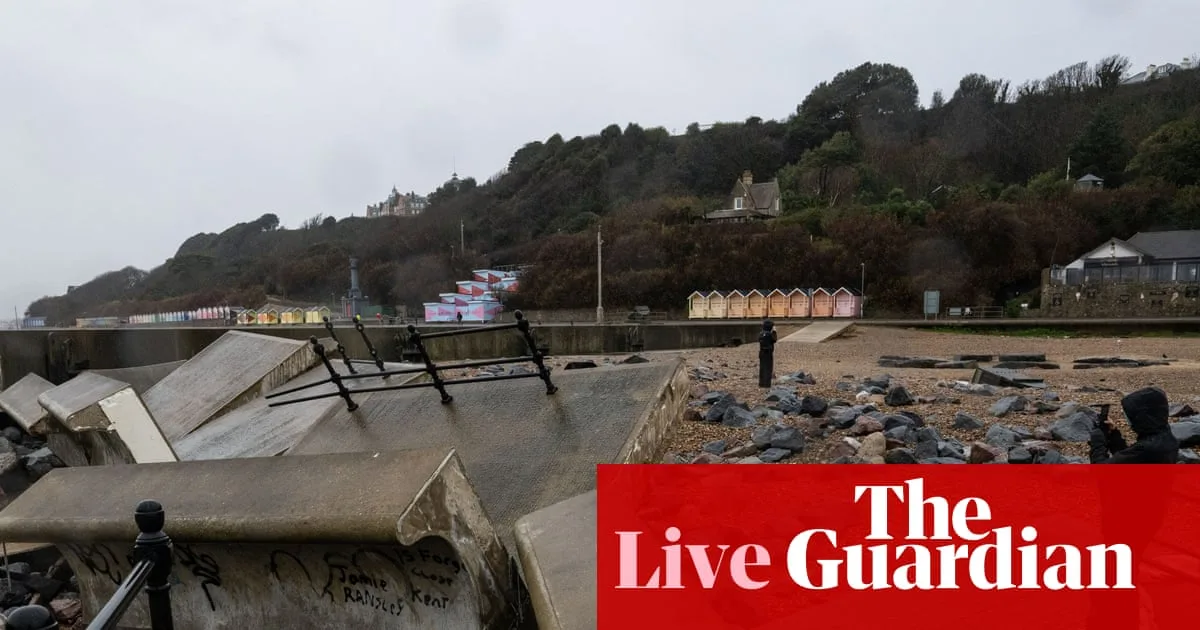
Storm Goretti has caused widespread disruption across the UK, bringing wind, rain, and snow that have halted rail services, cancelled flights, and closed schools. The Met Office has issued fresh yellow warnings for snow and ice across much of Scotland and northern England, in effect from Sunday morning until early afternoon.
The storm has also impacted travel in the South West, where RNLI volunteers responded to seven incidents in Cornwall on Thursday night, battling hurricane-strength winds described as the worst ever seen. Falmouth RNLI crews rescued people from boats in treacherous conditions.
Power outages have affected tens of thousands of properties, with National Grid reporting that engineers restored electricity to 169,380 homes in the South West, Midlands, and South Wales by Friday midday. Extra engineers were drafted in from other areas to assist with repairs.
The government has been urged to convene an emergency Cobra committee meeting. Liberal Democrat MP Gideon Amos called for immediate action, stating that the South West cannot be overlooked in this time of need. Road closures due to fallen trees and debris have also disrupted the criminal justice system, with Birmingham Crown Court unable to transport remand prisoners.
In Scotland, First Minister John Swinney said efforts are now turning to recovery after days of intense snowfall and sub-zero temperatures led to school closures. Meanwhile, local authorities across England and Wales have activated the Severe Weather Emergency Protocol (SWEP) to provide emergency accommodation for rough sleepers. The Mayor of London activated SWEP on Friday, the second time this year.
Tragically, two rough sleepers have died in Manchester during the cold weather: Michael Heaton, 26, found dead on 30 December, and Anthony Horn, 47, discovered on 26 December. The deaths underscore the dangers faced by those sleeping rough during Storm Goretti.