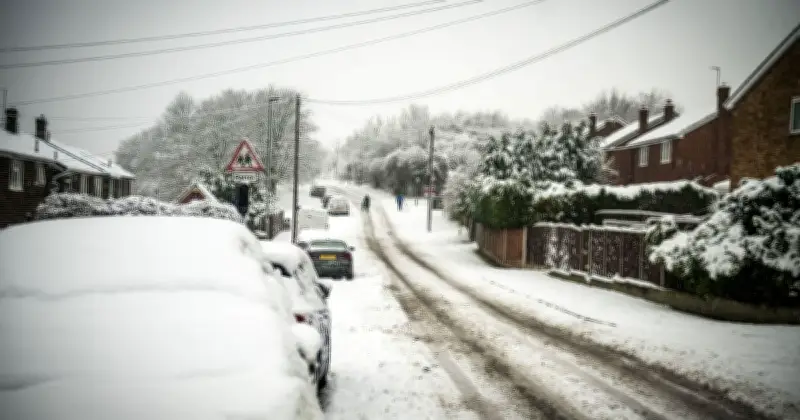
The Met Office has confirmed that up to 5cm of snow could accumulate in parts of the UK this week, with northern Scotland having the greatest chance of seeing snow.
In its latest forecast, the Met Office said cold Arctic air has spread south across the UK, bringing frost rather than significant snowfall to most areas. However, parts of Scotland could see snow over higher ground, with further wintry showers possible across the far north through the weekend.
Areas most likely to see snow
The Met Office named three areas most likely to get snow this weekend: northern and eastern Scotland, and the Northern Isles. It said snow is most likely above a few hundred metres, although temporary accumulations could occur as low as 200-300 metres. Around 2-5cm could accumulate above 400 metres.
Across the far north and northeast, showers will be frequent and blustery at times. There is also the potential for thunderstorms and small hail across the Northern Isles and exposed parts of northern and northeastern Scotland this morning.
Cold air and snow risk
The Met Office added that with cold air remaining in place, the risk of snow continues across parts of northern Scotland through the weekend. It said snow will principally affect higher ground, rather than bringing widespread disruption at lower levels.
The forecaster explained that snow falls when cold air meets moisture. A northerly airflow can bring colder Arctic air towards the UK, while easterly winds can draw cold continental air from Europe. If that cold air encounters moisture, either from a weather front or showers developing over the sea, precipitation has a greater chance of falling as snow.
The current cold spell is not related to the polar vortex phenomenon, a clutch of Arctic air swirling around the North Pole that could be pushed towards the UK. However, forecasts from the Met Office have cautioned that an early cold snap could come by the end of November if stratospheric warming continues to weaken the vortex, spilling cold air across the UK.