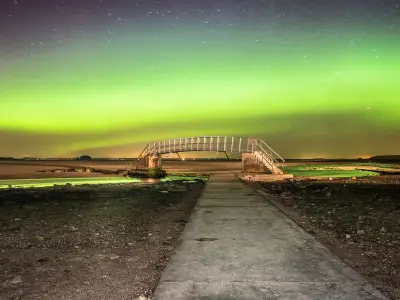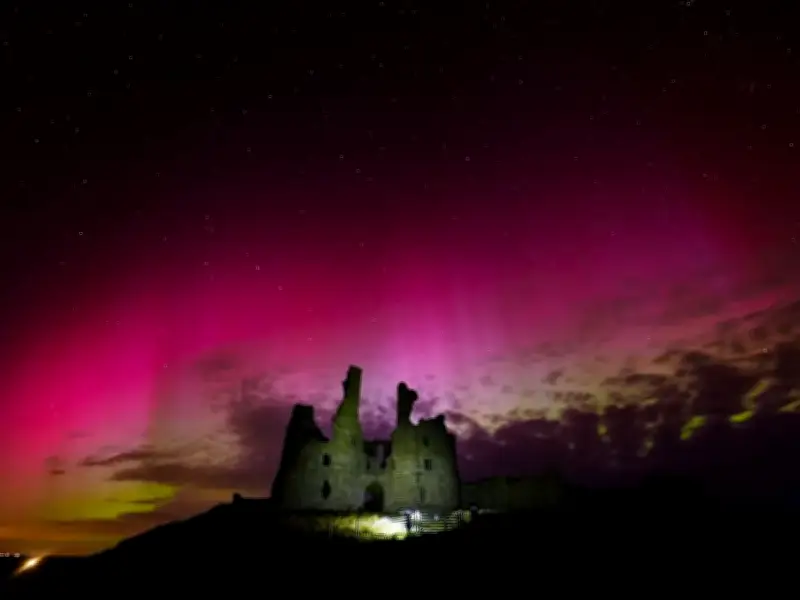
The Northern Lights put on a spectacular display across the North East on Saturday night, with skies turning green, purple and blue as the aurora danced across the horizon. Readers across the region, from Northumberland down to County Durham, were out in force to capture the show, armed with professional cameras or even just smartphones.
Aurora viewing tips and 2026 outlook
One benefit of the nights drawing in as winter approaches is the added chances to spot the Aurora Borealis. On cloudless nights without moonlight, the astounding colours are more likely to be visible if solar conditions are right. For those who missed Saturday's light show, 2026 is estimated to be a highlight year for aurora watchers, thanks to the Sun being in a heightened state of activity as part of its 11-year natural cycle.
The Northern Lights are caused by activity on the surface of the Sun. Solar storms emit clouds of electrically charged particles, some of which eventually collide with the Earth. While most particles are deflected, some are captured by the Earth's magnetic field and accelerate toward the north and south poles, creating aurora activity concentrated near the magnetic poles.
What causes the colours
The different colours of the Aurora Borealis are due to the gases in our atmosphere. The green colour is due to oxygen, while hints of purple, blue or pink are caused by nitrogen. Lancaster University's Department of Physics runs a website called AuroraWatch UK, which estimates the likelihood of an aurora being visible based on geomagnetic activity.
However, knowing exactly when to spot the Aurora Borealis can be a little hard. That's why the Chronicle has collected some of the photographs readers have shared of their view of the stunning skies. The images show a stunning view of the North East at night, from Dunstanburgh Castle to Amble Pier, the Angel of the North, and beyond.