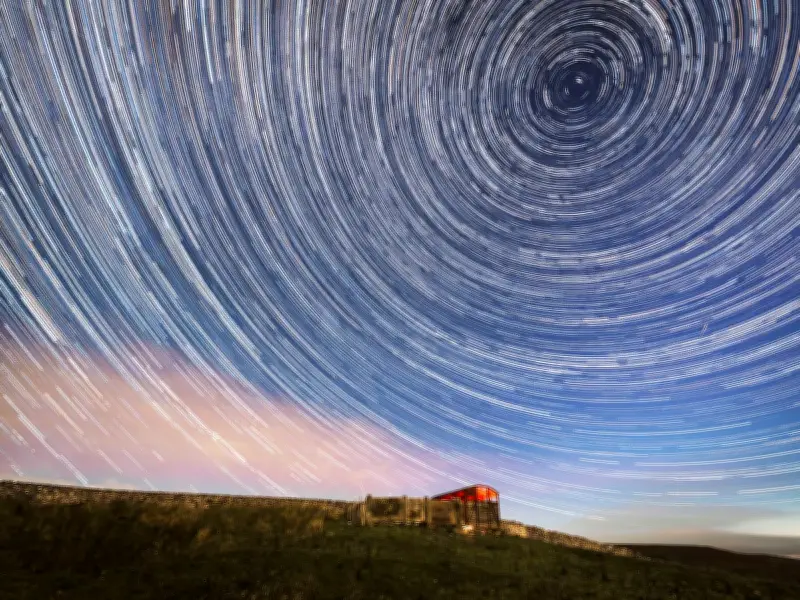
The Perseid meteor shower, peaking on August 12-13, offers a spectacular show with up to 100 meteors per hour. This year, a new moon coinciding with the peak makes viewing conditions even better.
What Causes a Meteor Shower?
A meteor shower occurs when thousands of space rocks enter Earth's atmosphere, falling from the tail of a passing comet. The Perseids, visible every July and August, are caused by the Swift-Tuttle comet.
Historical Interpretations
Ancient Romans believed shooting stars were the "seed" of the fertility god Priapus, blessing crops for the harvest. Christians later called them the "tears of Saint Lawrence," a Roman executed on August 10, 258 AD. The "coal of Saint Lawrence" was said to appear under plants the night before his anniversary.
Notable Meteor Storms
The Leonid meteor shower, occurring every November, usually produces 10-15 meteors per hour. But on November 12-13, 1833, known as the "night the stars fell," meteors sparked panic across North America as 150,000 rocks per hour fell. Witness Eliza Lyman wrote: "They came down almost as thick as snowflakes and could be seen until the daylight hid them from sight." The greatest meteor storm in recorded history occurred on November 17, 1966, when 40 rocks per second streamed across the US sky for 15 minutes.
Halloween Fireballs and Airbursts
The Taurid meteor shower, from comet Encke, produces "Halloween fireballs" that may indicate larger objects in the stream, posing a risk of "airbursts." The Tunguska Event of June 30, 1908, an airburst 1,000 times more powerful than an atom bomb, flattened 80 million trees across 830 square miles of Siberia.
Comets as Omens
Comets have long been seen as harbingers of disaster, giving us the word "disaster" from Greek meaning "bad star." Norse mythology said space rocks were chunks of bone from the giant Ymir. The Aztecs saw comets as bad omens, and ancient Chinese emperors employed staff to watch for them as signs of imbalance.
Halley's Comet
Halley's Comet, visible every 75 years, is woven into the Bayeux Tapestry, foretelling King Harold's defeat in 1066. It was blamed for the Black Death in 1347 and a fire in New York in 1835. In 1910, panic ensued when its tail was found to contain cyanogen. It is next due on July 28, 2061.