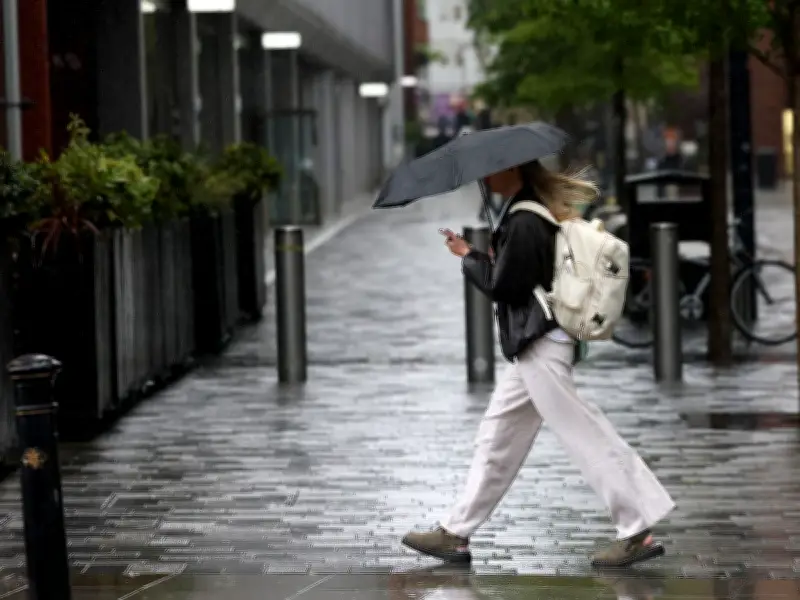
Parts of Greater Manchester are set to be hit with heavy rain today following England's driest July on record. Met Office maps show heavy showers passing eastwards across the region on Tuesday afternoon (August 4).
Driest July Since 1836
It comes as England and Wales have had their driest July in records dating back to 1836, provisional statistics from the Met Office show. In July, 19 counties across England had effectively no rainfall, recording 1mm or less across the whole of the month, figures show.
England as a whole had just a tenth of the average rainfall for the month, while Wales saw just nine per cent of the average, with both countries seeing less than half of the rainfall in the previous record dry July in 1911.
Forecast for Greater Manchester
Now, outbreaks of rain and showers are forecast on Tuesday in Northern Ireland, Scotland, western England and Wales. Temperatures are also expected to decrease gradually in the second half of the week. However, the Met Office has forecast a dry day for much of the Midlands, the east and south-east of England with warm sunshine and high humidity.
In Greater Manchester, Met Office maps show heavy rainfall hitting the region from around 1pm, with the heaviest showers - between 16-32mm of rain an hour - first seen around Bolton. Around an hour later, the heaviest showers are forecast in Manchester, with heavy rain set to continue throughout the afternoon and into the evening.
Heat Health Alerts
Temperatures in Greater Manchester are expected to reach 25C on Tuesday. It comes as the UK Health Security Agency (UKHSA) has issued a yellow heat health alert for the North West until Wednesday (August 5), with yellow alerts also in force in the South West, West Midlands, and Yorkshire and The Humber. The UKHSA also has amber heat health alerts in place for the East Midlands, East of England, South East and London until Wednesday morning.
Drought and Farming Concerns
The summer of extreme weather has seen multiple heatwaves and the whole of Wales and half of England plunged into drought. Farming leaders have warned it is “one of the most severe droughts many farmers and growers have lived through”, with poor yields, struggles to access water for fruit and vegetables and livestock keepers using winter feed for their animals. The National Farmers’ Union (NFU) has demanded urgent action to secure water supplies for homegrown food production.