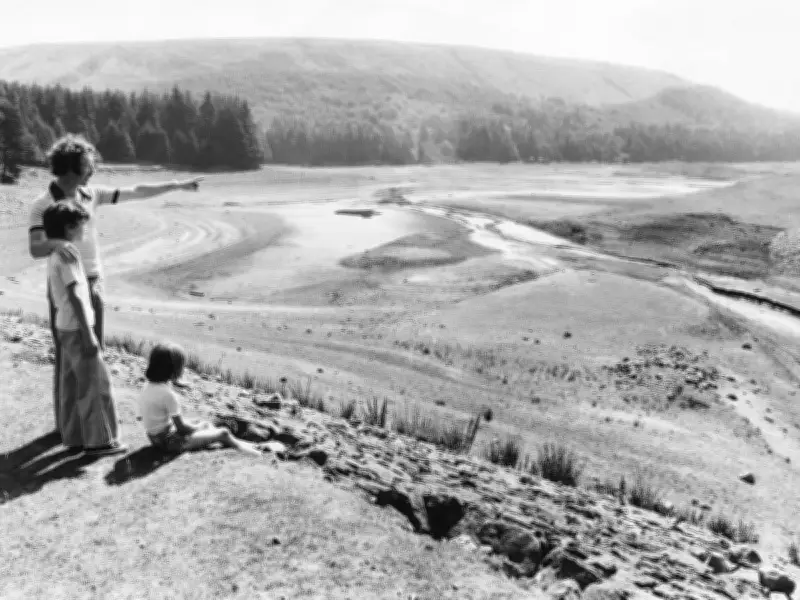
Fifty years on, the summer of 1976 remains the benchmark for extreme heat in Wales, despite the record-breaking temperatures of 2026. That year, Wales came perilously close to running out of water, with supplies cut off to hundreds of thousands of people. Children rode bikes on the empty riverbed of the Taff, forests and mountains burned, reservoirs dried up, and the nation endured severe water shortages.
Record-Breaking Heat and Drought
The summer of 1976 was the second driest since records began, but it is the searing heat for which it is most remembered. Across the UK, multiple locations recorded heatwave spells lasting over two weeks. Cheltenham in Gloucestershire experienced temperatures exceeding 32°C for seven consecutive days. Other areas, such as Bedfordshire and Heathrow, saw 16 consecutive days of temperatures above 30°C from June 23 to July 8.
In Wales, Gogerddan in Ceredigion and Cilfynydd in Rhondda Cynon Taf recorded seven days of temperatures above 30°C. More recently, Cardiff and St Athan experienced a heatwave in August 2022 with temperatures consistently exceeding 30°C.
Water Rationing and Bans
In July 1976, the Welsh National Water Development Authority announced that 400,000 people would have their water supply cut off at night. A ban was imposed on washing cars, watering flower beds, tennis courts, bowling greens, and golf courses. The drought finally ended on August 31, but water rationing continued in parts of Wales until November.
The crisis prompted the rise of the “midnight gardener,” with families watering plants in the dead of night to avoid detection. At Talybont reservoir, superintendent Len Jones oversaw dwindling supplies. The Brecon reservoir, north of Merthyr, had just 14 weeks of water left.
Wildfires and Environmental Impact
The hot weather sparked devastating wildfires. A fire at Trefil, at the top of the Sirhowy Valley, destroyed tens of thousands of trees. Gwydir Forest in Snowdonia also suffered, as an aerial view of billowing smoke showed. The parched landscape even revealed the remains of the village of Llanwddyn at Lake Vyrnwy, which had been submerged since the construction of a dam in 1888.
Comparison with 2026
The summer of 2026 has broken its own records, including a record eight days with temperatures exceeding 34°C, surpassing the previous record set in 1976 and 2020. It is also the first year in the UK to see temperatures reach 35°C or higher in May, June, and July. This has led to multiple health alerts, including a severe “red” alert issued by the UK Health Security Agency (UKHSA), with schools closing as a result.
While schools have closed in 2026 due to heat, in 1976 closures were driven by water shortages. Public fountains became swimming pools, and beaches like Porthcawl and Barry Island were packed. Despite the disruption, many nostalgically recall that in 1976, people “just got on with it.”