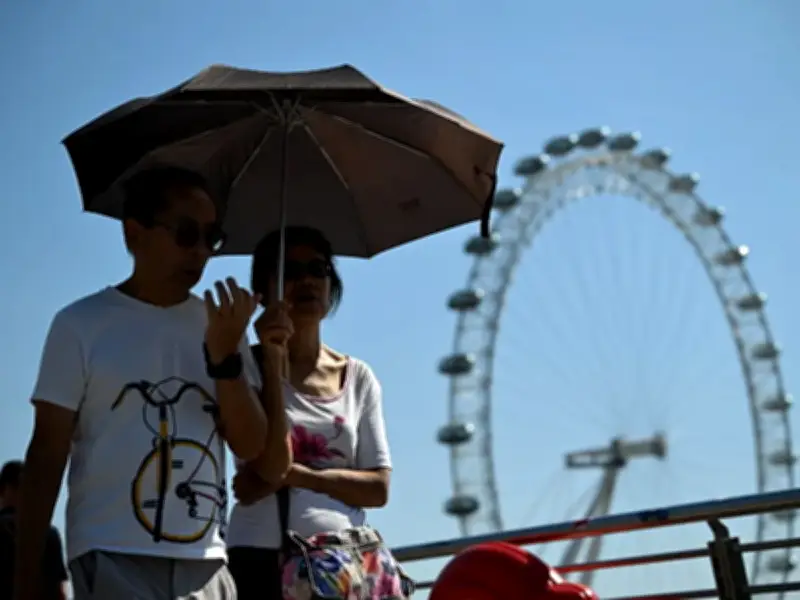
The UK will not be getting a sixth and final heatwave of the year, but forecasters say temperatures will rise sharply over the next few days. Five sweltering periods between May and August left much of the country in drought, sparking wildfires, hosepipe bans and travel disruption, and another had not been ruled out in September.
While it will feel summer-like again, highs of only 26C are expected, and only for a few days. The Met Office points out that while a short spell of warm weather will arrive over the coming days, the conditions are not likely to fully satisfy the official structural requirements for a heatwave.
Warm and humid weekend ahead
For a heatwave to be triggered, the UK needs at least three consecutive days of temperatures surpassing particular regional thresholds, such as 28C in Greater London. Warm and humid conditions are expected over the weekend and into Monday before unsettled Atlantic weather returns, bringing typical autumnal downpours and stronger winds, especially to the north and west.

BBC weather forecaster Ben Rich says conditions are about to get warmer but doubts the high temperatures will stick around. Explaining that it will feel warm and muggy over the next few days, he said: "On Sunday, rain may linger for a while in southern England but should clear to leave a dry afternoon for much of the UK with sunny spells and light winds."
"Temperatures may drop slightly in the northern half of the country but rise a little further south. Parts of Wales, the Midlands and southern England could reach 23-25C," he added.
Record-breaking summer confirmed
"Monday could be even warmer with highs of 22-26C across much of England and Wales, and 20C likely in parts of Scotland and Northern Ireland," Rich said. "However, while this will undoubtedly feel warm, it will remain below the criteria for a heatwave. This would require three consecutive days of temperatures above a threshold which varies from 25C in Scotland and Northern Ireland to 28C in the London area."
The Met Office has confirmed that summer 2026 became the hottest on record for the UK, following repeated bouts of extreme heat that surpassed the record set just the previous year. The relentless periods of high pressure and parched conditions also led the Environment Agency to declare official droughts across vast swathes of England and Wales throughout the summer.
El Nino concerns for 2027
It comes as experts say the brewing El Nino is expected to last well into 2027, and they fear it will be so strong it could devastate communities and economies. The warning follows predictions that the "most intense" event in living memory could bring storms, drought and record heat.
It could potentially be powerful enough to switch rainfall and temperature patterns worldwide, which is likely to fuel extreme weather. El Nino is a natural climate pattern and is typically declared when sea temperatures in a key part of the tropical Pacific rise at least 0.5C above the long-term average, impacting conditions on all continents.
The weather phenomenon typically takes place every two to seven years and can last up to nine months. It often develops between March and June, strengthens through the autumn, and reaches peak intensity around November.