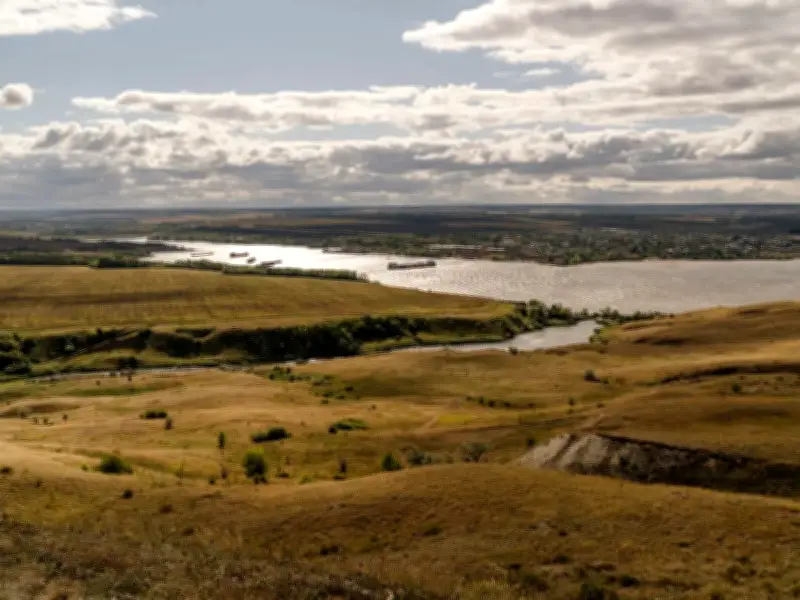
The Volga is the longest river in Europe, flowing through central and southern Russia. Its basin sprawls across two-fifths of the European part of Russia.
The river begins in the Valdai Hills as a tiny trickling spring, before turning into the Volga. It winds for 3,531 kilometres through forests and steppes before emptying into the Caspian Sea, which is not a sea at all, but a colossal lake.
Connected to five seas by canals
The river is connected to five different seas via an intricate network of manmade canals built over the centuries, although the Caspian is its main and natural mouth. The canal system allows ships to travel from the Volga to the Black Sea, the Sea of Azov, the Baltic Sea and the White Sea.
A wildlife sanctuary and caviar epicentre
The sprawling Volga Delta, where the river splits into more than 500 channels, is a world-famous wildlife sanctuary. It is a spawning ground for the Beluga sturgeon, which means the lower stretches of the Volga are the epicentre of wild black caviar, one of the most sought-after and expensive delicacies in the world.
A lifeline during World War II
The river was also a lifeline during World War II, providing supplies for Russian troops during the Battle of Stalingrad. The Soviet Army was pinned against its west bank, so all supplies had to be ferried across the mile-wide stretch of water under constant barrage from German artillery.
As winter set in and the river began to freeze, it became too icy for boats to cross but not yet thick enough for trucks to drive on. Russian forces were nearly starved of ammunition until it froze solid. However, as the German army focused its energy on fighting across the riverbank, the Soviets snuck across the eastern side of the river to launch a surprise attack and completely surrounded the German forces.