Initial 2026 Atlantic Hurricane Forecast Predicts Significant US Threat
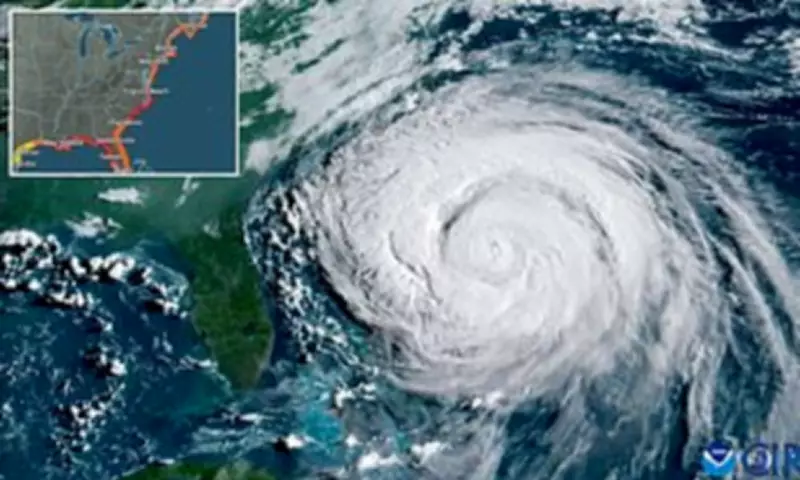
The inaugural predictions for this year's Atlantic hurricane season have been published, with meteorological experts issuing stark warnings that multiple major storms could directly impact the United States. AccuWeather meteorologists announced on Wednesday that they anticipate between 11 and 16 named storms to develop during the 2026 season, with as many as five making direct landfall along the US East Coast or Gulf states.
Expert Urges Universal Preparedness
AccuWeather Lead Hurricane Expert Alex DaSilva emphasized the critical need for comprehensive readiness. 'It's very important that everybody from South Texas all the way to Maine prepares equally for each and every hurricane season, regardless of the forecast,' DaSilva stated. The overall prediction indicates four to seven hurricanes developing when the season commences on June 1, which would be at or slightly below the average for the past thirty years.
However, the AccuWeather team specifically urged Americans in high-risk regions—including Virginia, the Carolinas, Florida, Alabama, Mississippi, and Louisiana—to begin immediate preparations for potentially devastating weather events. Even a limited number of hurricanes could prove deadly and cause billions in damages.

Critical Warnings and Safety Advice
'There is no reason to let your guard down this year. It only takes one storm to cause major damage, disruption and heartache,' DaSilva cautioned. He advised residents to review insurance coverage, safety plans, and local evacuation routes now, while ensuring emergency supplies are fully stocked.
Officials from the National Oceanic and Atmospheric Administration have similarly urged at-risk residents to begin accumulating emergency supplies—including fuel, food, water, and other essentials—well before potential crises create long queues and shortages.
Storm Intensity and Historical Context
Forecasters expect two to four major hurricanes—Category 3 or stronger with winds exceeding 111 mph—to form in the Atlantic between June and November's end. These storms possess significant potential for major property destruction. This year's prediction mirrors the 2025 season, which saw 14 named storms, four major hurricanes, and four US landfalls.
The AccuWeather model specifically highlights elevated risk from 'homegrown development' storms during June and July. Unlike typical hurricanes that originate near Africa, these systems form much closer to the US—often in the Gulf of Mexico, western Caribbean, or just off the East Coast.
The 'Homegrown Development' Threat
Homegrown storms typically develop when regular weather systems drift over exceptionally warm ocean waters, transforming into tropical depressions, storms, or hurricanes. Meteorologists warn that such storms forming near the US coastline could give millions of Southeastern residents less than 48 hours to prepare or evacuate, compared to the one-to-two-week advance notice provided by African-origin systems.
DaSilva noted that a primary driver for increased homegrown storm potential this year is exceptionally warm Atlantic waters from the Carolinas to Florida, throughout the Gulf, and across the Caribbean Sea. Tropical cyclones harness heat from warm ocean waters to rapidly intensify, potentially evolving from disorganized thunderstorms into hurricanes with 75+ mph winds within hours.
'That heat extends hundreds of feet below the surface, providing additional fuel for storms,' DaSilva explained. 'As a result, we are very concerned about the risk of rapid intensification this hurricane season.'
Moderating Factors and Recent History
A key factor that may moderate this hurricane season is the anticipated development of an El Niño pattern in the Pacific Ocean. This natural phenomenon, occurring every few years, creates stronger wind shear over the Atlantic that can disrupt hurricane formation, along with sinking air that suppresses storm development.

In 2025, NOAA initially predicted up to 19 named storms and ten hurricanes—an overestimate, as only five storms reached hurricane strength. However, three of those—Erin, Humberto, and Melissa—attained Category 5 status with winds exceeding 157 mph. The 2025 season resulted in 125 fatalities across the Atlantic basin and over $500 million in US damages, primarily from Tropical Storm Chantal in North Carolina.
While the overall number of potential US strikes is projected to be lower in 2026, AccuWeather estimates that the threat of direct US impacts remains elevated, necessitating vigilant preparation from all coastal communities.