Historic Hawaii Floods Leave Thousands Without Power After Billion-Dollar Storm
More than 2,000 people remained without power on Sunday afternoon following historic flooding in Hawaii, described as the worst in over two decades. Heavy rains battered the islands, exacerbating already saturated soil from a winter storm just a week prior.
Widespread Damage and Evacuations
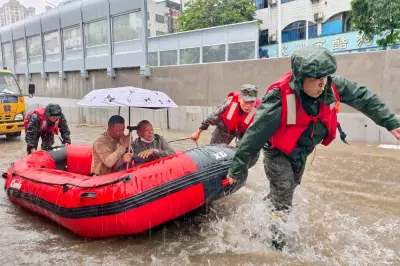
The deluge caused raging waters to lift homes and cars, leading to an estimated $1 billion in damages. Governor Josh Green highlighted that this includes significant harm to airports, schools, roads, homes, and a hospital in Kula on Maui. The storm initially prompted evacuation orders for 5,500 people north of Honolulu, though these were later lifted. Emergency services rescued more than 200 individuals from rising floodwaters.
Power Restoration Efforts Underway
Hawaiian Electric has been actively working to restore electricity. By Sunday afternoon, power was returned to approximately 1,200 customers in Waialua on O’ahu's North Shore. The company had proactively shut off power on Friday due to the flooding. Crews are continuing to assess damage and make repairs, with expectations to restore power to an additional 2,000 people later on Sunday.

On Maui County, about 100 people were without power, while all major outages on Hawai'i Island had been addressed by Sunday afternoon, according to utility reports.
Weather Conditions and Forecast
Hawaii meteorologist Matthew Foster informed The Associated Press that the worst of the storms appears to be over. By Sunday afternoon, weather patterns shifted from widespread showers to scattered rain across Oahu, Maui County, and the Big Island. Forecasts predict less than 5 inches (13 cm) of rain for the Big Island and 1 to 2 inches (3-5 cm) in other areas.
Winds are expected to increase from the northeast, where vegetation can better handle rainfall. Foster noted that it will take a couple of days for moisture to move past the islands, with drier and more typical March weather anticipated by Wednesday. While additional flooding could occur, it is likely to be isolated rather than widespread.
Ongoing Precautions and Climate Context
A boil water notice remained in effect on Sunday for North Shore areas from Mokuleia to Turtle Bay, with residents encouraged to report damages to local authorities. The flooding has been attributed to "Kona lows," winter storm systems with southerly or southwesterly winds that bring moisture-laden air, responsible for deluges over the past two weeks.
Experts emphasize that the intensity and frequency of heavy rains in Hawaii have increased due to human-caused global warming, highlighting broader environmental concerns amid this natural disaster.