Storm Dave Prompts Major Lake District Rescue Operation
A significant multi-agency rescue mission was initiated on Easter Saturday after an inflatable canoe capsized on Derwentwater in the Lake District during Storm Dave. Three individuals, who were not wearing life jackets, were thrown into the treacherous waters, prompting a large-scale emergency response.
Dramatic Derwentwater Incident
The incident occurred at approximately 3pm on Saturday, April 4, 2026, as Storm Dave battered parts of the UK, including the North West. The trio had planned to camp on a Lakeland island but found themselves in peril when their canoe overturned in rough conditions. One person managed to swim to shore, another reached St Herbert's Island, while the third remained stranded in the water.
Keswick Mountain Rescue Team deployed 16 members to assist, alongside personnel from the Greater North Air Ambulance Service, North West Ambulance Service, Cumbria Police, Cumbria Fire and Rescue, and the Maritime and Coastguard Agency. Additional support came from Whitehaven Coastguard Rescue Team, Maryport Coastguard Rescue Team, and an HM Coastguard helicopter.
All three individuals were safely rescued and assessed by medical teams, requiring no hospital treatment.Multiple Storm-Related Incidents
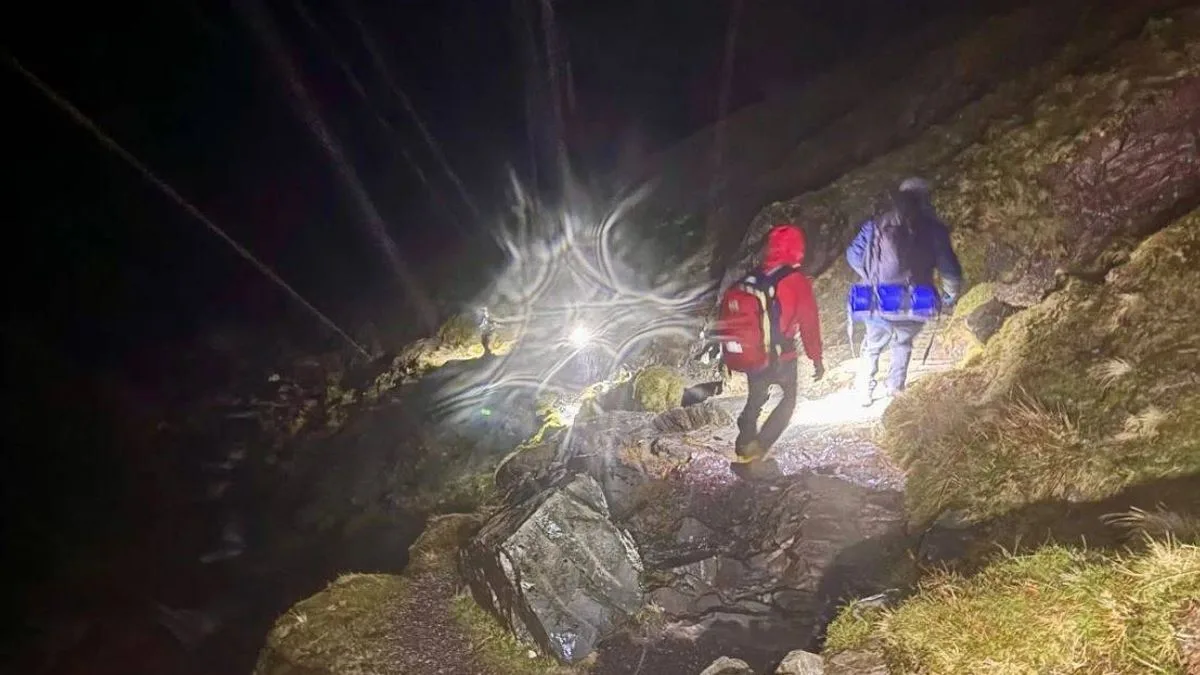
This was one of several emergencies that kept Keswick Mountain Rescue Team busy during the storm. Later that evening, at around 9.51pm, they were called to Sprinkling Tarn near Seathwaite, where two teenagers were wild camping. Their tent had been destroyed by high winds, leaving them cold, wet, and stranded.
Due to communication difficulties and fallen trees blocking paths, rescuers divided into two groups and eventually located the teenagers sheltering in a stretcher box on Sty Head. They were unharmed but cold. During this operation, rescuers also assisted a lone camper near Sprinkling Tarn who needed help getting off the hill.
All three individuals were escorted down to Seathwaite and returned to their vehicles after a four-and-a-half-hour rescue mission.
Further Camping Disasters
Just three minutes after the Sprinkling Tarn alert, at 9.54pm, rescuers were called to High How's Wood in Grange-over-Sands. A 54-year-old woman, three days into walking the Cumbria Way, had her camp destroyed by gusts from Storm Dave while she was sheltered in woods below Castle Crag in Borrowdale.
She dialled 999 for mountain rescue guidance and was advised to head north towards Grange, where a team met her and transported her to Keswick to find accommodation.
Langdale and Ambleside Mountain Rescue Team were also active, responding to Tarn Crag at Far Easedale at 9.49pm after a young man suffered a suspected lower leg fracture. Winds and heavy rain from Storm Dave made conditions difficult, with the casualty becoming hypothermic and his friend very cold. Kendal Mountain Rescue Team assisted in evacuating the pair.
Safety Warnings Issued
Rescuers emphasised that these incidents serve as a stark reminder of the importance of proper preparation. "High-altitude camping in a named storm carries extreme risks, not just for the campers, but for the volunteers who have to navigate blocked roads and dangerous winds to reach them," stated Keswick Mountain Rescue Team.
They urged outdoor enthusiasts to always wear buoyancy aids, check weather forecasts thoroughly, and ensure they possess the correct skills and equipment for conditions, especially when severe weather is predicted. The clear storm warnings in place prior to the incidents highlight the need for vigilance and responsible planning.
The rescue operations involved coordination across multiple agencies, including police, fire, ambulance, mountain rescue, coastguard, and helicopter services. Support from local entities like the Keswick Launch and Derwent Water Marina was also crucial in navigating choppy waters during the Derwentwater rescue.