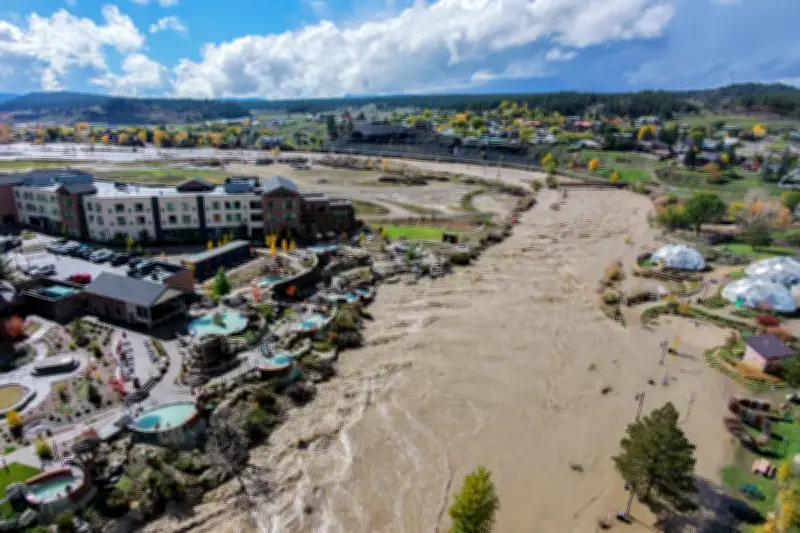
Severe flooding in the Four Corners region on Friday triggered water rescues, including from rooftops, and impassable roads, with some residents ordered to evacuate low-lying areas of Colorado and New Mexico, while others were advised to shelter in place until water levels subside.
The flooding followed several days of heavy rain that swamped dozens of homes in Utah. Earlier in the week, tornadoes in Arizona blew off roofs, knocked trees onto houses, and downed power lines. At least one person was injured.
Rescues and Rising Waters
An unknown number of people were rescued overnight and continued to be rescued on Friday by New Mexico guard boats, helicopters, and amphibious vehicles, according to Devin Neeley, a San Juan county spokesperson.
“We’re picking people off of roofs and pulling people out of houses that have 3 or 4ft (1-1.5 metres) of water in them, and there’s more water coming,” Neeley said.
Skies were clearing, but rivers continued to rise, with forecast crests surpassed, he added. “This is serious. We’re still sending deputies as I speak to get people out of their homes right now. In fact, our sheriff is damn near going to lose his home today.”
Evacuations and Warnings
About 600 households were told to evacuate in Farmington, where areas along the San Juan River were closed off, said city spokesperson Gina Intoppa. “We are kind of all hands on deck,” she said.
In a Facebook post on Friday morning, Farmington police said: “Agencies have been working through the night and are doing everything they can to respond as quickly as possible.”
A flood warning in Rio Chama noted: “The current extent of the flooding along the San Juan River in New Mexico has not been observed since before the completion of Navajo dam in 1962.” On Friday, the National Weather Service issued a flood warning across west central Montezuma county in southwestern Colorado.
Impact Across the Region
Farmington is the biggest city in the Four Corners, the only place in the US where four states – Colorado, New Mexico, Arizona, and Utah – meet. National guard members were deployed to assist with flooding in south-west Colorado, where rising waters prompted mandatory evacuations along four rivers, including the San Juan River through Pagosa Springs. The resort town, famous for its riverside hot springs, suffered flooding from a similar weather pattern a year ago.
“Please shelter in place, water levels are beginning to recede, but many roads are impassable and unsafe for travel,” the Archuleta county sheriff’s office posted online on Friday. The evacuation check-in center was not accessible, but the PLPOA Clubhouse at 230 Port Ave, Pagosa Springs, was open as an evacuation location.
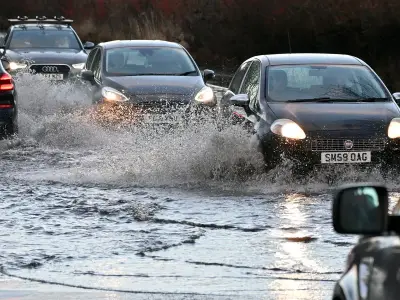
In nearby Rio Grande county, trailers at a campground were surrounded by high water, and trucks were partially submerged in other areas. Some homes along the Conejos River in the San Juan Mountains experienced up to 7ft of interior flooding, while homes in the South Fork area saw water levels reach 4-5ft, the Colorado Sun reported. The small mountain town of South Fork reported a missing bridge that extended over Forest Service Road 380.
Photos posted online by the Colorado Department of Transportation showed a road washout near Silverton on Highway 550, where brown floodwaters surged across a large section of the damaged roadway, Colorado Public Radio reported.
State of Emergency and Cleanup
Colorado’s governor, Jared Polis, declared a disaster emergency in 11 counties in response to heavy rain and flooding in the south-west part of the state.
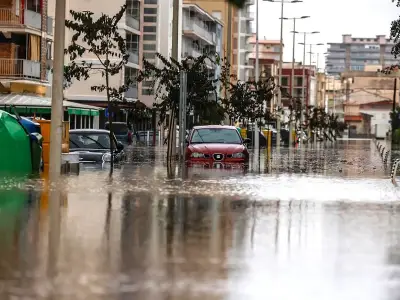
The city of Hurricane in far south-western Utah was cleaning up after declaring a state of emergency on Thursday. Reddish-brown flood water lapped into about 80 homes in a neighborhood and 50 recreational vehicles in an RV park. Surreal scenes included a shipping container drifting slowly down a street. An evacuation order was issued for the Willow Wind RV Park in Hurricane.
Other videos posted online showed people in Hurricane leading horses to safety through murky floodwaters. “The full extent and severity of the damage, as well as the potential displacement of residents, remain under assessment,” Hurricane officials said, adding that the floods have damaged or affected bridges, culverts, public roads, and electrical power boxes.
The flooding was not unexpected, just the latest from two months of heavy rain that ended a summer of drought. While parts of the south-west are rocky with little vegetation and are naturally prone to flash flooding, the recent rains have made flooding everywhere more likely, said Kate Abbott, a National Weather Service meteorologist in Grand Junction, Colorado. “At this point we’re saturated and can’t take too much more without flooding. This is the third or fourth round of this kind of moisture we’ve seen in as many weeks.”
The severe flooding follows weeks of extreme weather across the south-west, including Thursday’s storms in Arizona, which brought golf ball-size hail and tornadoes, and a prolonged heat dome that pushed temperatures across the region into the triple digits. Meanwhile, California was gripped by an unprecedented heatwave last week, with downtown Los Angeles reaching a record 104F, surpassing the previous high of 101F set in 1953.