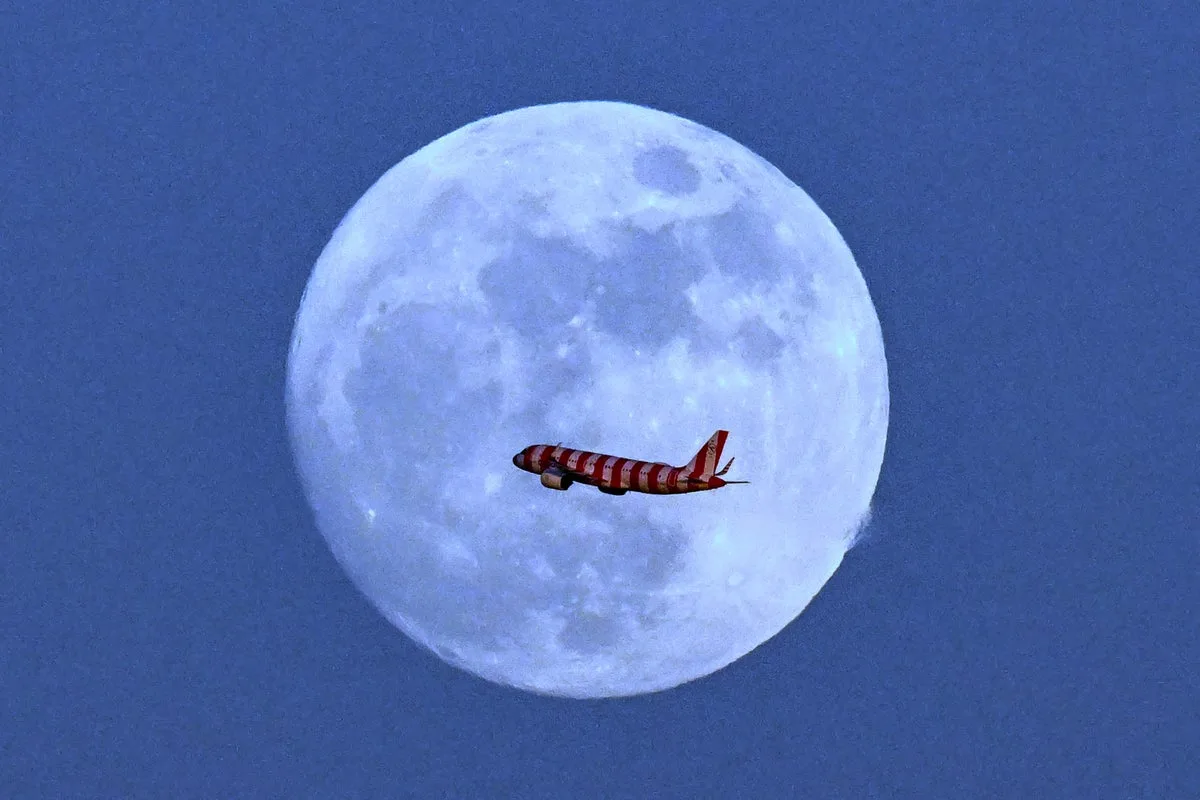
A rare celestial event is set to occur this weekend as a Blue Moon coincides with a micromoon, a combination not seen again until 2053. The full Moon on 31 May will be the second full Moon in the same calendar month, making it a Blue Moon, and it will also be the smallest full Moon of the year, classified as a micromoon.
A micromoon happens when a full Moon is near the furthest point in its orbit around Earth, known as apogee, making it appear slightly smaller and dimmer than usual. The Moon will reach apogee on 1 June, at a distance of 406,366 kilometres (252,504 miles), appearing up to 14% smaller than a supermoon.
Despite its name, the Moon will not appear blue. The term 'Blue Moon' refers to the occurrence of two full Moons in a single month, a phenomenon that happens roughly every two to three years. The last Blue Moon was on 31 August 2023, and the next will be on 31 December 2028, but the combination of a Blue Moon and a micromoon will not be repeated until 2053.
The full Moon will peak at 9:45am BST on Sunday, though it will appear full for a couple of days either side. In the UK, moonrise is expected around 10pm on 31 May. The Met Office forecasts patchy cloud for Sunday night, but clearer skies over most of England and Wales on Friday and Saturday night.
Astronomers recommend viewing from a location with a clear view of the southern horizon. Alan Jones of 365 Astronomy advised: 'The Blue Moon reaches peak illumination this Sunday, although the best time for stargazers will be on Saturday evening, when the Moon rises shortly after sunset and stays visible throughout the night. It will sit relatively low in the southern sky, so choosing a spot with clear views of the eastern and southern horizon, away from tall buildings and trees, will provide the best experience.'