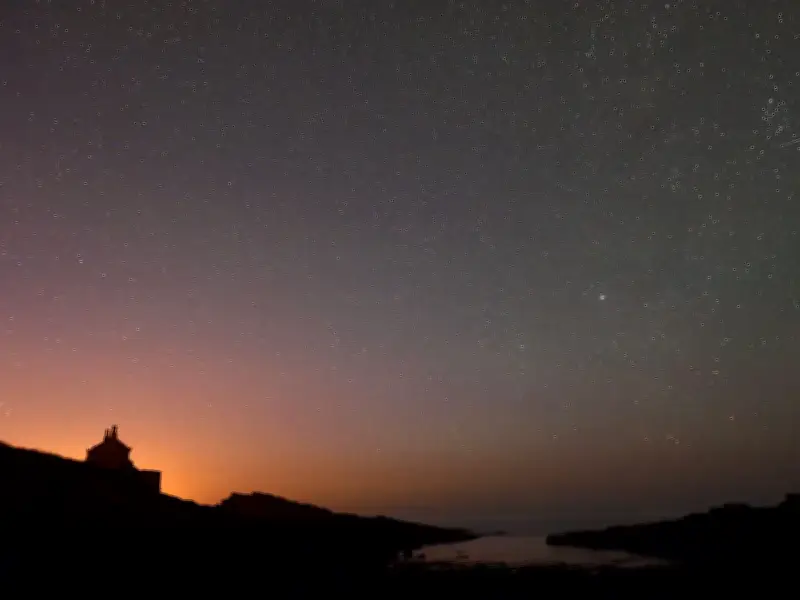
The Orionid meteor shower will be visible across the globe this month, according to Royal Museums Greenwich. The display is active from October 2 to November 7 and is considered one of the most reliable meteor showers in the annual calendar.
What causes the Orionid meteor shower?
The spectacle occurs every year around the same time when Earth passes through a trail of dust and debris left behind by Halley's Comet. Tiny particles travel through the Earth's atmosphere at high speed, around 41 miles per second, then heat up and produce streaks of light across the night sky that we see as meteors.
Halley's Comet is one of the most famous comets in our Solar System and has been observed from Earth for centuries. It only appears every 75-76 years, making it a once-in-a-lifetime event. While the comet itself is rare, Earth encounters material left behind by it twice a year: the Eta Aquariid meteor shower in May and the Orionids in October.
When and how to see the Orionids
The Orionid meteor shower will reach its peak on October 21. Royal Museums Greenwich said the meteors can be seen with the naked eye, so no binoculars or telescope are needed, though you will need to allow your eyes to adjust to the dark.
The best time to witness the spectacle is at the darkest point of the night, away from any street lights. Advice said: "The meteors can be seen in all parts of the sky, so it's good to be in a wide open space where you can scan the night sky with your eyes."