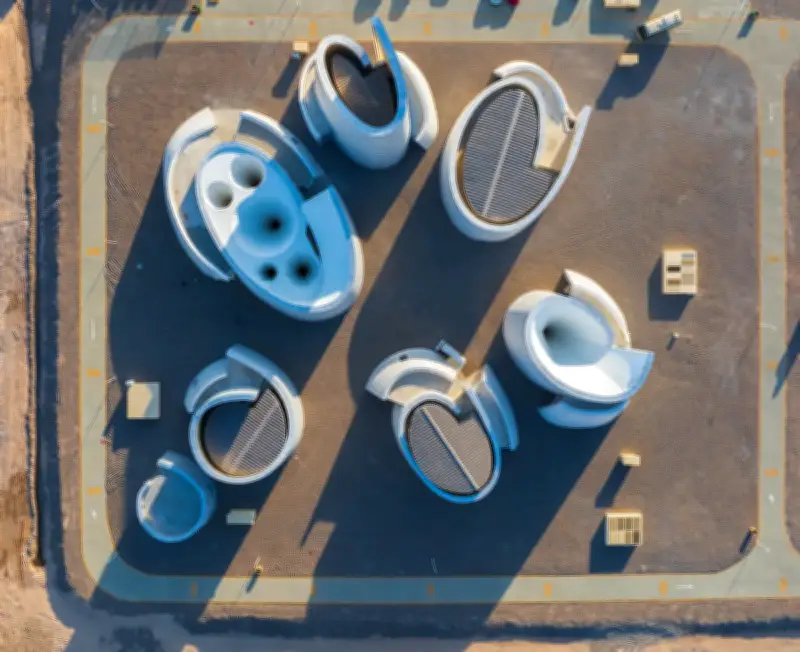
The Hami Pterosaur Museum, nestled in the Gobi desert in north-west China, showcases hundreds of pterosaur fossils while operating sustainably in an extreme environment. Designed by Beijing-based architecture firm Turenscape, the museum uses underground halls, light funnels, and solar farms to minimize energy consumption.
Design and Construction
Most of the 8,000-square-metre museum is built 8 metres into the ground, where temperatures are lower, helping it stay cool in summer and warm in winter, according to Huai Kaifeng, an architect at Turenscape. The region's air temperatures can exceed 55C, with surface ground temperatures reaching 80C, says Wang Xiaolin, the museum's director and a palaeontologist at the Chinese Academy of Sciences.
Being largely underground with seven above-ground entrances allows the museum to use energy efficiently, says Wang Yujia, a landscape architect and associate professor at the University of Nebraska–Lincoln, who is not involved in the project. Most of the structure avoids direct exposure to wind, sand, and solar heat, reducing the need for air-conditioning.
Energy Efficiency and Solar Power
The museum has natural ventilation shafts, and its electricity usage for air conditioning is cut by 94% compared with an above-ground counterpart, according to Turenscape estimates. This saves 223,421kWh of electricity annually, enough to power an average UK home for 89 years. The museum also uses giant, translucent funnels to maximize natural light, reducing artificial lighting needs by nearly 50%.
The museum has its own micro power grid with a solar farm about 1km away, expected to generate over 22.4GWh of electricity a year, meeting its own demand. It remains connected to Hami's power grid for energy security. The museum also recycles grey water on site, as "water is precious out here in the Gobi," says Xiaolin.
Architectural Significance
The museum was one of the last designs by the late Chinese landscape architect Kongjian Yu, founder of Turenscape, known for China's "sponge cities" concept. Jiinyi Hwang, chief architect at Turenscape, notes that as deserts and arid zones expand, buildings must adapt to harsh climates rather than rely on sealed boxes and mechanical control, which consume resources these landscapes cannot spare.
Wang Yujia adds that the museum exemplifies designing buildings to work with natural conditions, citing similar projects like a floating pavilion in Rotterdam and a park in Bangkok. For arid areas, such adaptation is crucial, as basic infrastructure and resources may not be available, and "money is not magic."