US Aims for Lunar Nuclear Power by 2030 Amid Space Race with China
The Trump administration is intensifying efforts to establish nuclear power in space, releasing updated federal guidance just after the historic Artemis II lunar mission. This move is designed to ensure the United States maintains a competitive edge over China in the new space race, which will shape future rules as humans work toward permanent moon bases and Mars missions using nuclear-powered spacecraft.
Why Nuclear Energy is Essential for Lunar Operations
Nuclear energy is considered critical for sustaining life and work on the moon due to limited solar power availability and extended lunar nights lasting 14.5 Earth days. According to NASA, nuclear reactors can be positioned in permanently shadowed regions to provide continuous power generation, overcoming the challenges of lunar environments.
Administration's Strategic Timeline and Objectives
The guidance, issued on Tuesday, directs the Departments of Energy and Defense, the White House Office of Science and Technology Policy, and NASA to begin steps for safely deploying nuclear reactors in orbit as early as 2028, with lunar launches targeted by 2030. This aligns with a December executive order from President Donald Trump. NASA Administrator Jared Isaacman, a former SpaceX astronaut, emphasized the urgency in a social media post, stating, "The time has come for America to get underway on nuclear power in space."

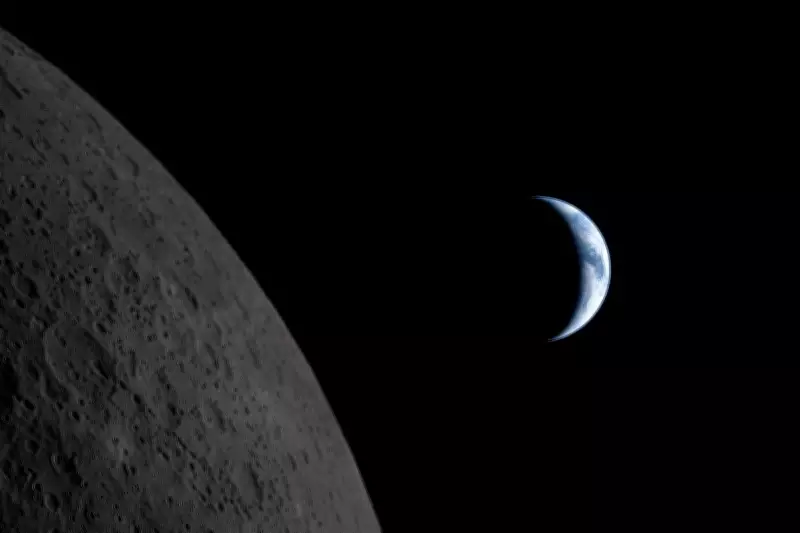
The Earth is seen behind the moon in this image captured by the Artemis II crew. After the success of the historic lunar flyby, the Trump administration is setting plans in motion for lunar nuclear reactors (NASA)
Key Initiatives and Design Competitions
The guidance mandates that NASA and the Department of Defense create design competitions to enable near-term demonstrations of low- to mid-power space reactors, paving the way for high-power reactors in the next decade. Within the next month, NASA is instructed to initiate a program developing fission surface power reactors, which provide at least 40 kilowatts of continuous electricity on the moon, and prepare options for demonstrations using nuclear electric propulsion technology.
This NASA concept image shows nuclear reactors on the surface of the moon, next to the Earth and Mars. Fission surface power will help provide continuous energy on the moon (NASA)
Within 60 days, the Department of Energy must assess the nuclear industry's readiness to produce up to four space reactors within five years, including design, component delivery, and fuel allocation, with recommendations to address any gaps. Additionally, the OSTP is tasked with developing a roadmap within 90 days to identify obstacles to achieving these objectives.
Historical Context and Feasibility Concerns
Nuclear power in space is not new, having been used since the 1960s, with the Department of Energy and NASA successfully demonstrating a nuclear reactor power system in 2018 under the first Trump administration. However, experts express skepticism about the feasibility of recent goals within the allotted timeline.
National security analyst and nuclear expert Joseph Cirincione criticized the proposal, telling The Independent last August, "The whole proposal is cock-eyed and runs against the sound management of a space program that is now being starved of money." He estimates it could take up to 20 years to realize a nuclear reactor on the moon.
Another NASA illustration shows the set up of a lunar nuclear reactor (NASA)
In contrast, Dr. Bhavya Lal, a former NASA associate administrator, argued that a lunar nuclear reactor by 2030 is possible with an estimated cost of $3 billion. Meanwhile, NASA is targeting 2028 for the first Artemis lunar landing, underscoring the ambitious pace of these initiatives.