Space Mirrors for 'Sunlight on Demand' Could Disrupt Global Sleep Cycles, Scientists Warn
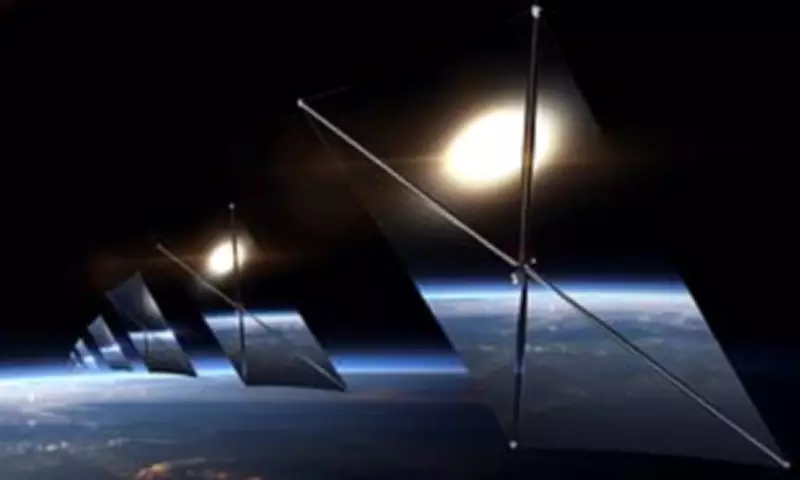
Ambitious plans to launch tens of thousands of mirrors into space to provide "sunlight on demand" have sparked a major scientific backlash, with experts warning the scheme could disrupt sleep patterns and ecosystems on a planetary scale. California-based startup Reflect Orbital is seeking regulatory approval to deploy a prototype 60-foot mirror into orbit, with the ultimate goal of creating a constellation of 50,000 such devices by 2035.
The Reflect Orbital Vision
Reflect Orbital has raised over $28 million from investors for its vision of harnessing sunlight that normally passes Earth by and selling illumination as a service. The company plans to launch its first prototype to an altitude of 400 miles, where it would unfurl and illuminate a patch of Earth approximately three miles wide.
Chief Executive Ben Nowack told the New York Times: "We're trying to build something that could replace fossil fuels and really power everything." The company envisions multiple applications for its technology:

- Enabling solar power plants to operate 24 hours a day
- Providing emergency lighting for disaster zones
- Replacing conventional street lighting
- Extending agricultural growing seasons
- Supporting defense operations with uninterrupted solar power
By the end of 2027, Reflect Orbital plans to launch two additional prototype mirrors, with ambitions to deploy 1,000 larger satellites by 2028, 5,000 by 2030, and the full constellation of 50,000 orbiting mirrors by 2035. The company would charge approximately $5,000 per hour of sunlight from a single mirror for customers signing annual contracts of at least 1,000 hours.
Scientific Opposition Mounts
Leading researchers from multiple international scientific societies have raised serious concerns about the potential consequences of such large-scale orbital lighting. In letters to the US Federal Communications Commission (FCC), experts representing about 2,500 researchers from more than 30 countries have urged regulators to conduct comprehensive environmental reviews.
The presidents of four prominent biological rhythm societies - the European Biological Rhythms Society, the Society for Research on Biological Rhythms, the Japanese Society for Chronobiology, and the Canadian Society for Chronobiology - jointly stated: "The proposed scale of orbital deployment would represent a significant alteration of the natural night-time light environment at a planetary scale."
Professor Charalambos Kyriacou, a geneticist at the University of Leicester and president of the European Biological Rhythms Society, told The Guardian: "We're saying, please think before you go through with this, because this could have global implications for things like food security. Plants need the night. You can't just get rid of it."
Potential Impacts on Life on Earth
Scientists warn that disrupting natural light-dark cycles could have far-reaching consequences:
- Human Health: Circadian rhythms that regulate sleep and hormone production could be severely disrupted, potentially leading to adverse health consequences
- Animal Behavior: Migration patterns could be confused, with birds potentially flying into deadly cold conditions thinking summer has arrived
- Ecosystem Disruption: Animals might breed at inappropriate times when food is scarce, while hibernating creatures could wake prematurely
- Plant Cycles: Seasonal flowering could become misaligned with pollinator availability
A separate letter from sleep medicine societies emphasized that circadian disruption "is not mere inconvenience, it is a physiological mechanism driving major adverse health consequences." The letter added: "The alternation of light and dark is not a trivial background condition. It is one of the oldest organising principles of life on Earth."

Astronomy and Regulatory Concerns
Beyond biological impacts, astronomers have raised alarms about the potential effects on ground-based observatories. Professor Gaspar Bakos, an astronomer from Princeton University, told the Daily Mail: "It will disrupt ground-based astronomy big time." He noted that even with targeted beams, light would inevitably scatter through the atmosphere, adding to existing light pollution problems.
The campaign group DarkSky warned that such illumination "would introduce an entirely new source of artificial light at night, with far-reaching consequences, including disruption to wildlife and ecosystems that depend on natural cycles of light and dark, as well as serious public safety concerns."
Critically, the FCC's current policy considers that activities in space are not subject to environmental review, creating a regulatory gap that concerns scientists. The international scientific groups have urged regulators to establish limits on satellite reflectivity and cumulative night sky brightness before approving such projects.
Historical Precedents and Future Implications
This is not the first attempt at orbital lighting. In 1993, the Russian satellite Znamya unfurled a 65-foot mirror that reflected a beam of light equivalent to two or three full moons. However, the scale proposed by Reflect Orbital represents an unprecedented intervention in Earth's natural light cycles.
The controversy emerges as the US government considers plans from Elon Musk's SpaceX to deploy up to one million additional satellites in Earth's orbit. While SpaceX has taken steps to reduce satellite reflectivity, Reflect Orbital's mirrors are specifically designed to maximize brightness.
As the debate continues, scientists emphasize the need for thorough environmental assessment and international cooperation to address the planetary-scale implications of altering Earth's natural light environment from space.