Space is becoming an increasingly crowded commercial battleground, with the European Space Agency predicting there will be 100,000 satellites in orbit by 2030, according to David Wilkinson, Director of the National Space Academy, part of the Leicester-based National Space Centre.
Wilkinson, a forensic physicist, said: “It’s extremely busy up there. The European Space Agency is predicting there will be 100,000 satellites in space by 2030.”
Thousands of objects monitored in orbit
He added: “Then you have GPS systems belonging to different countries, military satellites, space stations, human space flights and other traffic. That’s not to mention the space debris - there are about 35,000 objects larger than ten centimetres floating around, including the odd wrench dropped by an astronaut.”
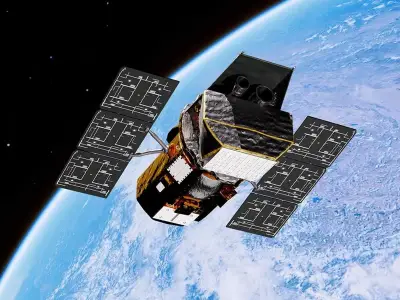
There are now more than 12,000 objects monitored in orbit, 11,500 of which are in low Earth orbit, at an altitude of between 800 and 1,500 kilometres (500 and 950 miles), where many commercial, military, scientific and navigational satellites operate.
New images emerged this week of China’s highly secretive ‘space plane’, whose mission is highly classified, although according to the country’s space agency it is there to “test new technologies”. Wilkinson understands the disquiet about exactly what is orbiting the Earth.
Secrecy and cooperation in space
He explained: “GPS and location satellites only broadcast a signal - they don’t collect data, so it’s all one way traffic. Contrary to sci-fi films, we don’t think any country has satellites precise enough to resolve human faces - yet. In terms of military capabilities, though, they’re a secret I am not party to.”
“I do know that the Americans have also got a space plane that can stay in space for literally hundreds of days, and then return to Earth and land on a runway. What’s it doing? Well, it's run by the US Space Force, so they're not telling anyone.”
Despite the secrecy, Wilkinson pointed out that countries do make efforts to work together, saying: “The Russians still talk to everybody about where their satellites are, so that nothing crushes into each other. It’s worth remembering that we have the Outer Space Treaty of 1967 too, which bans weapons of mass destruction in space.”
Impact of space on Earth
Wilkinson, who lives in Ashby-de-la-Zouch, Leicestershire, travels across the world to inspire and educate young people about science and space. Also a science fiction author, he was fascinated by space as a child, saying: “If you lie and look at the night sky for a long time, you see more and more. It’s a strange experience. That gives you such an impression of what is out there.”
He explained there are four global positioning systems covering Europe, the US, Russia, China and a regional one for India. Each has multiple satellites, with the US leading with 32. All are in the lower Earth orbit and transmit data, which allows devices on Earth to synchronise time - a capability relied upon for maps, financial markets and telecommunications.
Wilkinson said: “If space suddenly stopped working, the instant cost to the UK economy would be £1.4bn a day. The biggest hit would be in transportation and logistics, with massive disruption for aircraft and trains. Transport management systems would be hit and all banking transactions would stop. I can’t see a scenario when all that would happen, but we do need to protect that infrastructure. It’s illustrative of what's up there and how important it is down here.”
Commercial and military satellites
Other satellites enable internet usage, such as the 11,000 belonging to tech billionaire Elon Musk as part of his Starlink internet service, while others monitor the weather, climate change and forecast storms.
In terms of military satellites, used for secure communications, surveillance, reconnaissance and missile warning systems, Wilkinson revealed the US has 247, with Russia having 110 and China 157 - at least those which are declared. The UK has a meagre “five or six.”
He added: “That’s where anti-satellite operations come in. We know different countries have been trying to figure out different ways of destroying the capability of satellites, without blowing them apart and creating further space debris. In September the US said that it had a weapon in space to defend its satellites, but refused to elaborate on what it was.”
Space stations and future missions
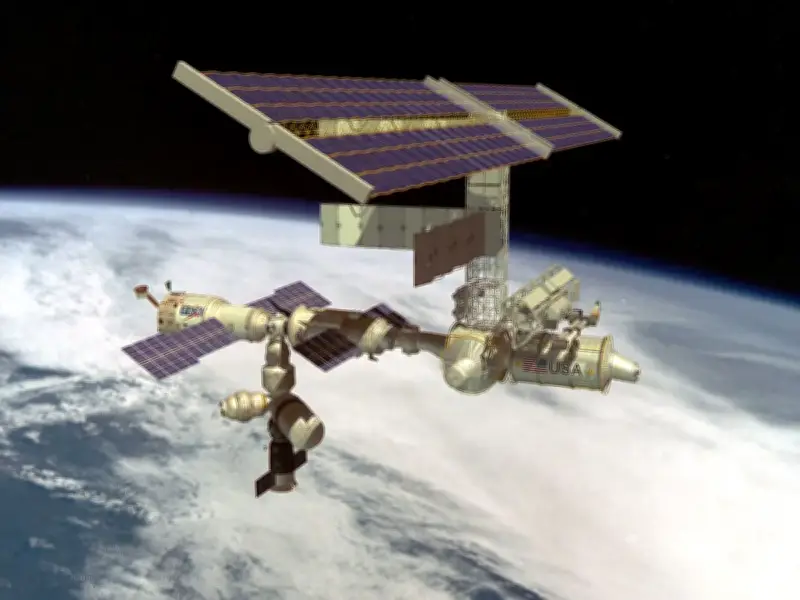
Two space stations regularly orbit the Earth. The International Space Station has been constantly crewed since 2000 and, says Wilkinson, is the fourth brightest object in the sky after the sun, moon and Venus: “They do wall to wall experiments up there. In fact, the UK is one of the countries trying to figure out how to do orbital manufacturing - basically build factories that you launch into space. Build whatever it is, and then when it comes back down you collect the stuff.”
The other station is the Tiangong Space Station - Chinese for heavenly palace. Both are visible from Earth, although Wilkinson uses the ISS Tracker app to understand when the station might be visible. Travelling around the planet multiple times a day, it can appear from a few times a week to once a month in the night sky.
Space also regularly sees vehicles such as the Space X Dragon Capsule and Boeing Starliner conveying astronauts, while space tourists can get a taste of weightlessness thanks to Jeff Bezos’s New Shepherd vehicle. When it was running, seat prices varied between $150,000 to $450,000.
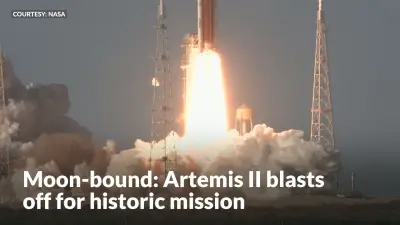
NASA’s spaceflight programme, Artemis, is also in full swing, with Wilkinson saying he expects “boots on the moon” by 2028. He explained: “It’s a space race - the Chinese also intend to land there. People are scrambling to get things into space. It's a hotly contested place, not necessarily to spy or cause disruption, but because it’s extremely commercially lucrative.”
“Space is about infrastructure, as much as gas and water and electricity, and just like every other bit of infrastructure, billionaires can make money out of that. And asteroids are absolutely chock full of resources, such as rare earth metals. Get your hands on a few of those and it will be profitable. Asteroid mining is going to be a thing.”
Inspiring the next generation
Wilkinson, who because of colour blindness would not have been permitted to train as an astronaut, loves his job with the Space Academy - currently delivering masterclasses for 25,000 secondary school children across the UK.
He said: “People remain fascinated by space. About 15 years ago, I got to shake hands with somebody who'd actually been on the moon - it was thrilling. I think there are fundamental drives in human beings. They make us what we are and one of them is exploration. Everybody feels it. The first time you take a different path when you’re out for a walk, there will be this little thrill - in terms of space you can multiply that a hundred times.”
The best time to spot a satellite or the ISS is a couple of hours after sunset or the few before sunrise. Satellites move silently as steady points of light with no flashing lights, while airplanes have flashing red, green, or white strobe lights. Satellites also travel in a smooth, steady, straight line across the sky. The Spot the Station app is the official NASA app that helps users track the ISS, and LiveOrbit is a free satellite tracking system.