Robot Claims Victory in Beijing Half Marathon, Outpacing Human Competitors
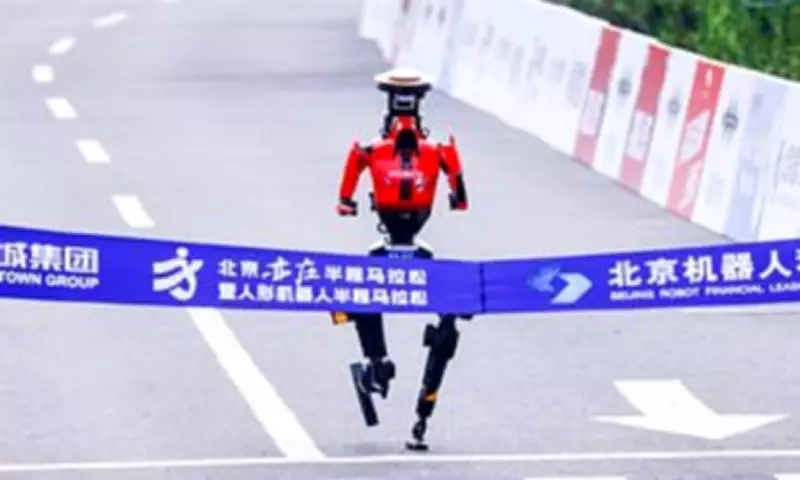
In a groundbreaking event that has captured global attention, a humanoid robot has emerged as the winner of the Beijing Half Marathon, achieving a time that eclipses the existing human record. This unprecedented feat occurred during a recent race in the Chinese capital, where the robot, developed by a leading tech firm, completed the 13.1-mile course in a remarkable display of endurance and speed.
Record-Breaking Performance and Technical Specifications
The robot, equipped with advanced artificial intelligence and sophisticated mechanical systems, finished the marathon with a time that not only secured first place but also broke the previous human record by a significant margin. According to race officials, the machine maintained a consistent pace throughout, leveraging real-time data processing to optimize its stride and energy efficiency. This performance has raised questions about the capabilities of robotics in endurance sports and the potential for future integration into athletic competitions.
Key details of the robot's achievement include:

- Completion time: The robot set a new benchmark, surpassing the fastest human time recorded in the event's history.
- Development team: Engineers from a prominent technology company designed the robot, incorporating cutting-edge AI algorithms and lightweight materials.
- Race conditions: The event took place under standard marathon conditions, with the robot navigating the same route as human participants without any special accommodations.
Implications for Sports and Technology
This victory has ignited widespread debate among sports enthusiasts, ethicists, and technologists. Proponents argue that such advancements could revolutionize training methods and enhance athletic performance through data-driven insights. For instance, robots might be used to simulate competitive scenarios or analyze biomechanics to help human athletes improve. However, critics express concerns about fairness and the essence of sportsmanship, questioning whether machines should be allowed to compete alongside humans in official events.
Potential impacts include:
- Regulatory challenges: Sports governing bodies may need to establish new rules to address the inclusion of AI-powered entities in competitions.
- Technological innovation: The success could accelerate research in robotics and AI, leading to more sophisticated applications in various fields beyond sports.
- Public perception: Reactions have been mixed, with some celebrating the technological milestone while others worry about job displacement in athletics and related industries.
Future Prospects and Ethical Considerations
Looking ahead, experts predict that this event could pave the way for more robot-human interactions in sports, possibly leading to hybrid competitions or specialized categories for machines. Ethical discussions are centered on issues such as transparency in AI decision-making, the risk of exacerbating inequalities if only wealthy organizations can afford such technology, and the preservation of human achievement in athletic records. As robotics continues to advance, stakeholders are calling for collaborative efforts to develop guidelines that balance innovation with integrity in sports.
In summary, the robot's win in the Beijing Half Marathon marks a significant moment in the intersection of technology and athletics, challenging traditional notions of competition and prompting a reevaluation of future sporting events. While it showcases remarkable progress in AI and engineering, it also underscores the need for thoughtful dialogue on how to integrate these technologies responsibly into society.