Never-Before-Seen Photos Reveal Neil Armstrong After Gemini 8 Emergency
Newly discovered photographs have emerged showing astronaut Neil Armstrong in the immediate aftermath of the Gemini 8 space mission emergency that almost claimed his life. These previously unreleased images, taken sixty years after the harrowing orbital incident, have been donated to the Ohio museum that bears his name, offering fresh perspectives on a pivotal moment in space history.
Capturing History Through Ordinary Means
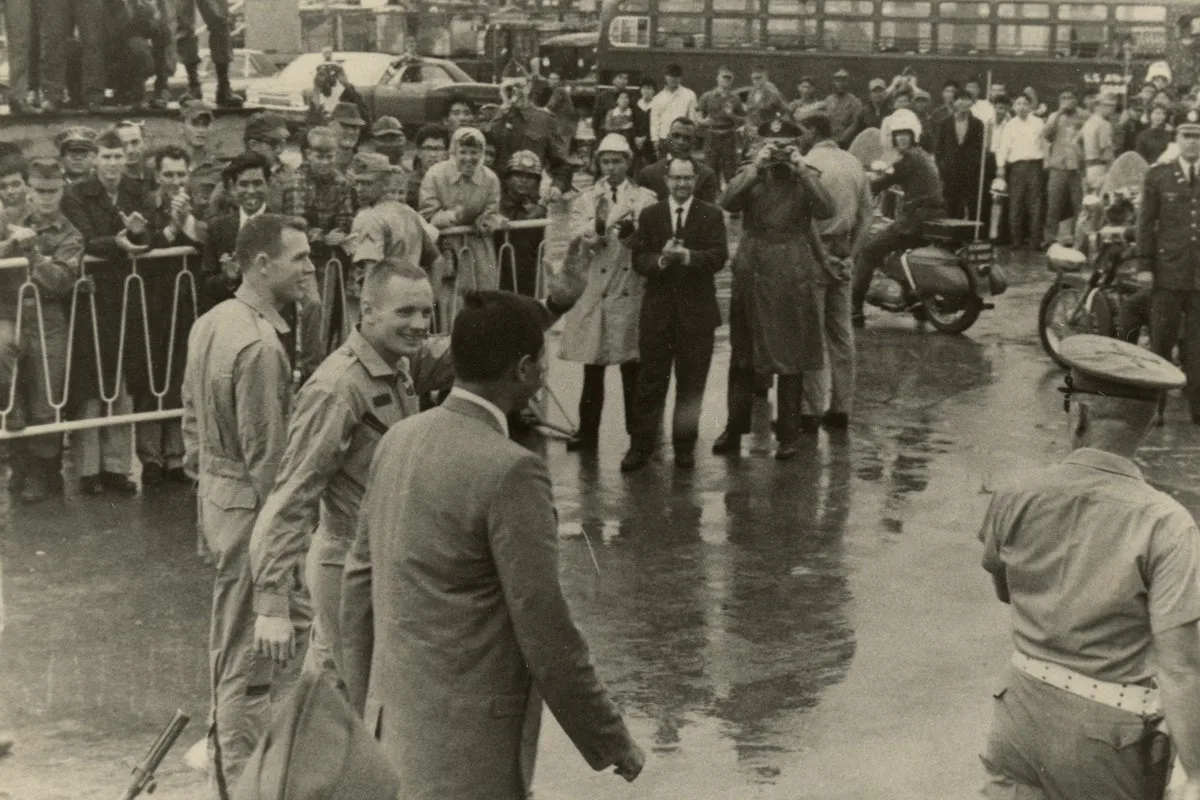
The photos were captured by Ron McQueeney, an Army veteran and professional photographer who was unexpectedly called to assist with recovery operations after the mission's unplanned splashdown off Okinawa, Japan. Since the emergency landing caught media off guard, few journalists were present, making contributions from individuals like McQueeney invaluable. "Sometimes, an incredible event can actually be documented by some of the most ordinary means," remarked Dante Centuori, executive director of the Armstrong Air and Space Museum in Wapakoneta, Armstrong's western Ohio hometown.
McQueeney's widow donated the collection, which includes images of Armstrong and fellow astronaut David Scott on the deck of a U.S. Navy vessel, waving to service members on land. One striking photo shows the Gemini 8 capsule being lifted into the air for transport, a visual testament to the mission's abrupt conclusion.
The Gemini 8 Crisis and Armstrong's Quick Thinking
The Gemini 8 mission, launched on March 16, 1966, aimed to achieve the first docking in space. Minutes after accomplishing this milestone, both spacecraft began tumbling uncontrollably. The astronauts separated from the other vessel, but the spinning intensified. Armstrong made a critical, calculated decision to deploy the craft's thrusters to halt the rotation, a move that consumed vital fuel needed for the return journey. For safety reasons, the mission had to be terminated early, leading to a splashdown approximately ten hours after launch. The duo was subsequently picked up by a recovery ship and transported to Naha Air Base in Japan.
Armstrong's composure during this crisis was instrumental in his selection as commander of Apollo 11, according to science historian Robert Poole of the University of Lancashire. "The obvious thing that sticks out to me is that they are very happy to be alive," Poole observed, referring to the astronauts' smiles in the photos. Centuori noted that these grins reflect their professionalism and ability to remain at ease even after a life-threatening ordeal.
Historical Significance and Modern Parallels
More than half a century after the final Apollo mission, NASA is preparing to return to the moon with a lunar fly-around by Artemis astronauts in April. Past missions like Gemini 8 serve as poignant reminders of the immense effort and preparation required for space travel, as well as the need to adapt when plans go awry. "Seeing people launch to space frequently can suggest that it’s easy, but it’s very hard. And it requires a lot of resources and attention," emphasized Emily Margolis, a curator at the National Air and Space Museum.
The newly donated images will enable the Armstrong Museum to enrich its narrative when educating visitors about the mission. The Gemini 8 capsule is already on display at the museum, and these photos will help fill in historical gaps, providing a more comprehensive story of Armstrong's heroism and the challenges of early space exploration.