Historic Photos Unveil Neil Armstrong's Brush with Death in 1966 Space Mission
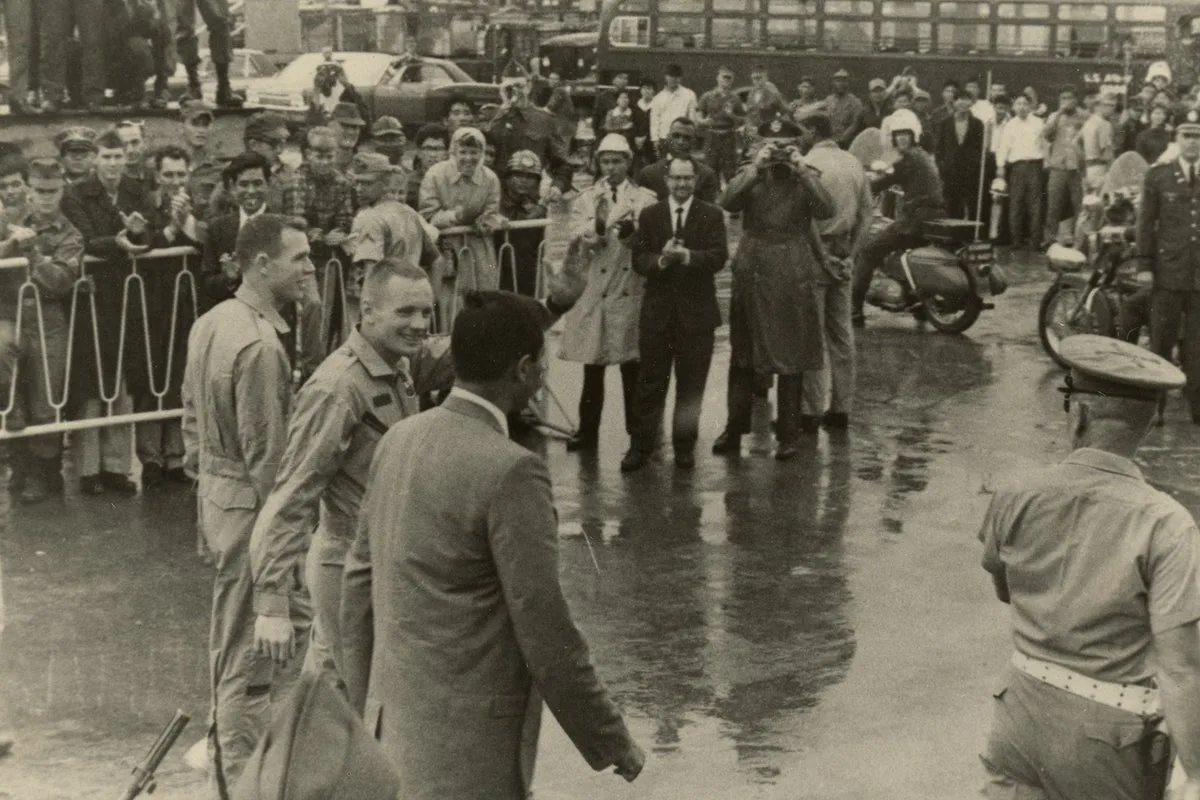
Previously unreleased photographs documenting astronaut Neil Armstrong's heroic return after barely surviving the perilous Gemini 8 mission have been donated to the Ohio museum that bears his name, six decades after the near-fatal incident. The images, captured by Army veteran and professional photographer Ron McQueeney, offer fresh perspectives on Armstrong and fellow astronaut David Scott in the immediate aftermath of their emergency splashdown off Okinawa, Japan.
The Dramatic Gemini 8 Incident
The Gemini 8 spacecraft launched on March 16, 1966, with one of its primary objectives being to complete humanity's first docking maneuver in space. Minutes after successfully achieving this historic milestone, both spacecraft began tumbling uncontrollably through the cosmos. The astronauts made the critical decision to separate from the other spacecraft, but the spinning intensified dangerously.
Armstrong demonstrated remarkable composure under extreme pressure, deploying the craft's thrusters to halt the violent rotation. This lifesaving maneuver came at a significant cost—consuming precious fuel reserves essential for their safe return to Earth. With safety considerations paramount, mission controllers had no choice but to abort the mission prematurely, bringing the spacecraft down approximately ten hours after launch.
Ordinary Means Documenting Extraordinary Events
Since the emergency splashdown occurred unexpectedly, few media representatives were present at the recovery site. However, NASA and military photographers documented the scene, alongside unexpected participants like McQueeney who were called upon to assist with recovery operations. "Sometimes, an incredible event can actually be documented by some of the most ordinary means," remarked Dante Centuori, executive director of the Armstrong Air and Space Museum in Wapakoneta, Armstrong's western Ohio hometown.
The photographs, donated by McQueeney's widow, depict Armstrong and Scott standing on the deck of a U.S. Navy vessel, waving to service members gathered on land. Another striking image shows the Gemini 8 capsule being hoisted into the air for transport at Naha Air Base in Okinawa.
Smiles That Tell a Deeper Story
Centuori noted that one particularly compelling aspect of the photographs is the visible smiles on the astronauts' faces, which he interprets as evidence of their professional demeanor and ability to maintain composure even after facing mortal danger. Science historian Robert Poole of the University of Lancashire offered an alternative interpretation of those grins.
"The obvious thing that sticks out to me is that they are very happy to be alive," Poole observed, highlighting the profound relief that must have accompanied their survival against formidable odds.
From Crisis to Command
Poole further emphasized that Armstrong's demonstrated ability to remain calm during the Gemini 8 crisis proved instrumental in his subsequent selection as commander of the historic Apollo 11 mission. More than half a century after the final Apollo mission concluded, NASA is preparing to return to lunar exploration with the Artemis program's planned lunar fly-around scheduled for April.
These historical missions serve as powerful reminders of the immense effort, preparation, and adaptability required for space exploration. "Seeing people launch to space frequently can suggest that it's easy, but it's very hard. And it requires a lot of resources and attention," explained Emily Margolis, a curator at the National Air and Space Museum.
Preserving History for Future Generations
The newly acquired images will enable the Armstrong Museum to enrich its narrative when educating visitors about this critical mission. The Gemini 8 capsule itself is already prominently displayed at the museum, providing a tangible connection to this dramatic chapter in space exploration history. Together, these artifacts help illuminate the human stories behind technological achievements, reminding us of the courage and quick thinking that defined early space exploration.