NASA's Bold Vision: A $20 Billion Lunar Base and Nuclear Mars Mission
In a major announcement, NASA has unveiled stunning new images and detailed plans for a $20 billion moon base, building on the success of the Artemis II mission. The agency also revealed ambitious strategies for a nuclear-powered mission to Mars, marking a significant leap in space exploration efforts.
Lunar Ambitions and the 'Mini Space Race'
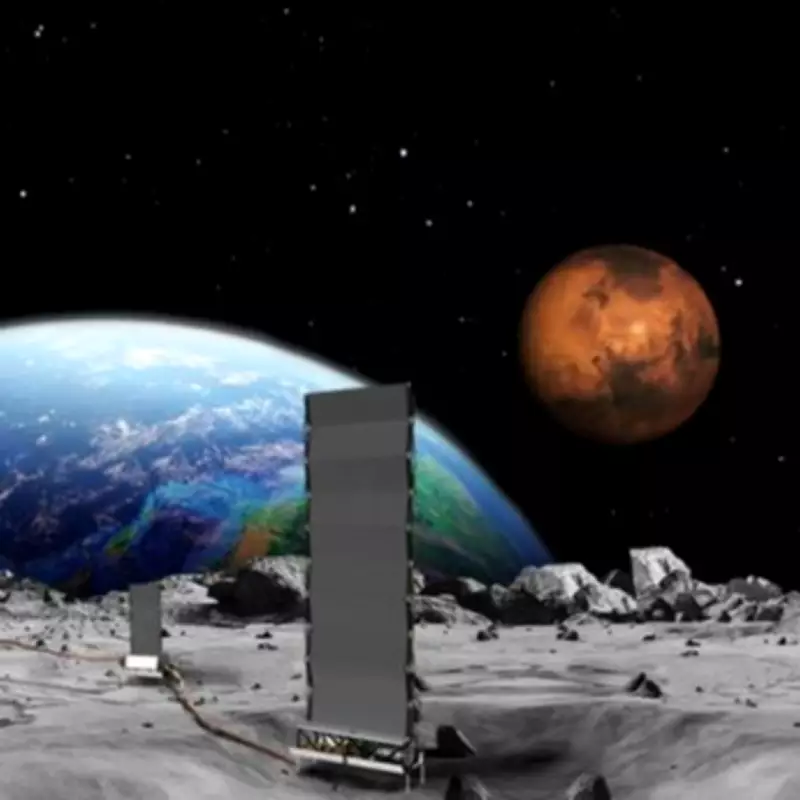
NASA chiefs are focusing on establishing a permanent lunar base, with futuristic visuals showcasing what the facility might look like. This initiative comes amid what experts describe as a 'mini space race' with China, as both nations vie to be the first to establish a manned presence on the Moon. The preferred location for the US base is the Moon's south polar region, where vast amounts of ice are believed to be hidden, potentially providing water and rocket fuel.
Artemis III astronauts, whose names are yet to be announced, will practice docking their Orion capsule with a lunar lander in Earth's orbit as part of preparations. The docking mechanism for this trial run is already stationed at Florida's Kennedy Space Center.

Nuclear-Powered Mars Mission Unveiled
At an event in Washington DC, NASA's chief Jared Isaacman outlined the agency's strategy, including the use of nuclear-powered spacecraft to reach Mars. This marks the first time a clear timeline has been provided for building a lunar base. Amit Kshatriya, NASA's associate administrator, revealed plans for the nuclear-powered spacecraft, named Space Reactor-1 Freedom, designed for Mars missions.
Isaacman emphasized the urgency, stating, "The clock is running in this great-power competition, and success or failure will be measured in months, not years." He added that achieving these goals would require aligning national efforts and removing obstacles to progress.
Expanding the Artemis Programme
The new plans build on NASA's existing Artemis programme, which aims to return astronauts to the Moon. Recent updates include standardising the configuration of the Space Launch System (SLS) rocket, adding an additional mission in 2027, and planning at least one lunar landing each year thereafter.
Private companies are also playing a crucial role. Elon Musk's SpaceX and Jeff Bezos' Blue Origin are racing to have their landers ready, with Musk's Starship and Bezos' Blue Moon vying for the Artemis IV moon landing in 2028.
Historical Context and Public Perception
Dr Mathias Basner of the University of Pennsylvania, who has researched space crews since 2008, noted that while this competition with China is significant, it is not as intense as the 1960s race with Russia to land the first man on the Moon. NASA has promised to announce the Artemis III crew soon, aiming to reduce risks for future moon landings, similar to the Apollo 9 mission in 1969.
The Artemis II mission, which included the first woman, first person of colour, and first non-U.S. citizen to fly to the Moon, was hailed for its diverse crew and communicative approach, contrasting with the more business-focused Apollo crews of the past. Author Andy Chaikin reflected on the progress, saying, "It's amazing how far we've come and how different this experience is from back then."
As NASA pushes forward with these groundbreaking initiatives, the world watches closely, anticipating new milestones in human space exploration and the potential for lasting lunar and Martian presence.