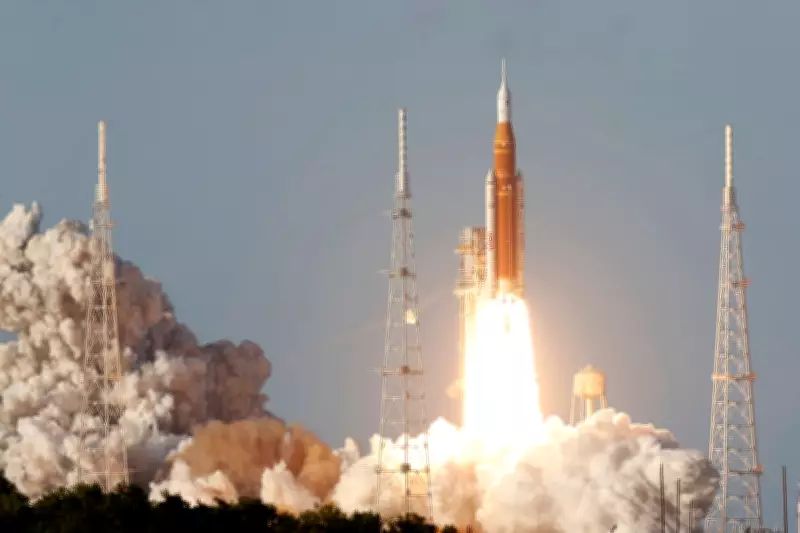
NASA Successfully Launches Artemis II Astronauts on Historic Moon Mission
NASA has achieved a monumental milestone with the successful launch of its Artemis II mission from Florida on Wednesday, marking the first crewed lunar journey in over half a century. The mission sends four astronauts on an ambitious 10-day, 252,000-mile voyage to the Moon, aiming to set a new distance record by flying approximately 4,000 miles beyond the lunar surface before returning to Earth.
Crew Composition and Historic Significance
The Artemis II crew comprises commander Reid Wiseman, Christina Koch, who becomes the first woman to travel to the Moon, Victor Glover, the first Black astronaut on a lunar mission, and Jeremy Hansen, the first non-U.S. citizen to embark on such a journey. This diverse team underscores NASA's commitment to inclusivity and international collaboration in space exploration.
Mission Details and Technological Achievements
The launch utilized NASA's most powerful rocket ever developed, overcoming repeated technical delays that had previously postponed the mission. After an initial 25-hour period in Earth orbit for comprehensive spacecraft checks, the crew will proceed to the Moon, executing a fly-around without entering orbit before heading back for a planned splashdown in the Pacific Ocean.

Long-Term Goals and Future Implications
This mission is a critical step in NASA's broader strategy to establish a permanent moon base and land humans on the lunar surface by 2028. The success of Artemis II paves the way for future Artemis missions, which aim to enhance scientific research, test new technologies, and prepare for eventual manned missions to Mars and beyond.
The historic launch not only revives human lunar exploration after decades but also sets the stage for a new era of space discovery, with potential impacts on global space policy, technological innovation, and international partnerships in the years to come.