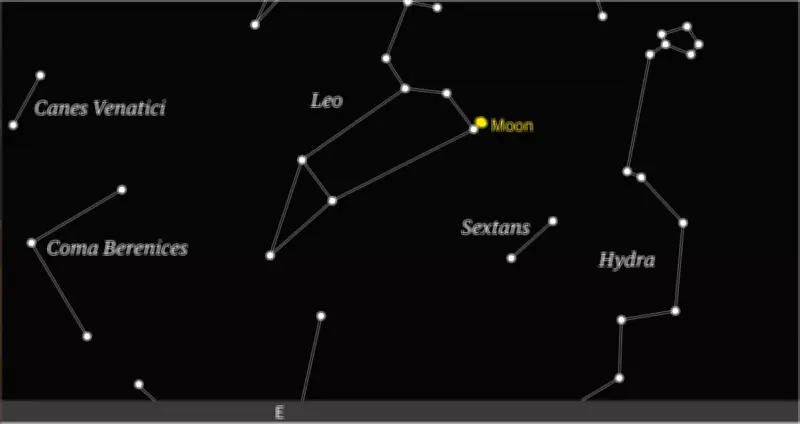
Sky enthusiasts are in for a treat this week as a unique astronomical event unfolds in the western horizon. On the evening of March 23, 2026, the moon will pass directly in front of Regulus, the brightest star in the constellation Leo, creating a stunning visual spectacle that can be observed without any special equipment.
Observing the Occultation
This phenomenon, known as an occultation, occurs when one celestial body moves in front of another from the perspective of an observer on Earth. In this instance, the moon will temporarily blot out Regulus, offering a brief but memorable sight for those with clear skies. The event is expected to be visible across many parts of the world, particularly in regions where the western sky is unobstructed.
Timing and Visibility
According to astronomical forecasts, the occultation will begin shortly after sunset and last for approximately an hour. Observers are advised to look towards the west, where the moon will be in its waxing crescent phase. Regulus, a blue-white star located about 79 light-years from Earth, will disappear behind the lunar disk and reappear on the other side, providing a clear demonstration of celestial motion.

This event is notable because occultations of bright stars by the moon are relatively rare and often require precise timing to witness. Unlike eclipses or meteor showers, which can be more predictable, such occultations depend on the moon's orbit and the star's position, making each occurrence a special opportunity for amateur astronomers and casual stargazers alike.
Significance for Astronomy
Beyond its visual appeal, the occultation of Regulus has scientific value. By timing the exact moments when the star disappears and reappears, researchers can gather data on the moon's topography and orbital characteristics. This information helps refine models of lunar motion and contributes to our understanding of celestial mechanics.
For the public, events like this serve as a reminder of the dynamic nature of our night sky. They encourage people to step outside and engage with the cosmos, fostering a greater appreciation for astronomy and the wonders of the universe. With light pollution increasingly affecting urban areas, such clear-sky events are precious opportunities to connect with the stars.
In summary, mark your calendars for March 23, 2026, and don't miss the chance to see the moon occult Regulus. Whether you're an experienced stargazer or simply curious about the heavens, this celestial show promises to be a highlight of the astronomical calendar.