Astronomers have identified what could be the first planet ever discovered outside our galaxy. The candidate exoplanet, roughly the size of Saturn, was detected in the Messier 51 galaxy, located about 28 million light-years from Earth.
The finding, based on data from NASA's Chandra X-Ray Observatory, marks a departure from the nearly 5,000 exoplanets found to date, all of which reside within the Milky Way. The team, led by Dr Rosanne Di Stefano of the Harvard-Smithsonian Center for Astrophysics, used a novel technique that monitors X-ray emissions rather than visible light.
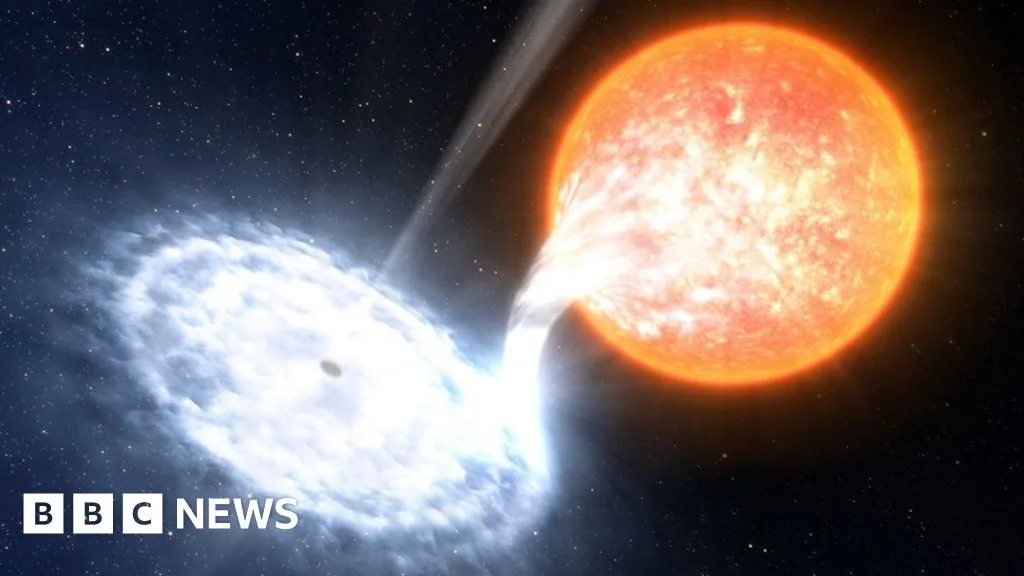
The method relies on transits—dips in brightness when a planet passes in front of its host star. In this case, the target was an X-ray bright binary system, M51-ULS-1, containing a neutron star or black hole pulling gas from a companion star. The X-ray-emitting region is so small that a passing planet can block most or all of the radiation, making the transit easier to detect.

The transit lasted about three hours, during which X-ray emission dropped to zero. Based on this, the researchers estimate the planet orbits its neutron star or black hole at about twice the distance Saturn orbits the Sun. However, confirmation is challenging: the planet's large orbit means it will not transit again for roughly 70 years.
The team considered alternative explanations, such as a passing gas cloud, but found the evidence inconsistent. “We know we are making an exciting and bold claim so we expect that other astronomers will look at it very carefully,” said co-author Julia Berndtsson of Princeton University. The study appears in the journal Nature Astronomy.