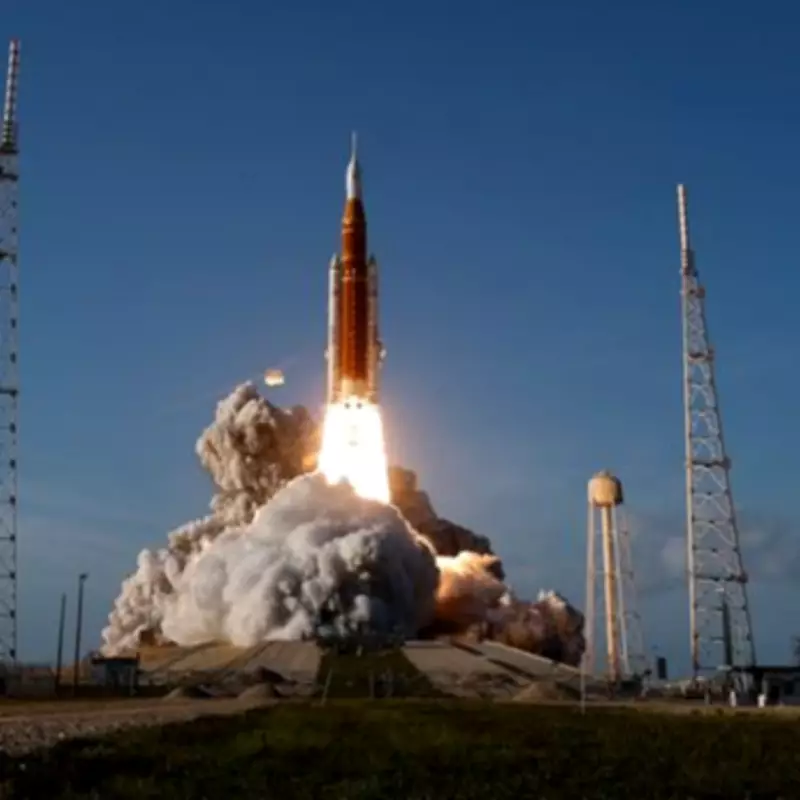
A British scientist playing a key role in guiding NASA's historic Artemis II mission around the far side of the moon has provided an exclusive insight into the atmosphere just hours before the spacecraft's dramatic launch. The mission, which represents a major step towards returning humans to the lunar surface, has captured global attention with its ambitious objectives and international crew.
The Calm Before the Historic Launch
Nicola Fox, a 57-year-old solar science expert from Hitchin in Hertfordshire, was among the critical NASA team members responsible for making the final go or no-go decision for the launch of the Orion spacecraft carrying four astronauts. Speaking to The Times about the tense moments leading up to the April 1 launch from Cape Canaveral, Fox described a "very confident, calm feeling" among the mission control team.
Fox originally joined NASA in 2018 to lead their heliophysics division before advancing to head the Science Mission Directorate, placing her at the forefront of space-based research initiatives. In previous interviews, she has expressed her lifelong fascination with space, telling The Guardian in 2023 how she "grew up sort of starstruck by space" and now finds herself in a pivotal position at the renowned American space agency.

Mission Milestones and Crew Details
The Artemis II mission represents the first crewed lunar mission since the Apollo program ended in 1972, with the spacecraft currently en route to complete a lunar flyby. The crew is expected to reach the far side of the moon today (Monday, April 6), marking another significant milestone in their journey.
The international crew consists of Commander Reid Wiseman (50), mission specialist Christina Kock (47), mission specialist Jeremy Hansen (50), and pilot Victor J. Glover (49). During their lunar flyby, they will break the record for the furthest distance humans have traveled into space, surpassing previous missions in the history of space exploration.
Scientific Objectives and Training
While orbiting the far side of the moon, the astronauts have been tasked with capturing detailed photographs of the lunar surface. In preparation for this critical aspect of their mission, all crew members received specialized training in geology to properly document and describe the geological features they observe during their historic journey.
This photographic documentation will provide valuable scientific data for future lunar missions and contribute to our understanding of the moon's composition and history.
Challenges and Crew Morale
Despite the mission's overall success to date, the crew has encountered technical difficulties with an essential onboard facility—their spacecraft toilet. Reports indicate that engineers suspect ice may be blocking the line designed to remove urine from the spacecraft, creating an unexpected challenge for the mission.
Addressing this issue, Debbie North, deputy manager of NASA's Orion program, acknowledged that "space toilets and bathrooms are something everybody can really understand... it's always a challenge" in the unique environment of space travel.
Despite these technical difficulties, Commander Reid Wiseman reported during a live press conference via Houston's mission control center that crew morale remains "high." He shared a poignant moment from the mission, stating: "We're up here, we're so far away, and for a moment, I was reunited with my little family... It was just the greatest moment of my entire life."
The Artemis II mission continues to progress toward its objectives, with the British-led guidance team playing a crucial role in this historic endeavor that brings humanity one step closer to returning to the lunar surface after more than five decades.