Artemis II Astronauts on Track to Shatter Earth's Farthest Travel Record
In a historic milestone for space exploration, the four astronauts of NASA's Artemis II mission are set to become Earth's farthest travelled individuals on Monday. During their lunar flyby, they will exceed the distance record established by the ill-fated Apollo 13 mission in 1970, marking a significant leap in humanity's journey beyond our planet.
Breaking the Apollo 13 Barrier
The crew, comprising NASA astronauts Reid Wiseman, Victor Glover, and Christina Koch, along with Canadian Space Agency astronaut Jeremy Hansen, will venture approximately 5,000 miles (8,047 kilometers) beyond the moon. This surpasses the previous record of 248,655 miles (400,171 kilometers) from Earth, achieved by Apollo 13 astronauts Jim Lovell, Fred Haise, and Jack Swigert. Artemis II is projected to outdistance that mission by about 4,000 miles (6,437 kilometers), symbolizing a new era in lunar exploration.
Unprecedented Lunar Views and Scientific Observations
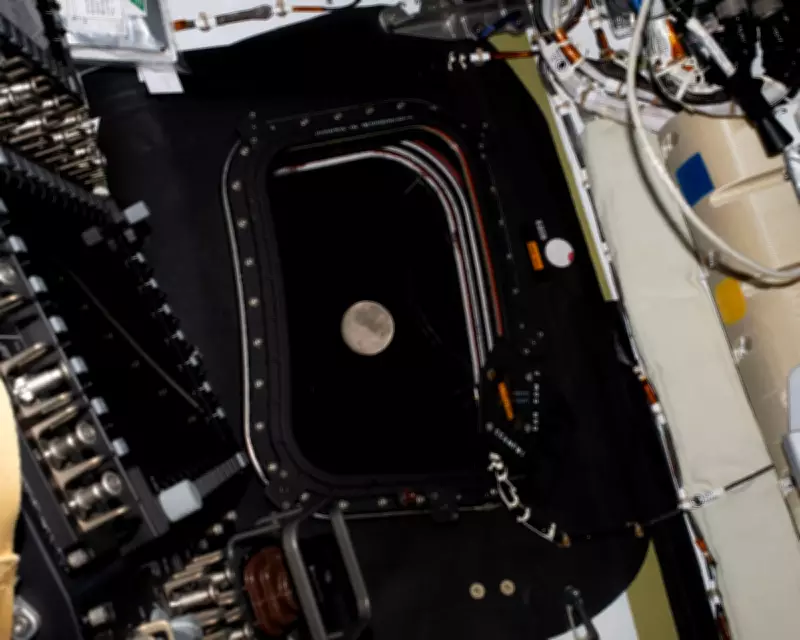
On the sixth day of their mission, the Orion capsule will execute a roughly six-hour flyby, offering the astronauts unparalleled views of the moon's far side. These regions were too dark or inaccessible for Apollo program astronauts over half a century ago. Additionally, the crew will witness a total solar eclipse as the moon blocks the sun, revealing glimpses of the shimmering corona.

Flight director Judd Frieling emphasized the mission's significance, stating, "We'll get eyes on the moon, kind of map it out and then continue to go back in force." The astronauts have trained for three and a half years to gather critical data, using various cameras to survey potential landing zones for future missions, including the enigmatic Reiner Gamma formation.
Communication Challenges and Inspirational Moments
During the flyby, Orion will experience a 40-minute communication blackout while behind the moon, relying on NASA's Deep Space Network. Despite the tension, Frieling noted, "physics takes over – and physics will absolutely get us back to the front side of the moon." The crew will also attempt to recreate the iconic Earthrise image from Apollo 8, hoping to inspire global unity.
Reflecting on the mission's broader impact, pilot Victor Glover shared on Easter, "In all of this emptiness – this is a whole bunch of nothing, this thing we call the universe – you have this oasis, this beautiful place [on Earth] that we get to exist together." The mission concludes with a splashdown in the Pacific Ocean near San Diego on April 10, after a nine-day journey from Florida.