Artemis II Astronauts Soar Over 100,000 Miles from Earth on Historic Lunar Flyby
Astronauts embarking on humanity's first crewed journey to the Moon in over five decades are currently situated more than 100,000 miles (160,930 kilometres) from Earth and are reported to be in "good spirits" by NASA officials. The elite team, comprising three Americans and one Canadian, launched from Cape Canaveral, Florida, on Wednesday evening and has since cleared Earth orbit, marking a significant milestone in the 10-day Artemis II mission.
Trajectory and Communication Challenges
The Orion spacecraft is now on a precise trajectory that will guide it around the Moon, utilizing the natural satellite's gravity for a "free" return journey. As the module ventures approximately 4,000 miles beyond the far side of the Moon, the crew will experience a communication blackout with Earth for around 40 minutes. This critical phase is being tracked with assistance from the Goonhilly Earth Station near Helston, Cornwall.
NASA executives provided an update, noting that the crew has an additional 150,000 miles (241,400 kilometres) to travel to reach their destination for a lunar flyby. This mission will take them deeper into space than any human has previously ventured, testing essential technologies for long-term lunar exploration and future manned voyages to Mars.
Daily Activities and Unusual Tasks
Detailing the crew's daily routines, Judd Frieling, the Artemis II ascent flight director, explained that after waking up and conducting normal planning conferences, the astronauts engaged in family conferences to connect with loved ones. In a more unconventional task, they performed another noise characterisation of the spacecraft's toilet, measuring how loud it was after previous issues had been resolved.
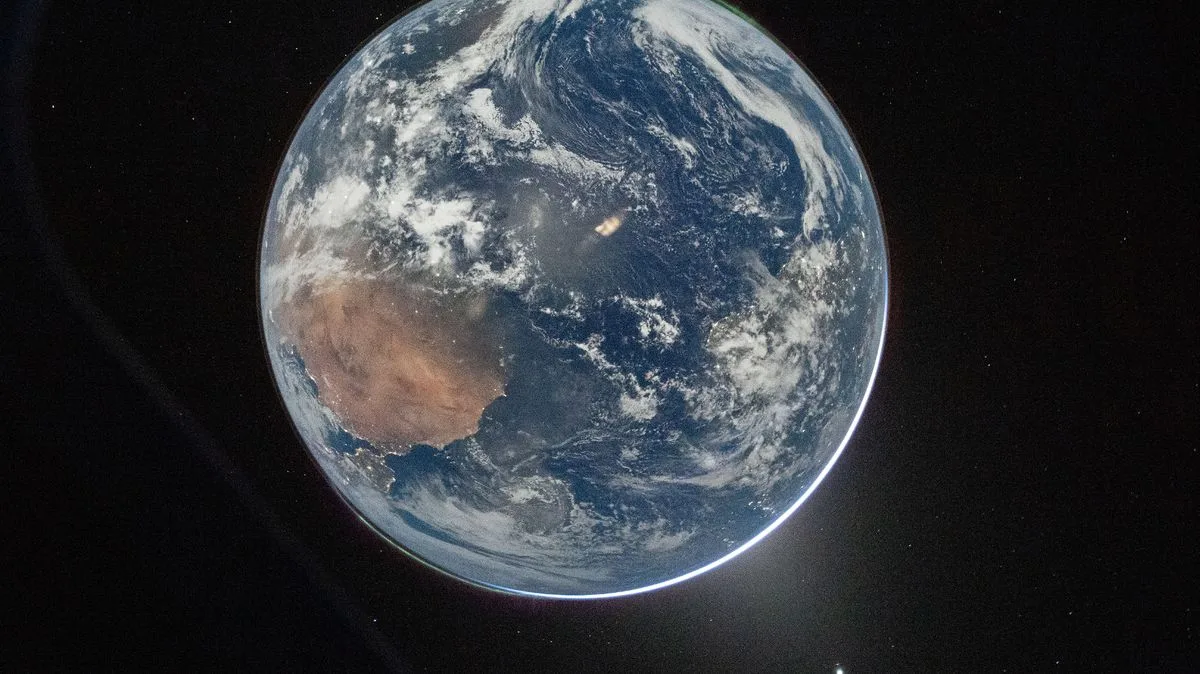
Speaking at a news conference, Lakiesha Hawkins, NASA's acting deputy associate administrator for exploration systems development, emphasised the mission's success: "The mission continues to perform well overall, and the crew is in great spirits. Currently, the crew is more than 100,000 miles from the Earth and about 150,000 miles to go away from the Moon." She also reflected on a spectacular image of Earth taken by mission commander Reid Wiseman, stating, "It's great to think that, with the exception of our four friends, all of us are represented in this image."
Foundations for Future Exploration
Highlighting the importance of this test flight, Howard Hu, the Orion programme manager, remarked, "When we talk about wanting to have a Moon base, wanting to have people on the surface of the Moon or other planets, you need a way to transport people safely to that particular domain. To me, it's very important that we do everything we can to understand and provide that capability in a robust and reliable way. You have to walk before you can run, and I think this is very important in our step towards exploration."
While the Artemis II astronauts will not land on the Moon, this mission paves the way for a future lunar landing and lays the groundwork for sending a crew to Mars. The mission had previously been postponed by two months due to technical issues, including hydrogen fuel leaks and clogged helium lines.
NASA's last crewed mission to the Moon was Apollo 17 in 1972. The agency aims to return astronauts to the lunar surface by 2028, ahead of China's planned mission around 2030, underscoring the competitive and pioneering spirit of modern space exploration.