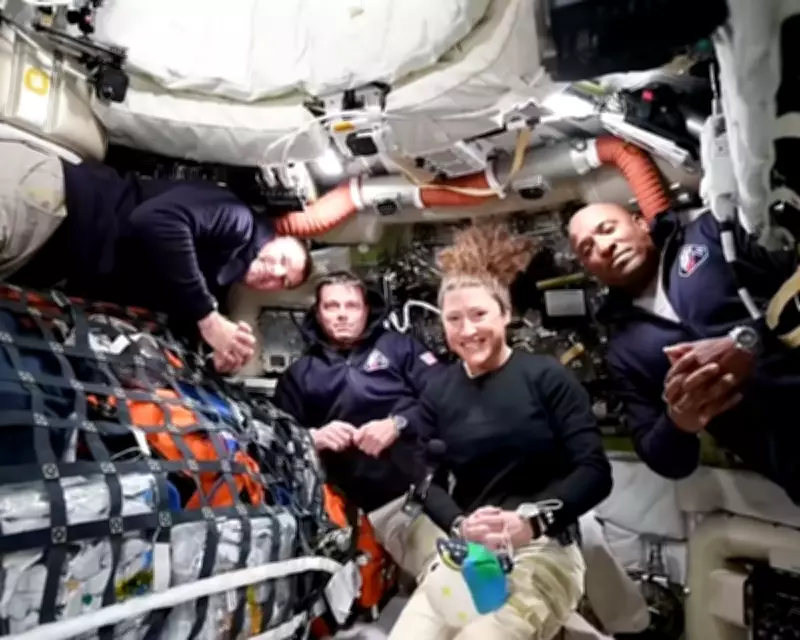
Artemis II Crew Embarks on Historic Solitude During Lunar Orbit
Today marks a pivotal moment in human space exploration as the four-person crew of NASA's Artemis II mission faces a period of complete isolation. Astronauts Reid Wiseman, Victor Glover, Christina Koch, and Jeremy Hansen will be cut off from all communication with Earth for 41 minutes while orbiting the far side of the moon. This unprecedented event places them further from our planet than any humans before, symbolising a bold step in testing the limits of deep-space endurance.
Mission Objectives and Scientific Endeavours
The Artemis II mission, launched from the Kennedy Space Centre on 1 April, is not a lunar landing but a crucial preparatory journey for future missions aimed at establishing a continuous human presence on the moon by 2028. Over the past days, the crew has been diligently checking spacecraft systems, spacesuits, and rehearsing scientific experiments. Their tasks include documenting lunar regions unseen by human eyes since the Apollo missions over five decades ago.
Despite the high-tech environment, the astronauts have encountered familiar challenges, such as repairing a malfunctioning $30 million toilet—a significant upgrade from the leak-prone waste systems used during Apollo missions. This incident highlights the blend of advanced technology and everyday human needs in space travel.

Controversies and Costs of Space Exploration
The Artemis programme, with an estimated cost nearing $100 billion, has faced criticism amid economic concerns on Earth. Critics argue that such expenditure is excessive during a cost-of-living crisis. However, bipartisan support in the United States has safeguarded funding, rebuffing attempts to cut NASA's budget. Skepticism remains regarding the timeline for returning astronauts to the lunar surface by 2028, with many predicting delays beyond current political cycles.
Scientific Innovations and Health Monitoring
In their role as volunteers for scientific research, the crew is conducting experiments to advance our understanding of space travel's effects on the human body. They are collecting saliva samples to monitor immune responses to radiation, isolation, and distance from Earth. This research aims to address issues like virus reactivation, which has affected astronauts on the International Space Station.
Additionally, the astronauts are utilising "organ-on-a-chip" technology—devices the size of USB sticks containing blood samples to mimic bone marrow sensitivity to radiation. Data from these experiments could lead to personalised medical kits for future missions, enhancing astronaut safety during long-duration spaceflights.
Human Achievement and Global Inspiration
As the Orion spacecraft orbits the moon, the crew's experiences underscore humanity's capacity for collaboration and innovation. Astronaut Jeremy Hansen remarked on the mission's success, stating, "Humanity has once again shown what we are capable of." The journey also includes testing radiation shelters against solar flares, a critical measure for protecting astronauts on deeper space voyages.
Victor Glover, the first Black person to travel to the moon, emphasised the human aspect of this solitude, hoping it fosters a sense of global togetherness. The mission's livestreams have captivated audiences worldwide, showcasing the technological marvels and emotional depth of space exploration.
Challenges Ahead and Return to Earth
Following their period of radio silence, the crew will begin their return journey, facing the intense heat of re-entry into Earth's atmosphere—temperatures reaching up to 1,650°C—before parachuting into the Pacific Ocean. This phase represents another critical test of the spacecraft's durability and the mission's overall success.
The Artemis II mission not only advances scientific knowledge but also reignites public fascination with space, reminding us of the profound possibilities when humanity unites in pursuit of discovery.