Artemis II Astronauts Confront Most Dangerous Mission Phase with Fiery Earth Re-Entry
The Artemis II crew, having successfully journeyed to the Moon and back, now face the paramount challenge of their historic mission: safely returning to Earth. This final leg involves a harrowing re-entry through the atmosphere at staggering speeds, with temperatures soaring to an incredible 2,700 degrees Celsius.
The Perilous Descent: A Trial by Fire
Imagine being enclosed within a spacecraft no larger than a minibus, as its vital heat shield endures extreme thermal forces while traveling at 25,000 miles per hour. This extraordinary experience, reserved for a select few, marks the culmination of a voyage spanning more than half a million miles. The Orion capsule, named Integrity, will approach Earth's atmosphere at a velocity thirteen times faster than a bullet, making this segment the most jeopardy-laden part of the entire Artemis adventure.
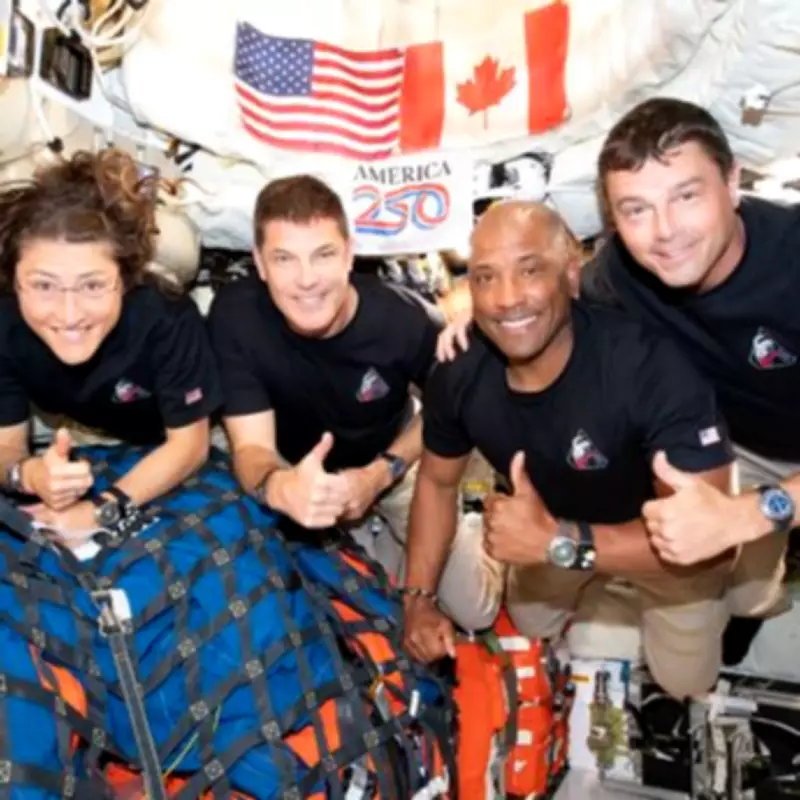
Commander Reid Wiseman, a 50-year-old Navy veteran with extensive astronaut experience, alongside crewmates Victor Glover, Christina Koch, and Jeremy Hansen, must rely on their collective expertise. The mission has captivated global attention, evoking memories of the iconic 1969 Moon Landing, yet the astronauts themselves acknowledge that returning home presents the greatest risk.

Heat Shield: The Critical Component
At the heart of the re-entry process is the heat shield, a 16.5-foot structure constructed from 186 blocks of Avcoat—a material composed of silica fibres and epoxy resin within a fibreglass honeycomb mesh. Designed to ablate in a controlled manner, it redirects intense heat away from the capsule to protect the crew. However, this shield suffered significant damage during the initial uncrewed test flight, cracking and breaking apart in sections.
Former NASA astronaut Dr. Danny Olivas, who reviewed the incident, noted that the original shield was not ideal for crewed missions. Despite this, subsequent modifications have been implemented to enhance safety. NASA astronaut and heat shield expert Charlie Camarda expressed concerns in a January letter, warning that the technical and organizational issues surrounding the Orion heat shield pose a serious risk, echoing patterns seen before past space disasters.
Crew Preparedness and Safety Measures
The Artemis II astronauts have expressed confidence in the revised heat shield solution. Commander Wiseman emphasized that identifying the root cause was crucial, and adhering to the new re-entry path should ensure safety. To withstand the immense G-forces during descent, the crew will use salt tablets to increase blood volume, preventing blackouts as gravity pulls blood toward their feet.
They will don pressurized orange Orion crew survival suits, complemented by special compression garments to maintain blood pressure. Upon successful atmospheric braking, a series of eleven parachutes will deploy to slow the capsule for a scheduled splashdown in the Pacific Ocean near San Diego in the early hours of Saturday morning.
Personal Reflections from the Crew
Victor Glover, a 49-year-old former test pilot and father of four, admitted that the re-entry phase is the most dangerous part of the mission. He shared that while he does not dwell on nervousness, his primary concern is for his family, who will be anxiously watching until he is safely back on Earth. Glover's sentiment underscores the human element of this high-stakes endeavor, where decades of training and experience converge in a moment of extreme peril.
The Artemis II mission has already set records, with the crew reaching 252,756 miles from Earth, surpassing the Apollo 13 distance record. As they prepare for this critical re-entry, the world holds its breath, awaiting the safe return of these pioneering astronauts from their extraordinary journey through space.