Artemis II Achieves Record-Breaking Lunar Flyby for NASA
In a monumental achievement for space exploration, NASA's Artemis II mission has successfully completed a lunar flyby, setting a new record for the farthest distance humans have ever traveled from Earth. The astronauts aboard the Orion spacecraft ventured an astounding 5,000 miles (8,000 kilometers) beyond the moon, exceeding the previous milestone established by the Apollo 13 mission in 1970.
Historic Journey and Stellar Photography
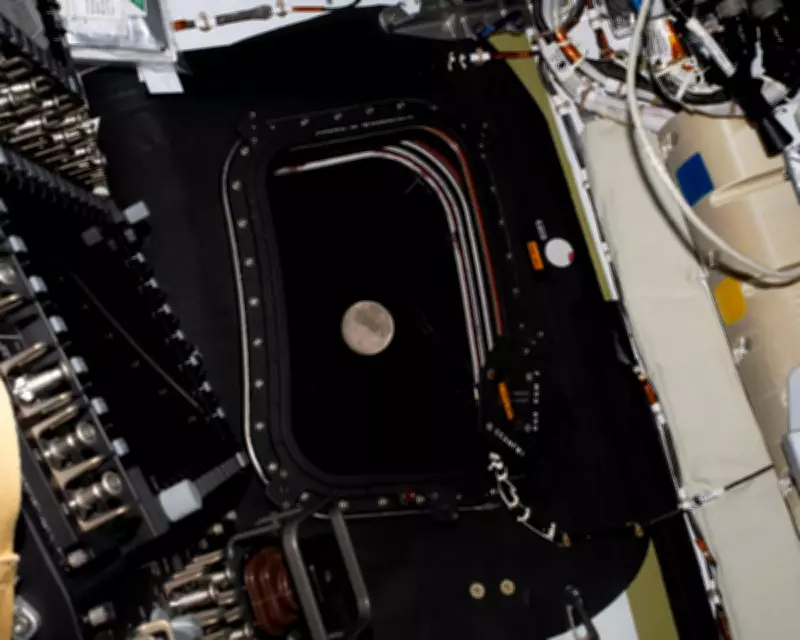
As the Artemis II crew wrapped up their lunar flyby on Tuesday, they continued their journey back to Earth, marking a pivotal moment in modern space history. Before retiring to sleep on the fifth day of the mission, the crew captured one final photograph of the moon as it drew near one of the Orion spacecraft's windows, providing a breathtaking glimpse of our celestial neighbor.
The mission, which includes NASA astronauts Christina Koch, Reid Wiseman, Victor Glover, and Canadian Space Agency astronaut Jeremy Hansen, has been documented through a series of remarkable images. These include views of Earth setting over the moon's curved limb, the moon fully eclipsing the sun, and the prominent Orientale basin on the lunar surface.

Key Moments and Global Recognition
During the flyby, Commander Reid Wiseman was observed peering out the window as his first lunar observation period began on April 6. The crew also engaged in a significant call with US President Donald Trump, highlighting the mission's international importance. Additionally, flight controllers at the Johnson Space Center in Houston, Texas, meticulously monitored the Orion spacecraft's progress, ensuring the mission's success.
The Artemis II mission not only broke distance records but also showcased advanced technology, with touchscreen displays and operations rooms playing crucial roles. The crew's sleeping bags onboard the Orion spacecraft and an astronaut mascot at the White House Easter egg roll added human touches to this scientific endeavor.
As the sun began to emerge from behind the moon near the end of the flyby on April 7, the mission demonstrated the ongoing advancements in space travel. With images taken from the Orion's solar arrays and windows, this mission has provided invaluable data and inspiration for future explorations.