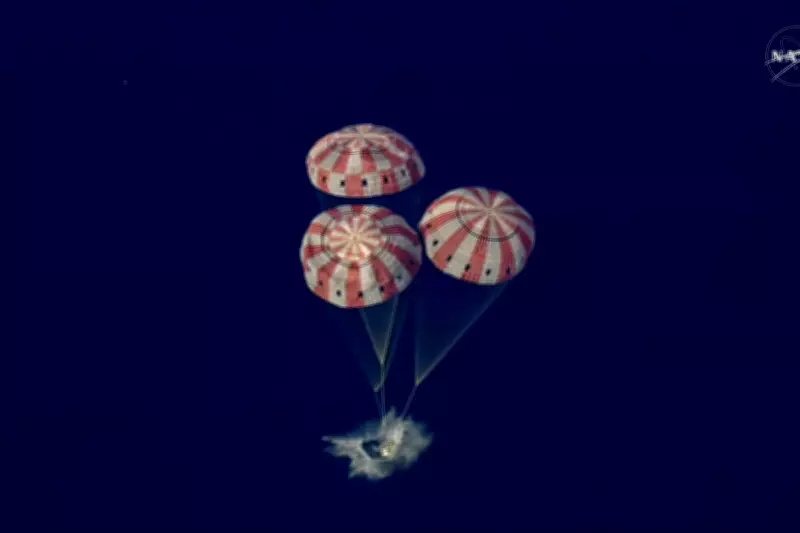
Artemis II Crew Safely Splashes Down on Earth After Fiery Lunar Return
The Artemis II mission astronauts have made a triumphant and secure return to Earth, splashing down in the vast expanse of the Pacific Ocean following their historic journey back from the Moon. This critical phase of the mission marks a significant milestone in NASA's ambitious lunar exploration program, demonstrating the resilience and advanced technology required for human spaceflight.
Successful Re-Entry and Splashdown Details
The crew, consisting of NASA astronauts Christina Koch, Victor Glover, Reid Wiseman, and Canadian Space Agency astronaut Jeremy Hansen, completed a dramatic and fiery fifteen-minute descent through Earth's atmosphere. NASA officials have lauded the return, which took place at approximately 7:07 PM Eastern Time (1:07 AM GMT) on Friday, describing it as "perfect" for the Artemis II team. The precision of this operation underscores the meticulous planning and execution involved in modern space missions.
The Orion capsule's heat shield played a pivotal role in safeguarding the astronauts from the extreme temperatures encountered during re-entry, which soared to an astonishing 5,000 degrees Fahrenheit. This technological marvel was put to the ultimate test, and its performance has been hailed as flawless, ensuring the crew's safety throughout the hazardous descent.

Overcoming Past Challenges with Advanced Engineering
Extensive testing and comprehensive engineering data had significantly bolstered confidence in the heat shield's advanced technology prior to this mission. This confidence was crucial, especially following the technical issues encountered during the uncrewed Artemis I flight, which highlighted potential vulnerabilities. The successful outcome of Artemis II's re-entry validates the improvements and rigorous validation processes implemented by NASA and its international partners.
The splashdown not only represents a personal victory for the astronauts but also a collective achievement for the global space community. It sets a positive precedent for future manned missions to the Moon and beyond, reinforcing the viability of sustained human presence in deep space. The data collected from this return will be invaluable for refining technologies and procedures for upcoming Artemis missions.