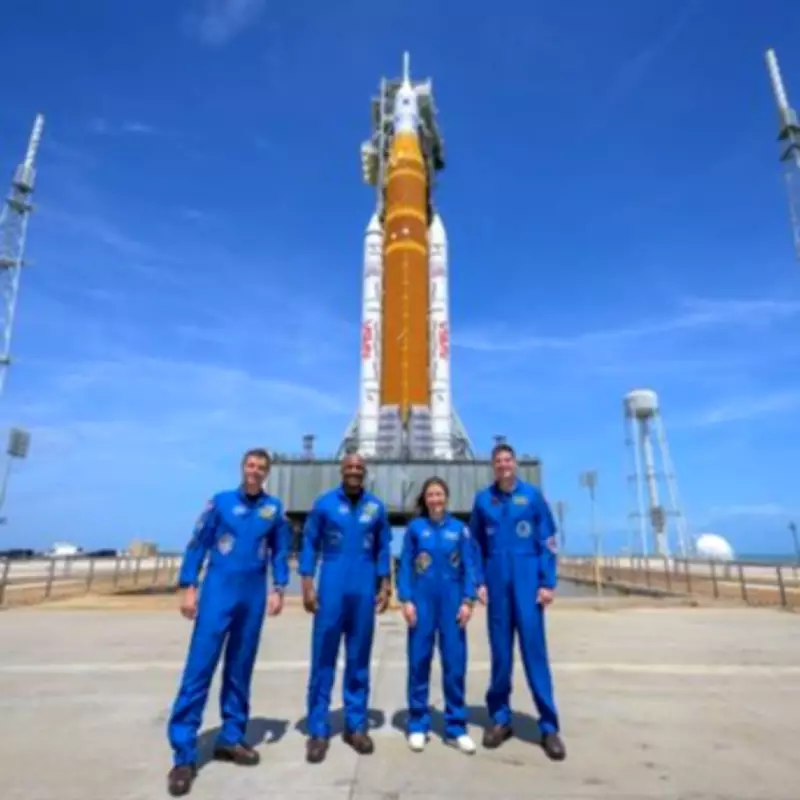
Historic Artemis 2 Moon Mission Set for Launch Within Hours
NASA's countdown to the highly anticipated Artemis 2 launch has officially commenced, marking a pivotal moment in space exploration as the mission prepares to send astronauts to orbit the Moon for the first time in over five decades. This crewed launch represents the inaugural flight of NASA's powerful Space Launch System (SLS) rocket combined with the Orion spacecraft, a critical step in the agency's lunar exploration program.
Crew and Launch Details
The Artemis 2 mission will carry four astronauts on this groundbreaking journey. The crew consists of NASA astronauts Reid Wiseman, Victor Glover, and Christina Koch, alongside Jeremy Hansen from the Canadian Space Agency. These spacefarers are scheduled to board the Orion spacecraft this evening, with the first potential launch opportunity set for 6:24 PM EDT (10:24 PM GMT).
NASA weather specialists have been meticulously monitoring forecast conditions in preparation for this evening's launch window. Should weather or technical issues cause a delay, subsequent launch dates have been identified for April 2, 3, 4, 5, 6, and 30, providing multiple opportunities within this critical period.

Mission Background and Significance
Originally targeted for February, the Artemis 2 launch experienced postponements due to testing complications, ultimately rescheduling to this six-day April launch window. This mission holds profound historical importance as it will be the first crewed flight to the Moon since NASA's Apollo 17 mission in 1972, ending a 54-year hiatus in human lunar exploration.
The astronauts will embark on an approximately 10-day mission designed to orbit the Moon, testing spacecraft systems and paving the way for future Artemis missions that aim to establish a sustainable human presence on the lunar surface.
Technical Considerations and Challenges
Mission timing presents significant technical challenges that NASA planners have carefully addressed. The trajectory for each potential launch day must ensure the Orion spacecraft does not remain in darkness for more than 90 consecutive minutes. This limitation is crucial for the solar array wings to effectively convert sunlight into electrical power and maintain optimal temperature ranges throughout the mission.
Mission planners have systematically eliminated launch dates that would subject Orion to extended eclipses during flight. Additionally, viable launch windows must accommodate Orion's precise return trajectory to Earth, requiring specific entry profiles for safe re-entry and recovery.
Leadership and Preparation
Artemis 2 launch director Charlie Blackwell-Thompson expressed enthusiasm about the impending launch during a recent press conference. "I am thrilled to say that our countdown clock picked up just a little bit ago and began counting," she stated on March 30. Blackwell-Thompson further praised her team's dedication, noting, "Our team has worked extremely hard to get us to this moment and I am so very proud of the work that they have done."
The United States space agency has been targeting this April 1 launch window as the beginning of this historic mission, with extensive preparations and testing completed to ensure mission success and crew safety throughout the lunar orbital journey.