Artemis 2 Astronauts Prepare for High-Stakes Splashdown in Gravity Suits
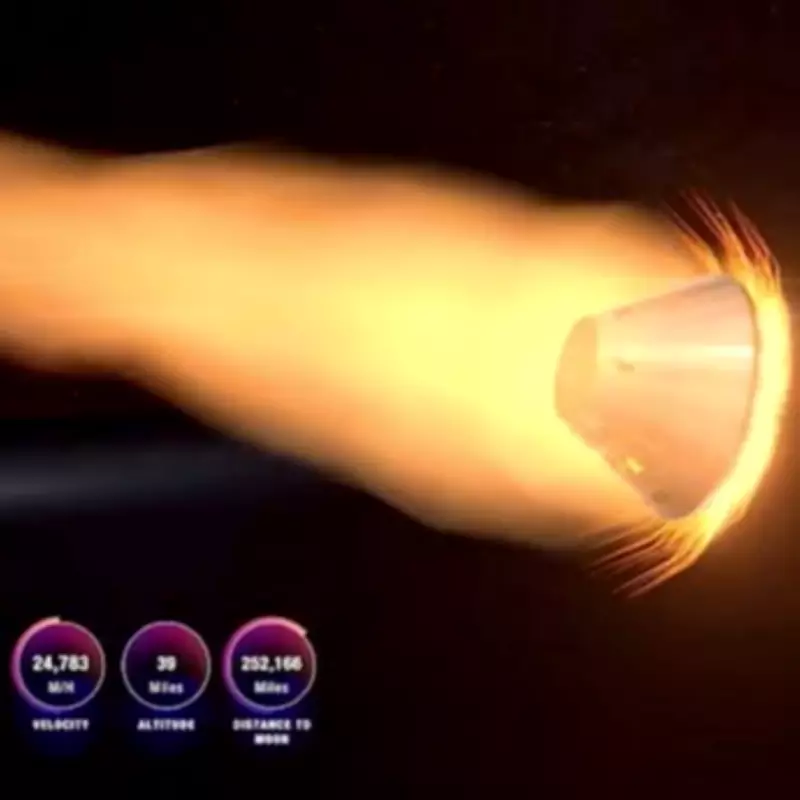
The Artemis 2 crew is scheduled to make their dramatic return to Earth in the early hours of Saturday, facing a fiery 2,700-degree Celsius re-entry before splashing down in the Pacific Ocean. Commander Reid Wiseman, mission specialist Christina Koch, pilot Victor Glover, and Canadian astronaut Jeremy Hansen will wear specialized gravity suits designed to help their bodies readjust to Earth's environment after their historic lunar mission.
Rapid Recovery Expected Despite Extreme Conditions
Dr. Mathias Basner, a leading researcher who has studied International Space Station crews since 2008, told the Mirror that the Artemis astronauts should recover remarkably quickly from their 10-day mission. "On short missions of 10 days, they can recover pretty quickly," explained Dr. Basner. "Any issues are usually fully resolved soon after they return to Earth. It is not a long enough time to affect your bones or your heart significantly."
The German-born University of Pennsylvania scientist added that while longer missions can cause muscle mass deterioration requiring extensive rehabilitation, the Artemis crew should return to their pre-mission condition within just a few hours. "They should be back to themselves, how they were 10 days ago, after a couple of hours," he stated confidently.

Radiation Exposure Remains Primary Concern
Despite the optimistic recovery timeline, scientists express significant concern about the crew's exposure to deep-space radiation during their journey beyond Earth's protective magnetic field. "What could be a real show stopper is the impact of radiation," Dr. Basner warned. "We don't really have a good understanding of what it can do and the potential outcomes. With radiation, it would be completely unethical to expose anyone to that here on Earth."
The researcher emphasized that astronauts participating in deep-space missions are essentially pioneers in human radiation exposure studies. "Any participants in space are guinea pigs to a certain extent; that is really important to the crews," he noted. "They want us to understand the impact of space flight so they can help others in the future."
Technical Challenges of Re-Entry and Landing
UK astronaut Tim Peake revealed that the crew will spend their final hours in space preparing meticulously for re-entry. "They will make sure the spacecraft is at the right angle for re-entry," Peake told the BBC. "They will get seating out that has been stowed away and get into the suits."
The spacecraft's heat shield, which sustained damage during the first Artemis mission, will face its ultimate test as it protects the crew module from temperatures reaching approximately 2,700C during atmospheric re-entry. Once safely through this fiery phase, a series of parachutes will deploy to slow the capsule for a gentle splashdown off the California coast.
Crew Backgrounds and Mission Significance
Commander Reid Wiseman brings 16 years of astronaut experience including six months in space, while pilot Victor Glover has 12 years as an astronaut with similar spaceflight duration. Mission specialist Christina Koch made history with the first all-female spacewalk during her year aboard the International Space Station. Canadian astronaut Jeremy Hansen, completing his first space mission after 16 years of training, represents Canada's inaugural deep-space explorer.
During a livestreamed call from the Canadian Space Agency, Prime Minister Mark Carney humorously questioned Hansen about his breakfast preferences, asking for reassurance that maple syrup rather than Nutella topped his pancakes. The conversation highlighted the national pride surrounding Canada's participation in this record-breaking lunar mission.
Family Concerns and Emotional Preparation
Pilot Victor Glover acknowledged the emotional toll on astronauts' families during these high-risk missions. "I am really looking forward to seeing those three beautiful parachutes and splashing down in the Pacific Ocean," Glover told the BBC. "I know that's when my wife will have her first real, true exhale, and that means a lot to me. This is really challenging for the families."

Dr. Basner emphasized that space remains "a very hostile environment" where "tiny little mistakes can cause catastrophic events." He praised NASA's cautious approach to the Artemis program while acknowledging the unavoidable risks of deep-space exploration. The research community eagerly awaits data from the crew's return, particularly regarding radiation effects that could shape future missions to Mars and beyond.