Dubai-Based British Influencers Criticised for Glossy Posts Amid Regional Conflict
British influencers residing in Dubai have sparked controversy by continuing to share polished, idyllic content on social media as missile strikes and heightened tensions unfold across the Middle East. High-profile figures, including former Love Island contestant Arabella Chi, are accused of presenting a sanitised version of reality, focusing on sun-soaked images, fitness routines, and luxury updates while ignoring the escalating crisis.
Escalation of Conflict and Its Impact on Dubai
On February 28, airstrikes launched by the US and Israel on Iran triggered a sharp escalation in regional hostilities. Iran retaliated, leading to the closure of airspace across the Gulf, including the United Arab Emirates. This left over 100,000 British nationals stranded in Dubai as missiles and debris fell from the sky, causing significant disruptions.
Incidents included falling wreckage that ignited a fire at Fairmont The Palm, injuring four individuals, while blasts damaged Dubai International Airport and sparked another fire at Jebel Ali Port. In the aftermath, the UK Foreign Office faced its most substantial consular crisis since the Covid-19 pandemic, with approximately 138,000 Britons registering in the region, 112,000 of whom were in the UAE.

Influencers' Divergent Responses to the Crisis
Despite the chaos, many influencers maintained their usual posting schedules, though some briefly deviated from this pattern. Notable figures such as Petra Ecclestone and Kate Ferdinand shared and then deleted clips expressing fear and concern online, indicating a momentary break from their curated feeds.
In contrast, content creator Mitchell Armstrong adopted a dismissive tone in a video posted on February 28, mocking those fleeing the city. He stated, "What does everyone mean there's bombs and explosions going off in Dubai? As long as I've still got my sauna and I've still got my G-Wagon and I still live in my $2.1 million mansion on the Palm, I don't really care... I can't really hear anything over the sound of success." Armstrong further claimed that affluent individuals profited from the situation, adding, "All the rich guys, all the guys making money, printing bread either profited off the war or made more money because we are more locked in."
Influencer Soudi Al Nadak portrayed a calmer image to her 1.3 million TikTok followers, asserting, "As you can see, it is very quiet and peaceful in Dubai at the moment, but for those people who want to leave, let them leave. I just think they are very ungrateful." On March 4, she remarked that she felt safe because "we know who protects us," prompting a follower to question, "How much have you been paid to keep on posting government propaganda?"
Arabella Chi's Controversial Content Amidst Turmoil
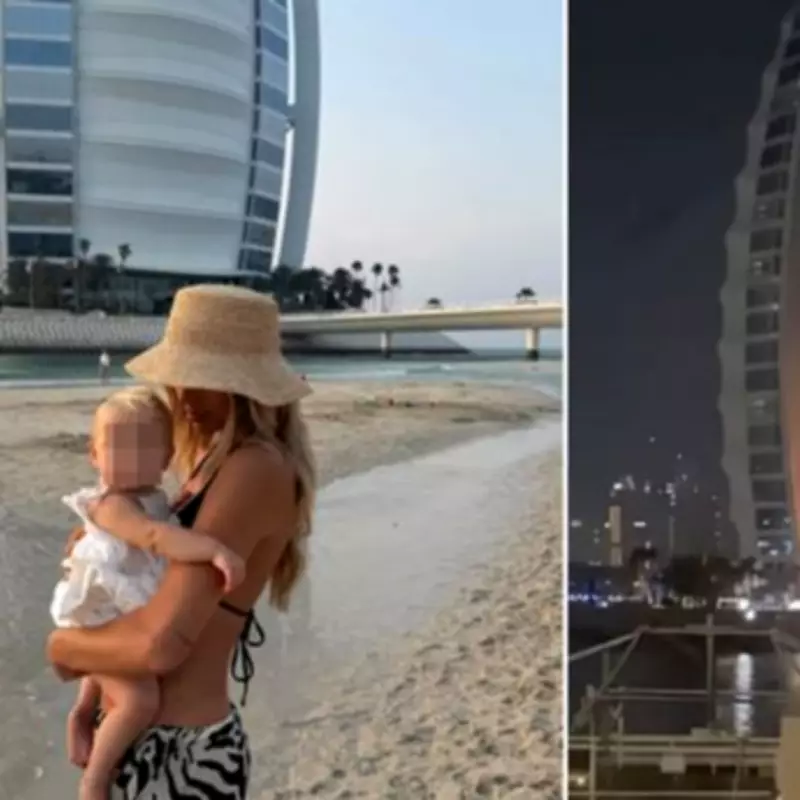
Arabella Chi has notably maintained a stream of pristine content, often posted minutes away from where incidents occurred. On March 3, just three days after flames engulfed the iconic Burj Al Arab, she shared a romantic dinner at Asia Asia with the caption, "A forever kind of love." Days later, she posted beach snaps with her 10-month-old daughter Gigi, captioned "Sandy toes," depicting a serene shoreline despite nearby conflict.
Followers quickly noted the dissonance, with one commenting, "Stay safe, that beach looks so quiet," and another asking, "Did everyone leave Dubai?" On March 9, when drones struck near the airport and debris hit a waterfront tower, forcing evacuations, Chi's feed instead promoted a luxury jewellery collaboration. Similarly, on March 13, as debris struck a building in the Dubai International Financial Centre, she posted from Jumeirah Beach in a bikini with her daughter.

Regulatory Pressures and Social Media Laws in the UAE
The United Arab Emirates enforces some of the world's strictest social media regulations, with authorities warning against "publishing or circulating rumours and information from unknown sources" following the conflict's onset. Influencers must obtain government-issued licences to post paid content, linking their income directly to compliance. Content perceived as inciting panic or harming the country's reputation can result in severe penalties, including heavy fines, imprisonment, or deportation.
This regulatory environment may influence the tone and nature of posts by British influencers in Dubai, potentially encouraging a glossed-over portrayal of events to avoid repercussions. The situation highlights the complex interplay between personal branding, economic incentives, and geopolitical realities in the digital age.