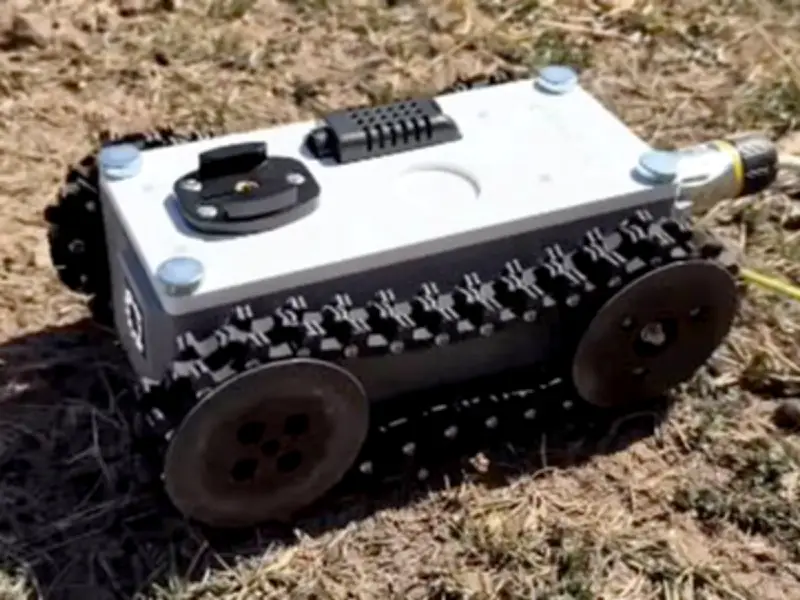
A robot originally designed to explore wombat tunnels has been deployed to inspect the boat-shaped Durupınar formation near Mount Ararat in Turkey, a site some believe could hold the remains of Noah's Ark.
The small vehicle, named Gopher, was designed by Dr Robert Ross of La Trobe University. Dr Ross has been collaborating with Noah's Ark Discovery for nine months after seeing they were looking for a robot to explore the area.
Robot's Capabilities and Journey
The Gopher is equipped with front and rear waterproof wide-angle cameras and environmental sensors, allowing researchers to collect data 25 metres below the ground. The robot left Australia for its new destination in late July.
Earlier this month, scientists at the Durupınar formation announced that work at the site had temporarily stopped. They wrote: "The drilling equipment has stopped. The field team has packed up. But some of the most important work of the 2026 investigation is still ahead. Hundreds of samples collected from the Durupınar formation are now awaiting detailed laboratory analysis…"
End of Field Season and Next Steps
The latest update marks the end of a 90-day field season while scientists examine what was collected. The permitted project was a collaboration led by Professor Cenker Atila of Sivas Cumhuriyet University, alongside the independent Noah's Ark Scans team.
Over the season, they carried out core drilling to depths of 18 metres at roughly 12 to 150 locations across the site. Their end-of-season video shows the custom underground camera robot being lowered into a 12-metre borehole to film below the surface. Researchers also logged long cylinder core samples in 50cm segments before packaging them for detailed lab work over winter.
Organic Carbon Findings
Early testing indicates higher organic carbon inside the boat-shaped perimeter, with roughly 40% more organic matter and, in some areas, reportedly triple the concentration compared with control samples outside.
Dr Ross said: "It could be the archaeological discovery of the century but whether the site turns out to be Noah's Ark or something completely different, it's exciting to see our technology helping researchers investigate and better understand what's there." The Durupınar formation has long been a magnet for Noah's Ark seekers, with the team claiming the Biblical vessel had been "100% confirmed" after excitement over subsurface scans.