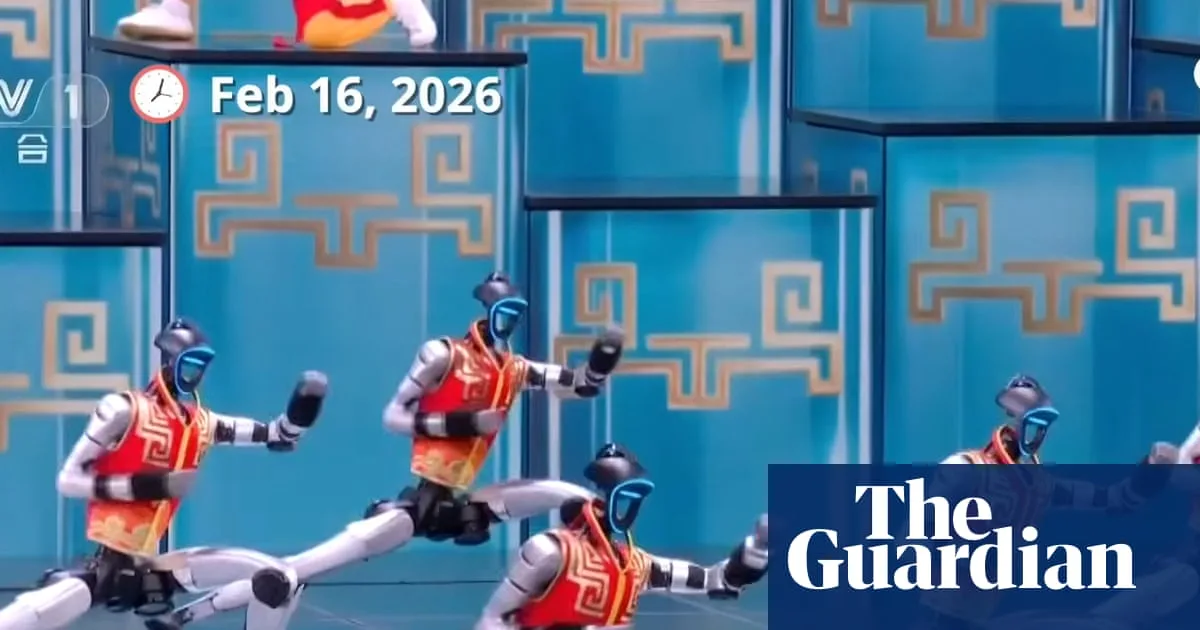
Dancing humanoid robots took centre stage during China Media Group's Spring Festival Gala, performing martial arts, backflips, and choreographed routines alongside human performers. The display, developed by several Chinese robotics firms, drew comparisons to last year's simpler robot performances and sparked debate about the robots' capabilities beyond entertainment.
Experts noted that while the performance showcased technological progress, it also served as state propaganda. Kyle Chan of the Brookings Institution said Beijing uses such displays to 'dazzle domestic and international audiences with China's technological prowess,' particularly as competition with the US intensifies. Georg Stieler, a robotics consultant, highlighted the direct pipeline from industrial policy to prime-time spectacle but cautioned that stage performance 'does not equate to industrial robustness, yet.'
The robots' movements were the result of extensive training for a specific routine, involving imitation learning and balance control, with little environmental perception. Stieler noted that this has 'little bearing on reliability in unstructured environments, a prerequisite for factory-grade deployment.' Progress in dexterity also lags behind locomotion.
China's robotics sector is expanding rapidly, with 451,700 smart robotics companies registered by end of 2024, backed by major government initiatives like Made in China 2025. Morgan Stanley projects humanoid sales will more than double to 28,000 units in 2026, while Elon Musk has acknowledged Chinese companies as key competitors. Marina Zhang of the University of Technology Sydney said the showcase hints at a shift from low-cost assembly to high-end smart manufacturing, with robotics as a linchpin.