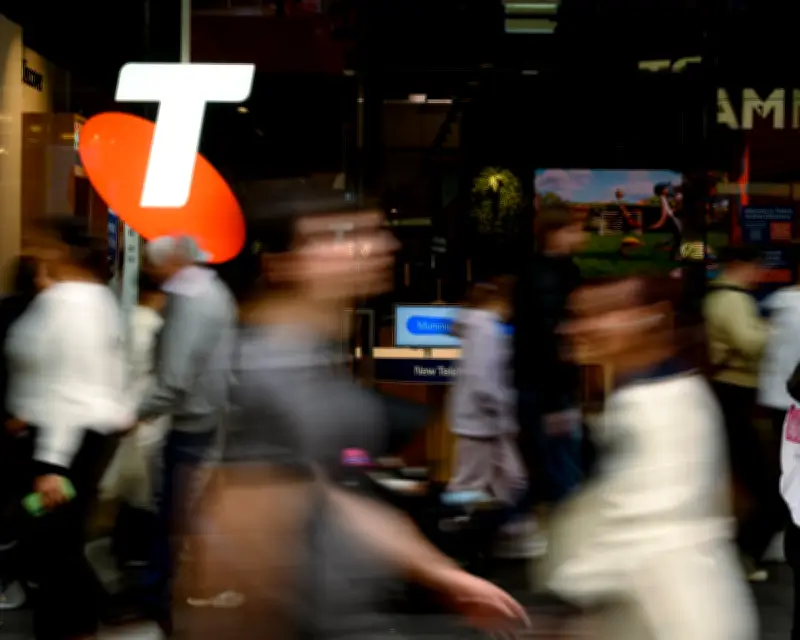
The nearly five-hour Telstra mobile outage on Wednesday was caused by a software defect in an update that impacted the company's time server, according to Telstra's chief financial officer, Michael Ackland. The time server, which keeps time across the network's systems, is vital for synchronisation and authentication. When time becomes out of sync, it creates problems across the network.
Widespread Disruptions Across Australia
The outage brought train lines to a halt, affected traffic lights, stopped Eftpos payments, prevented people from charging electric vehicles, and even impacted triple-zero emergency calls. Ackland explained at a press conference that “lots of computer systems have to synchronise time. It's one of the ways that you authenticate what's going on in the network, and the time synchronisation in those nodes wasn't working as it should.” Later, he revealed a software defect in an update had caused the issue.
Recurring Pattern of Single-System Failures
This incident follows a pattern of major outages in Australia, including the 2024 global CrowdStrike outage, the 2023 Optus national outage, and the 2025 Optus triple-zero outage. Each event highlights how a single problem at one company can cascade across the economy. Australia's reliance on just three mobile network operators—Telstra, Optus, and Vodafone—amplifies the impact when one fails, especially Telstra, which has the largest customer base and is used by numerous smaller mobile companies.
Government Response and Blame
The federal government responded quickly, with communications minister Anika Wells returning from leave to address the matter. Wells acknowledged improvements since the 2023 Optus outage but blamed telcos for losing public trust. “There is a reason that telcos are the least trusted industry in Australia – it's days like today,” she said. “It is on all telcos to improve their systems to make sure that Australians can rely upon them when they need them most.” The Australian Communications and Media Authority has been asked to investigate the outage, and Telstra has promised to provide updates on the cause and potential redundancy measures.
Need for Redundancy and Resilience
Experts call for greater resilience. Hussein Dia, professor of transport technology at Swinburne University, said: “As transport networks become more digital and connected, they need communications systems that can tolerate faults without bringing an entire network to a standstill. That means reducing single points of failure through redundancy and ensuring there are alternative communication pathways if one system is disrupted.” He noted that hospitals and airports already operate with this mindset. Adjunct Assoc Prof Graeme Hughes of Griffith University recommended that policymakers mandate multi-carrier routing for public transport and essential services, while businesses and households should keep cash on hand, enable wifi calling, and know how to switch payment terminals to backup connections. Assoc Prof Mamello Thinyane of Adelaide University suggested businesses consider multiple types of connections, such as fixed line and 5G across multiple providers.
Lessons for the Future
Josh Taylor, a technology reporter for Guardian Australia, noted that customers who left Optus after previous outages learned that it is not just an Optus issue. The outage raises questions about the resilience of services and whether rail operators use multiple mobile companies for communications. As Taylor concluded: “What is for sure is that this will not be the last network outage in Australia … are we all going to put measures to ensure we are collectively more cyber-resilient going forward? 'Til the next one.”