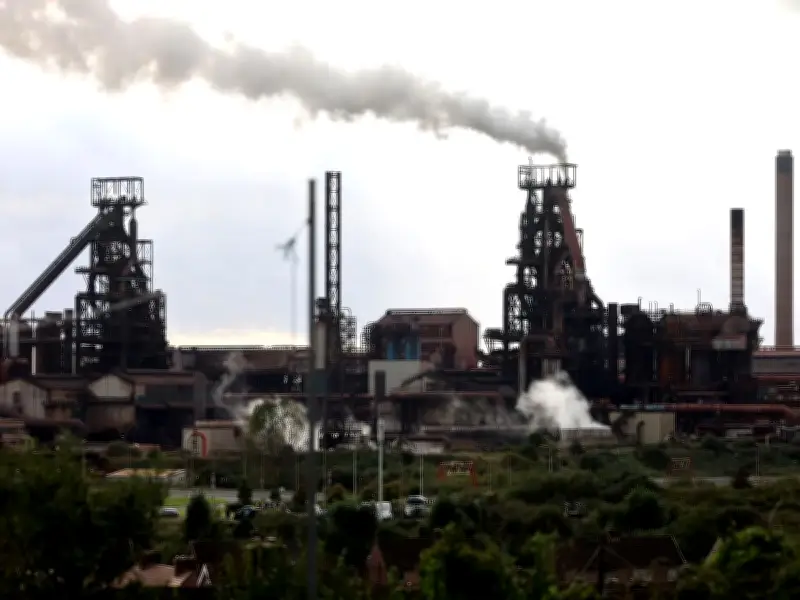
Steel giant Tata has been found guilty of health and safety failures at its Port Talbot plant. Two employees were taken to hospital after toxic blast furnace gases were released into the area where they were working during an emergency procedure initiated when a piece of equipment failed.
The firm was prosecuted for failing to carry out a proper risk assessment on the emergency procedure. After deliberating for two hours, a jury at Swansea Crown Court found Tata guilty of failing in its duty to ensure the safety of staff and contractors working on site. Sentencing has been adjourned, but the court heard the only sentencing option is a financial penalty.
Emergency procedure and the snort valve
The trial revolved around the use of a "snort valve" to vent toxic gases from a blast furnace in an emergency. The valves were originally designed to control the flow of fresh air into the blast furnace system, but following an incident at the Port Talbot plant in 2007, they were incorporated into an emergency procedure.
The 2007 incident saw the failure of one of the giant "blowers" which force hot air into the blast furnaces – when the so-called "wind" dropped and the pressure was reduced, toxic gases flowed out of the furnace and down the pipe to the blower, which exploded. To try to stop such a thing happening again, the snort valve was included in an emergency procedure which allowed blast furnace gases to be vented from the system. Once the pressure was sufficiently reduced, the hot gas isolation valve could be shut and the flow of gases out of the furnace could be stopped completely.
February 2022 incident
On February 14, 2022, a blower pushing air into blast furnace number four at the steelworks failed and the emergency procedure was initiated, including venting gases through the snort valve. The court heard the blower had also failed the day before and the emergency procedure had been used. However, on that occasion, there was nobody working in the area.
The court heard that on February 14, there were a total of 15 men working in the area around the snort valve – two Tata employees and 13 contractors from York Linings who were working on one of the huge "stoves" which heat the air going into the furnace. Personal gas monitors being worn by the Tata workers were triggered and all the men were told to evacuate the area. The court heard Tata employees did not leave immediately but stayed to ensure all the contractors, eight of whom were working inside the giant stove, got out okay.
The court heard blast furnace gases contain around 20% carbon monoxide, and the safe short-term limit for exposure to that gas in the air is 100 parts per million – the personal gas monitors being worn by the two workers recorded levels of 1,408 and 1,860 parts per million. The two Tata employees were given oxygen on site before being taken to hospital for tests. They subsequently made a full recovery.
Prosecution and sentencing
It was the prosecution case that Tata failed in its duty to ensure the safety of staff and others – in this case contractors – by not carrying out a proper risk assessment on the use of the snort valve to vent gases. Prosecution barrister Rebecca Griffiths told the jury that if the company had carried out a proper assessment, the snort valve would never have been used in the way it was used at Port Talbot.
Tata argued it had carried out a "suitable and sufficient" risk assessment and the prosecution was being brought on the basis of hindsight. After the jurors returned guilty verdicts – one relating to Tata's duty to its staff and one relating to the firm's duty to the contractors – Judge Geraint Walters thanked them for the attention they had paid to the often detailed evidence in the case.
Sentencing was adjourned to December 8, with Judge Walters saying the only sentencing option open to the court in a company case was a fine.