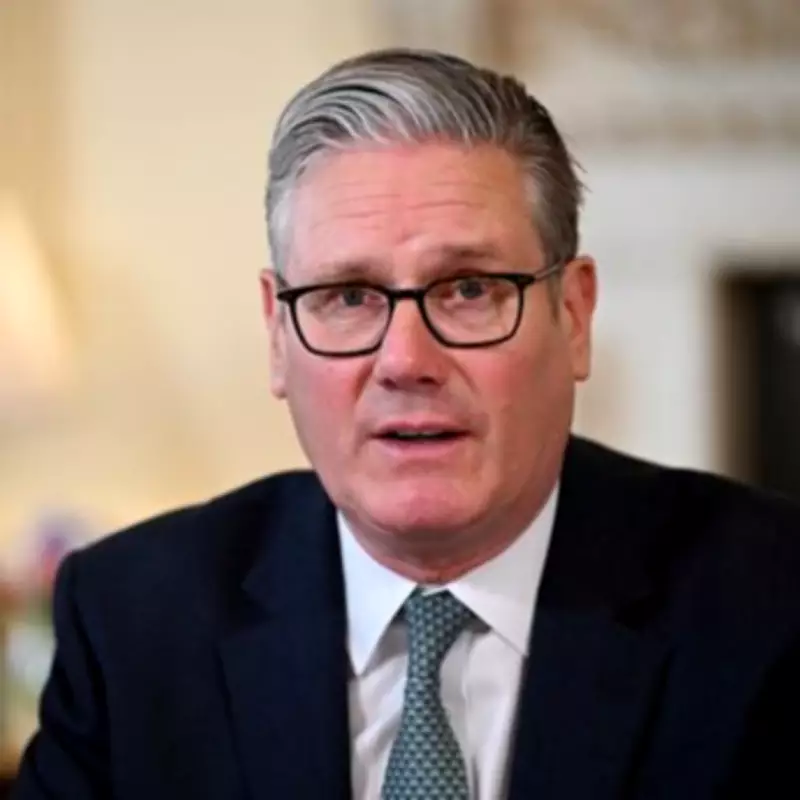
Prime Minister Keir Starmer Issues Stern Warning to Tech Leaders in High-Stakes Downing Street Confrontation
Prime Minister Keir Starmer has delivered a stark ultimatum to technology executives, declaring that "things can't go on like this" during a tense summit at Downing Street focused on the escalating dangers children face online. The Prime Minister explicitly hinted at the potential implementation of measures to "restrict" young people's access to social media platforms, as mounting political and public pressure demands concrete governmental action.
Tech Titans Summoned to Number Ten for Critical Safety Talks
In a significant move, senior representatives from five of the world's most influential technology corporations—X, Meta, Snap, TikTok, and Google, which owns YouTube—were hauled into Number 10 Downing Street on Thursday. The Prime Minister's central demand was for these companies to establish enhanced and immediate protections for children using their digital services. Opening the high-level meeting with forceful rhetoric, Mr. Starmer told the assembled tech bosses, "Things can't go on like this, they must change because right now social media is putting our children at risk."
The Prime Minister elaborated further, stating, "In a world in which children are protected, even if that means access is restricted, that is preferable to a world where harm is the price of participation." He expressed a determined commitment to building a safer digital future for young people, adding, "I am determined we will build a better future for our children, and look forward to working with you on this. I do think this can be done. I think the question is not whether it is done, the question is how it is done."

Downing Street Demands Tangible Action and No Delays
Following the summit, a spokesperson for Downing Street clarified the government's "key ask," emphasizing that technology firms "must be able to show real-world changes that make their platforms safer for children" and that "there must be no delay in them taking action." The official message from Number 10 was unequivocal: "The message was simple - no free pass, no delay in putting children's safety first." Attendees at the critical meeting included high-profile figures such as Wifredo Fernandez, X’s director of global government affairs; Alistair Law from TikTok; Markus Reinisch from Meta; and Kate Alessi of Google UK and Ireland.
Political Context and International Comparisons Intensify Pressure
The Downing Street confrontation occurs against a backdrop of intense political maneuvering and international developments. Bereaved families had previously warned the Prime Minister that the United Kingdom risks lagging behind other nations, particularly after Australia implemented a social media ban for users under 16 in December 2025. Other European countries, including Spain and Greece, are actively formulating similar legislative plans. Domestically, MPs recently rejected a House of Lords amendment calling for an under-16 ban by a vote of 256 to 150. The Government, which is currently consulting on a suite of online safety measures, instructed Labour MPs to vote against the amendment. Potential measures under consideration include:
- A comprehensive social media access ban for minors
- Regulations to curb addictive design features on applications
- The introduction of overnight curfews for young users
When questioned about a potential timeline for implementing changes, Prime Minister Starmer remained non-committal, telling LBC radio, "We’ll get through the consultation, obviously, but the reason we took the powers early was to make sure that once the consultation is over and we’ve evaluated it, we can move very quickly."

Mixed Reactions from Bereaved Families and Campaign Groups
Reactions to the high-profile meeting have been sharply divided. Ellen Roome, whose 14-year-old son Julian "Jools" Sweeney died while attempting an online challenge, criticized the summit as a political "stunt." She argued, "Social media companies have sat in rooms with parents like me – parents who have lost their children – and heard exactly what their platforms do. They have heard it in meetings and they have heard it in courtrooms. And still they do nothing. This meeting will be no different."
Conversely, other campaigners and bereaved families urge caution against rushing into an outright ban, citing concerning evidence from Australia. Research co-produced by the Molly Rose Foundation reveals that despite the ban, 61% of Australian children aged 12 to 15 still maintain access to one or more social media accounts. Andy Burrows, the charity’s chief executive, cautioned, "It’s time to look beyond this false sense of safety and for the Prime Minister to decisively commit to strengthening regulation to make unsafe and addictive design a thing of the past." This highlights the complex regulatory landscape and the challenges of enforcing digital safety measures effectively across borders.