Penguin Random House Files Legal Action Against OpenAI Over Alleged Copyright Breach
Penguin Random House has initiated a lawsuit against OpenAI, accusing the artificial intelligence research company's ChatGPT chatbot of violating copyright by replicating content from a beloved German children's book series. The legal complaint was lodged with a Munich court on Friday, targeting OpenAI's European subsidiary based in Ireland.
Details of the Alleged Infringement
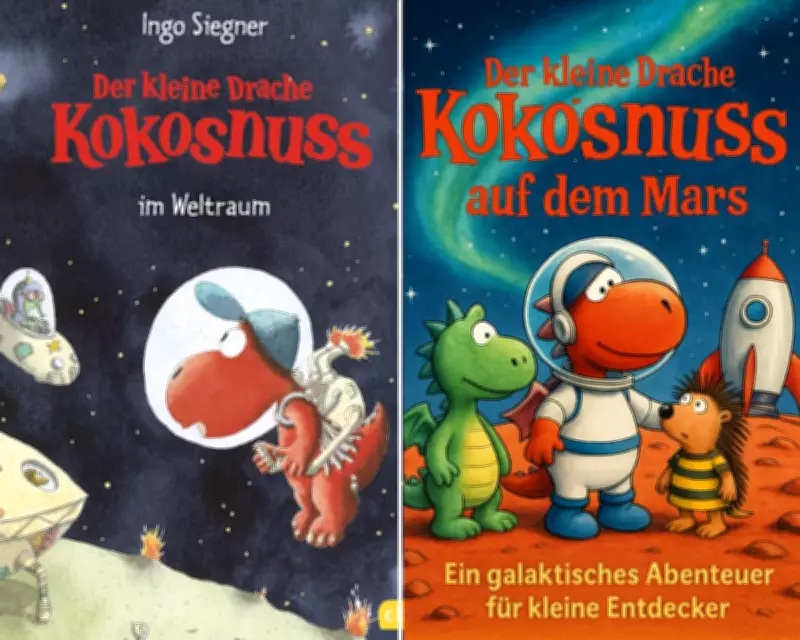
According to the lawsuit, Penguin's legal team prompted ChatGPT to generate a story similar to the Coconut the Little Dragon series, authored and illustrated by Ingo Siegner. When asked to "write a children's book in which Coconut the Dragon is on Mars", the AI produced text and images that the publisher claims are "virtually indistinguishable from the original". This included a cover featuring Siegner's iconic orange dragon and companions, a back-cover blurb, and instructions for self-publishing.
The Coconut the Little Dragon series, known in German as Der kleine Drache Kokosnuss, is a cultural phenomenon with over 30 volumes, a television series, and two feature films. The dragon's name derives from its small stature, comparable to a coconut shell.

Legal Arguments and Precedents
Penguin argues that ChatGPT's output demonstrates "clear evidence" of unlawful "memorisation" of Siegner's work. Memorisation refers to large-language models storing and reproducing extensive excerpts from training data, a point contested by AI firms in past cases as distinct from direct copying.
This lawsuit could establish a significant precedent for publishers globally, given Penguin's stature as one of the world's largest publishing houses. Carina Mathern, publisher for children's and young-adult books at Penguin Random House Verlagsgruppe, emphasised: "Human creativity is and remains at the heart of our work as publishers. We are first and foremost obliged to represent the interests of our authors and creatives." She added that while open to AI opportunities, intellectual property protection is paramount.
OpenAI's Response and Broader Context
An OpenAI spokesperson stated: "We are reviewing the allegations. We respect creators and content owners, and are having productive conversations with many publishers around the world so that they can also benefit from the opportunities of this technology."
The case follows a November ruling by a Munich court that found ChatGPT violated German copyright laws by using protected lyrics from top-selling musicians for training. Notably, German media conglomerate Bertelsmann, which owns Penguin Random House, had entered a collaboration agreement with OpenAI in January 2025, but this did not grant access to Bertelsmann's archives.
Agence France-Presse contributed to this report.