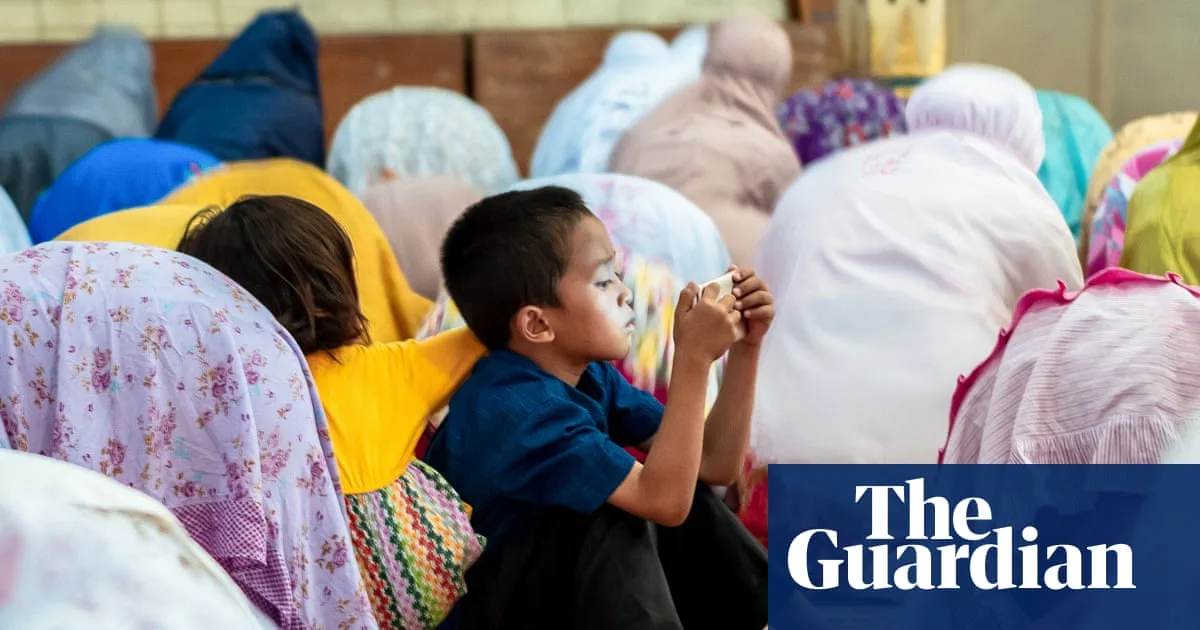
Indonesia Launches Pioneering Social Media Restrictions for Minors
Indonesia has officially commenced the enforcement of a groundbreaking government regulation, approved earlier this month, which prohibits children under the age of 16 from accessing digital platforms that could expose them to pornography, cyberbullying, online scams, and addiction. This decisive move establishes Indonesia as the first country in Southeast Asia to institute such a comprehensive ban, directly affecting popular services including YouTube, TikTok, Facebook, Instagram, Threads, X, Bigo Live, and Roblox.
A Gradual Implementation for a Monumental Task
The implementation of these restrictions is being rolled out progressively, with the government aiming for full compliance from all digital platforms in due course. In March, Indonesia's Communication and Digital Affairs Minister, Meutya Hafid, announced that the regulation would apply to approximately 70 million children within the nation's population of about 280 million.
Minister Hafid acknowledged the significant challenges ahead, noting that high-risk platforms are identified based on factors such as the ease with which children can encounter strangers, potential predators, harmful content, exploitation risks, and data security scams. "This is certainly a task. But we must take steps to save our children," Hafid stated. "It’s not easy. Nevertheless, we must see it through." She emphasized that ensuring platform compliance and accurate reporting of deactivated under-16 accounts presents considerable difficulties.
Mixed Reactions from Families and Experts
The policy has elicited varied responses from Indonesian families. Maura Munthe, a 13-year-old who typically spends around four hours daily on social media and gaming platforms like Roblox, expressed ambivalence. "I feel 'kind of 50-50' about it," she said, though she largely supports the measure. Her school peers worry about missing out on entertainment, but Munthe added, "There are always other games on my phone, not only the online ones. I will likely play more games alone or just hang out with my friends."
Her mother, Leni Sinuraya, 47, who has trusted her daughter's phone usage for years, views the government's action positively. "Parents have lost control—and social media platforms have taken over," Sinuraya remarked. "Nowadays, when we see kids sitting in a restaurant, they have a phone right in front of them. It’s clear that they’re addicted. They won’t eat unless they’re given a phone, and they throw a tantrum if they aren’t." She stressed that mealtime should foster real-world conversation.
Balancing Protection with Digital Literacy
Diena Haryana, founder of the SEJIWA foundation in Jakarta, which focuses on online child safety, highlighted the dual nature of digital platforms. Studies indicate that social media can adversely affect children's mental health, triggering anxiety and depression, yet these platforms also offer educational benefits. "We also need to remember that they need to learn to use this digital technology at the right time, at the right age, and with the right guidance as well," Haryana advised.
She predicted initial confusion among parents and complaints from children as the ban takes effect, urging parents and schools to guide children toward engaging with the real world. "Of course, this takes time to get used to, which is why parents and schools need to encourage children to engage with the real world and make it fun for them," Haryana added. "And there’s plenty in the real world for children to explore."
Platform Responses and Global Context
Initial reactions from digital platforms have been limited. X, under Elon Musk's ownership, has updated its Indonesia Online Safety Information page to specify 16 as the minimum user age, stating, "It’s not our choice—it’s what Indonesian law requires." Google-owned YouTube expressed support for the Indonesian government's efforts, saying, "We are ready to engage under the regulation’s self-assessment approach to demonstrate our long-standing safety rigor."
This initiative follows Australia's world-first social media ban for children implemented last year, which led to the revocation of access to about 4.7 million accounts. Other nations, including Spain, France, and the United Kingdom, are also considering or enacting similar measures amid growing concerns over the harms of unregulated social media content on youth.