Holiday Home Hidden Cameras: Expert Reveals How to Spot Covert Surveillance
The Independent's journalism is supported by our readers. When you purchase through links on our site, we may earn commission.
Choosing a holiday home over a hotel offers greater independence and privacy, allowing travellers to fully relax. However, alarming stories of hidden cameras discovered in short-term rentals have sparked widespread concerns about safety and security.
Recent Incidents Highlight the Risks
In May last year, a doctor was jailed for voyeurism offences after recording over 24 people across three years at his Glasgow holiday home. One victim grew suspicious of two air fresheners positioned near the toilet and shower, uncovering small surveillance devices. A third camera was later found inside a smoke alarm.

Similarly, a couple holidaying in Puerto Rico in June found spy cameras hidden throughout their Airbnb, which had captured video and audio of them having sex, along with footage of their two children in the bathroom. Reviewing the footage, the guests discovered videos of the hosts setting up one of the cameras.
Platform Policies and Prohibitions
Airbnb explicitly states it has zero tolerance for hidden cameras and will ban hosts caught secretly filming guests. In April 2024, the rental platform introduced rules prohibiting hosts from having "security cameras or recording devices that monitor indoor spaces in homes, even if these devices are turned off."
Its guidance affirms, "Hidden cameras have always been prohibited and will continue to be prohibited." Other platforms like Vrbo enforce similar policies, ruling that surveillance devices should not be used inside properties.
Expert Tips for Detection
While such incidents are rare, they can be distressing for travellers. Fortunately, quick checks can provide peace of mind. Jack Charman, managing director of National Private Investigators, a UK-based team offering bug-sweeping services, notes a rise in everyday items like Apple AirTags and cameras being "weaponised" to invade privacy.
Mr Charman and his company regularly conduct sweeps at hotels and rentals for high-profile clients. He shared his expert tips with The Independent as a guide for everyday holidaymakers.
Do Your Research
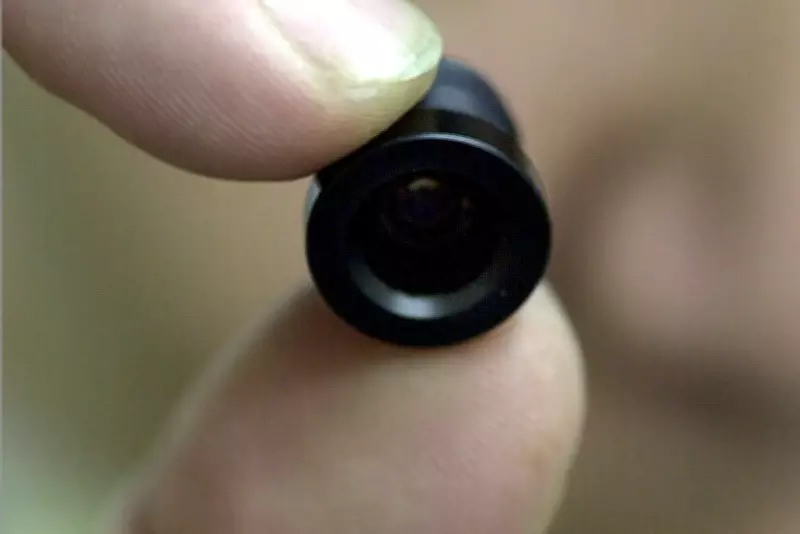
Before searching, it's crucial to know what to look for. Mr Charman explains, "These devices [such as covert cameras] are available to buy very cheaply, with next-day delivery from Amazon and online 'spy' shops."
"Scroll through the types of devices available, like cameras hidden in alarm clocks. Then, if you enter an Airbnb and recognise that alarm clock, you can inspect it closely. It may have slots underneath for a Sim card or SD card."
"Ninety-nine per cent of the devices found are commercially available to everyone."
Use Your Phone Torch
The torch on a phone is a valuable tool for uncovering hidden technology. If a device is concealed and illuminated by the torch, its lens might "flare" in the light, revealing its location. Mr Charman also advises looking for pinpoint holes that seem out of place on everyday objects, where a camera could be recording.
However, he cautions against buying radio frequency (RF) detectors, often used to identify transmitting electronics. "RF detectors you can buy online are just nonsense, because there's RF in the environment everywhere."
"So many people come to me saying they've bought an RF detector, but there's intermittent RF in the environment. If you have wifi in the house, you probably wear a smartwatch, and that's emitting RF," he adds.
Look for Anything Out of the Ordinary
Mr Charman recommends focusing checks on likely spots rather than wasting time sweeping the entire property. "There's no point putting a camera under the stairs, for instance, because it won't see anything. A camera is likely positioned up high with a view of the whole room, or in a living room area, somewhere around the TV is ideal, as it points back at the rest of the room."
"Some devices can also be hidden in a bookshelf easily, because there's lots going on there."
He also suggests checking wifi and Bluetooth connections. Open your phone settings and review nearby connections for names like "IP camera", "_cam", or anything suspicious. "It might sound really simple, but you'd be surprised," he said.

"Look for things just a little out of place, like an alarm clock in the corner. It might not be positioned centrally; it could be off-centre and pointed at the bath. Little things like that."
What to Do If You Find a Camera
If you discover a hidden camera, Mr Charman advises first documenting it. Use your phone to video the device in situ. Then, report it to the police and the platform or company you booked through.
If the police cannot respond and you have the funds, consider contacting a private company to assess the situation properly.
Read more: A married couple enjoyed an 'intimate moment' at their Airbnb. Then they discovered a hidden camera above the bed.